
Last updated October 15, 2026
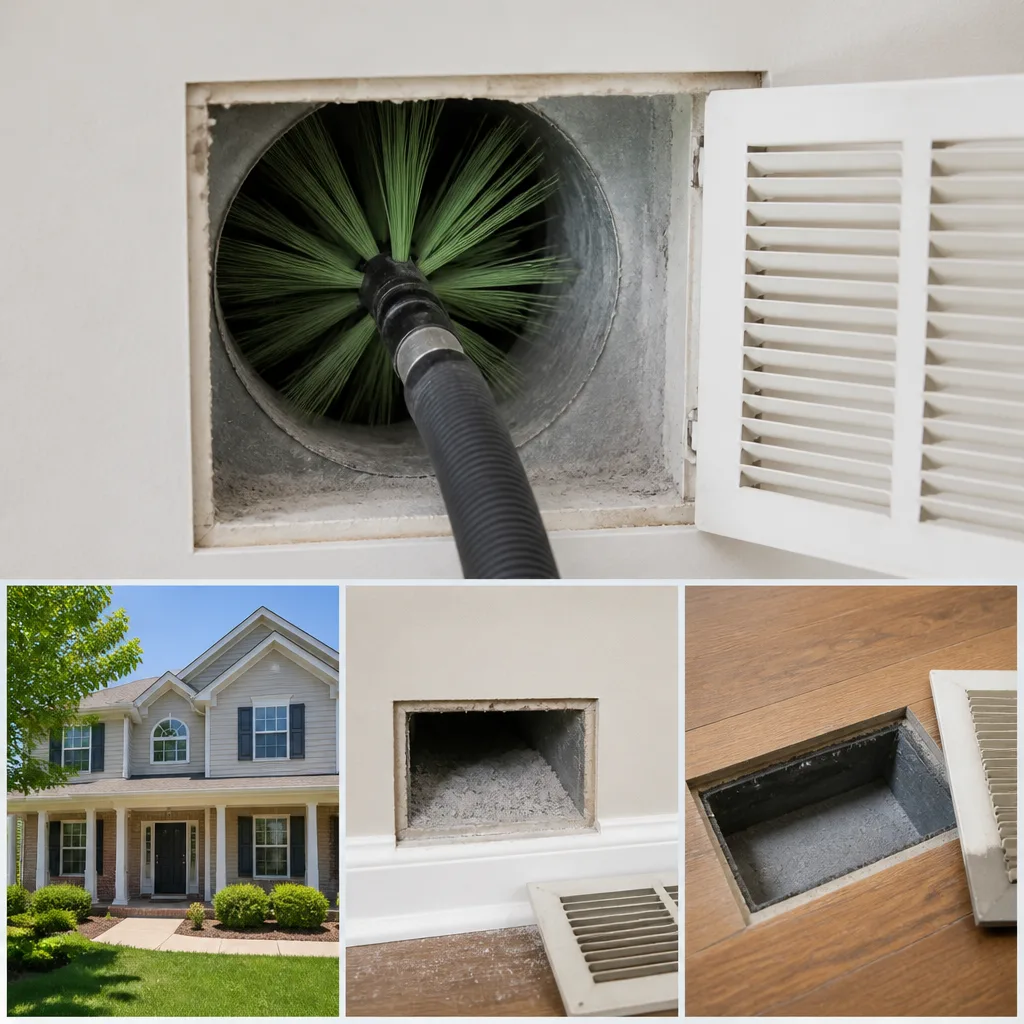 Whole-home duct cleaning
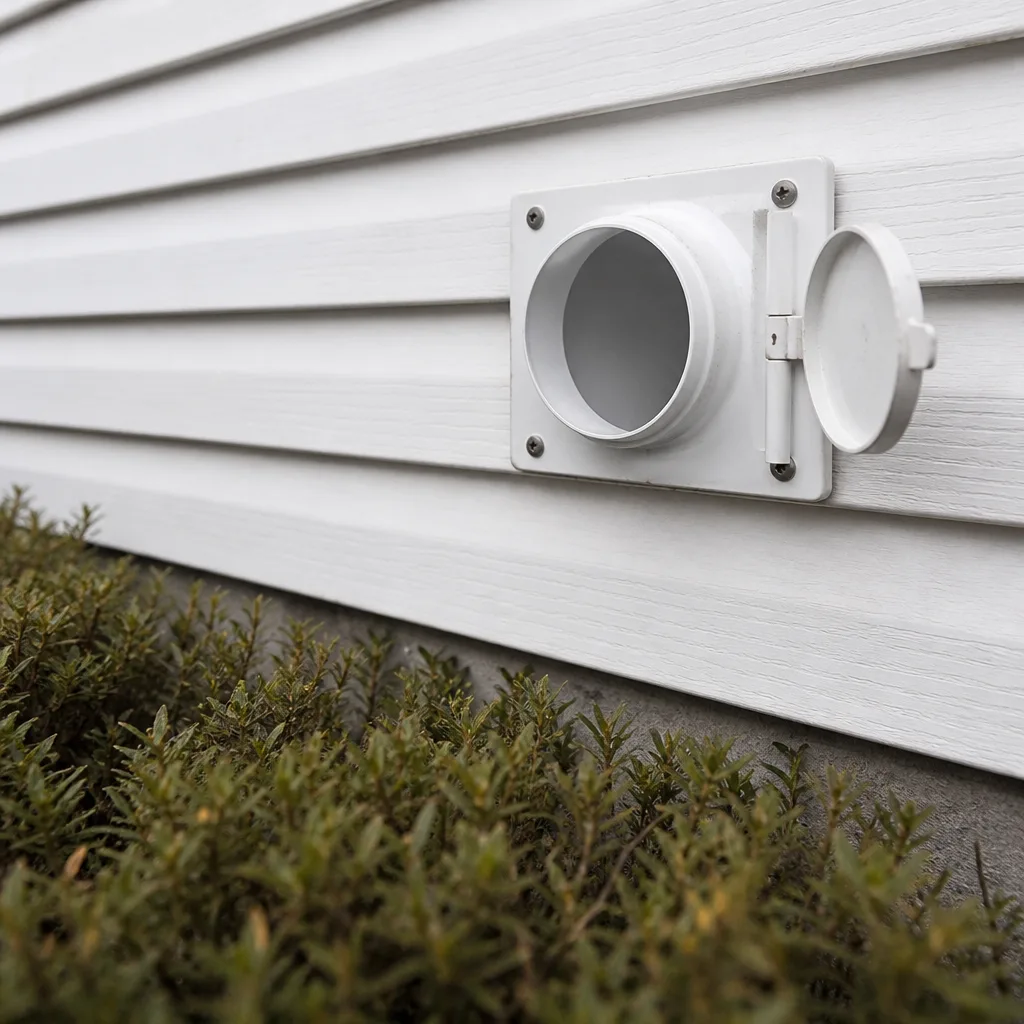 Dryer vent cleaning
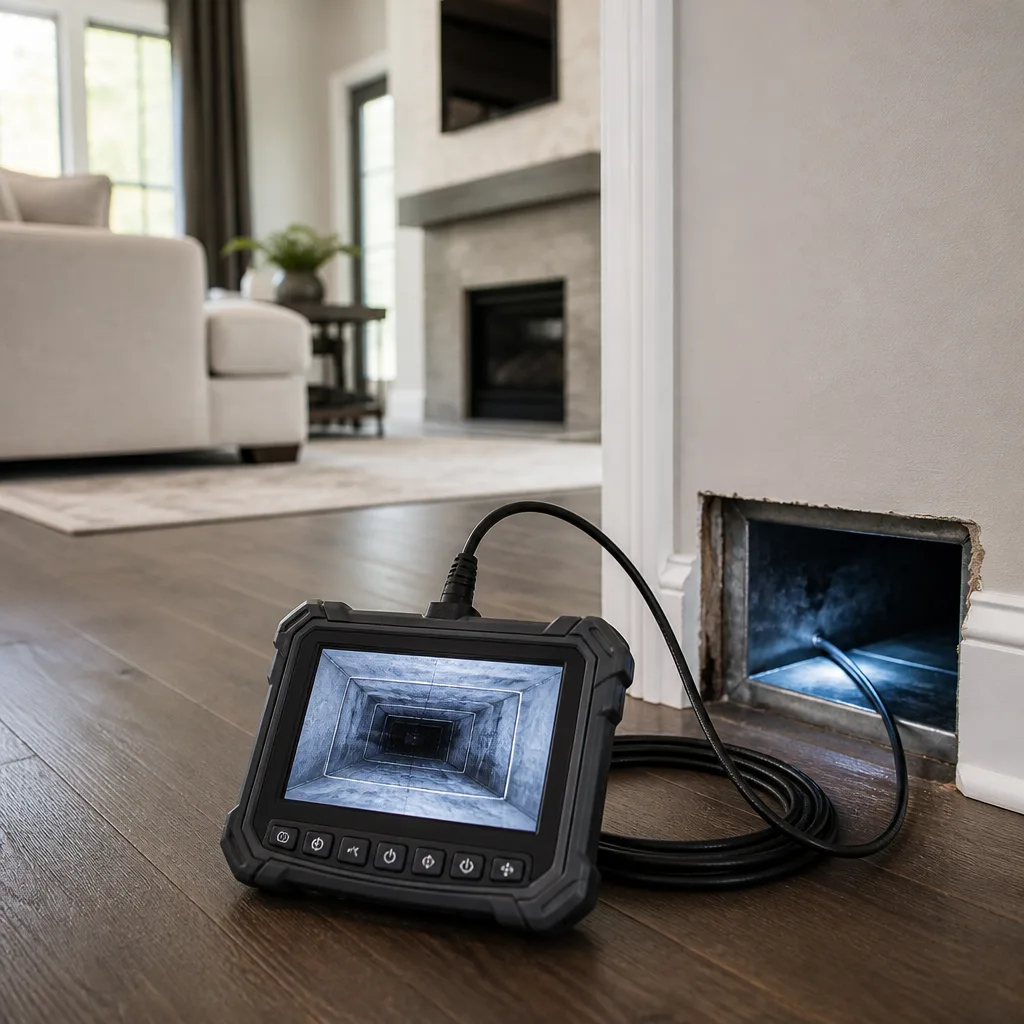 Camera inspection
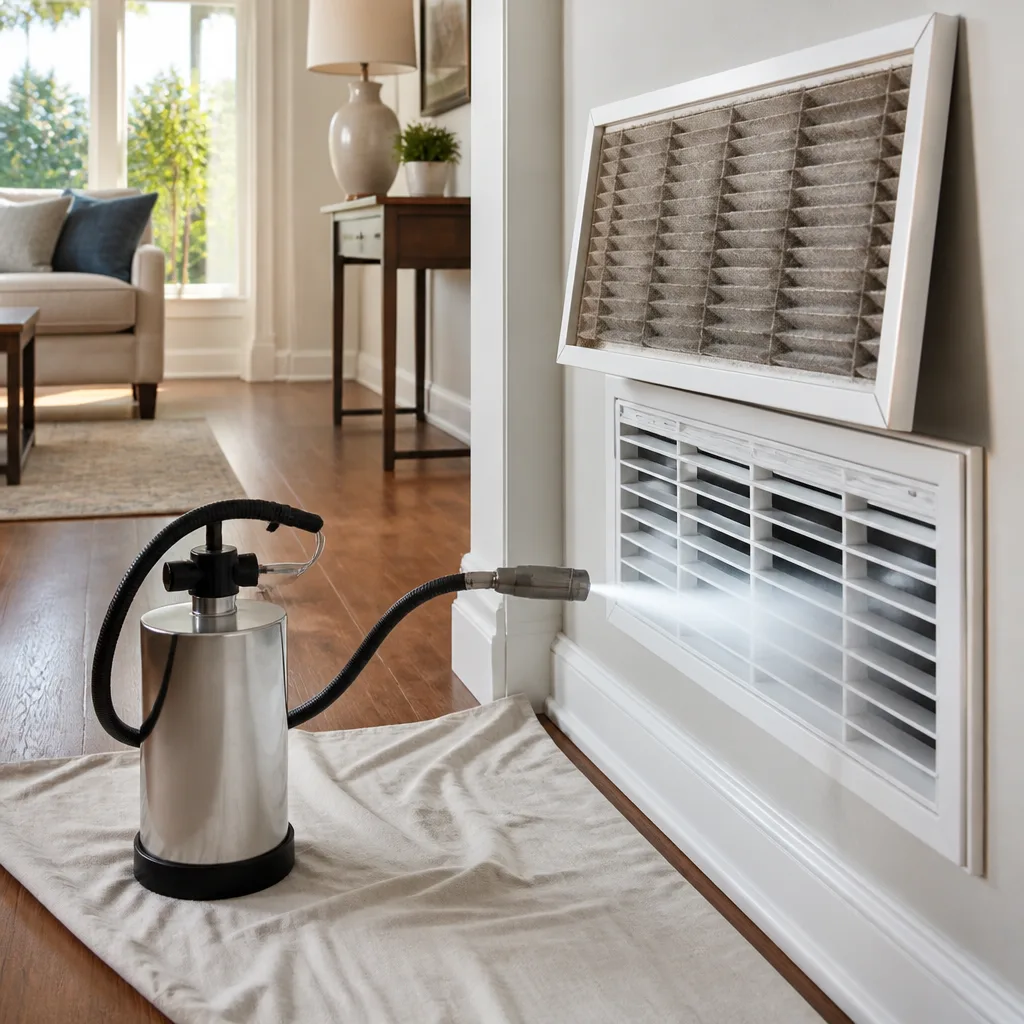 Sanitizing & deodorizing
Whole-system duct and dryer vent check with before-and-after photos - you see exactly what came out of your vents
That "$99 whole-house special" is a bait ad - the real number appears once they are in your hallway, or the "clean" is a shop-vac at the register. We photograph the inside of your ducts before and after instead.
The Complete Guide to Air Duct Cleaning in Austin
Austin ranks in the top 10 U.S. cities for seasonal allergy severity, yet most duct-cleaning guides online read like they were written for a three-bedroom colonial in Ohio. Cedar pollen doesn’t care about generic advice, and neither does the limestone dust that works its way into slab-on-grade return vents across Central Texas. This Air Duct Cleaning guide is built around what Austin homes actually accumulate in their ductwork, when they accumulate it, and how to get it out without getting taken for a ride. You’ll learn real Austin pricing, how to verify the work was done, and what equipment separates a professional job from a shop-vac shortcut.
Quick Answer
Air duct cleaning in Austin typically costs between $450 and $900 for a standard single-family home, depending on square footage, number of returns, and whether the system includes the main trunk lines and all branch runs. Most Austin homes benefit from cleaning every 3 to 5 years, though homes near active construction corridors like 183 or 71, or households with shedding pets, may need service every 2 to 3 years. The key is hiring a company that uses negative-air extraction with HEPA filtration and gives you before-and-after photo documentation of every vent, as explained in our DIY vs Professional Air Duct Cleaning: The Austin Homeowner’s Decision Guide.
Styles & brands we work with
Table of Contents
- Why Austin’s Climate Hits Ductwork Harder Than Most Cities
- Cedar Fever and Oak Pollen: Austin’s Two Contamination Windows
- Why Slab Foundations Push More Soil Into Austin Ducts
- The Equipment Question: Negative-Air Machines vs. Shop-Vac Rigs
- How Often Should Austin Homes Really Clean Their Ducts?
- What Air Duct Cleaning Costs in Austin (Real Numbers)
- What a Modern Duct Cleaning Booking Should Look Like
- Common Mistakes to Avoid
- When to Call a Professional
- Frequently Asked Questions
Why Austin’s Climate Hits Ductwork Harder Than Most Cities
Austin sits at the intersection of three environmental forces that most of the country never deals with simultaneously: intense seasonal pollen loads, long stretches of high humidity, and soil types that produce fine airborne particulates. The Edwards Plateau limestone to our west breaks down into a dust that finds its way through window seals, door jambs, and foundation cracks. The blackland prairie clay to our east dries out in summer and turns to powder that gets tracked inside and kicked into the return air stream. Add in the fact that Austin homes run their HVAC systems heavily for seven to eight months of the year, and you have a recipe for duct contamination that a home in Minneapolis or Seattle simply doesn’t experience.
We see this in the systems we open up across Austin neighborhoods. Ducts in Tarrytown homes built in the 1960s often carry decades of accumulated dust that has compacted into the duct lining. Homes in Cedar Park and Round Rock, where construction has boomed for twenty years, frequently show a fine layer of drywall dust and construction debris inside supply runs from the original build. The climate isn’t just about what blows in from outside; it’s about how long your system runs, how much air it moves, and what that air is carrying when it moves through your returns.
Cedar Fever and Oak Pollen: Austin’s Two Contamination Windows
Central Texas doesn’t have one allergy season. It has two distinct pollen events that bookend the winter, and each one pushes a different type of particulate into your ductwork. Understanding these windows is the difference between cleaning your ducts at the right time and cleaning them six months too late.
Cedar fever season (December through February) is the first window. Mountain cedar pollen, which blows in from the Hill Country on south winds, is unusually small and fine. When it settles inside return ducts and the blower kicks on, it gets redistributed through the entire house. We’ve opened systems in February where the inside of the supply plenum looks dusted with a fine yellow film. That’s cedar pollen that cycled through the system for two months and then sat there after the season ended. If you clean your ducts in March or April, after the cedar has passed, you’re removing the bulk of that seasonal load before it gets baked onto the duct walls by summer heat.
Oak pollen season (March through April) is the second window. Live oak pollen is heavier and stickier than cedar pollen. It doesn’t stay airborne as long, but it clings to shoes, pet fur, and clothing, then gets walked through the house and pulled into return grilles. By May, the average Austin home’s return duct has accumulated a measurable layer of pollen and the dust it bonded with. Homes with pets that go in and out during oak season see significantly more of this accumulation, because fur is a pollen magnet.
What this means practically: if you’re going to clean your ducts once, the optimal window in Austin is late April through early June. That’s after cedar fever has fully passed and after oak pollen has peaked, but before the summer heat makes your AC run around the clock and compound whatever is still in the system. If you clean in November, you’re cleaning a system that’s about to get hit with cedar for three more months. It’s not useless, but it’s not strategic.
Why Slab Foundations Push More Soil Into Austin Ducts
Most Austin homes sit on slab-on-grade foundations, not basements or crawl spaces. That matters for ductwork in ways most national guides never mention. In a pier-and-beam home, the ducts run through an accessible crawl space, which means they can be inspected from the outside and the air around them is relatively contained. In a slab home, the supply and return runs are often embedded in or routed through conditioned space, but they also frequently run through closets, utility rooms, and garages where outdoor air intrusion is higher.
The bigger issue is the return path. Slab homes typically have return grilles mounted low on walls or in hallways, close to the floor. Every time a door opens, every time someone walks through the house, the dust and soil that settles at floor level gets pulled toward those low returns. Central Texas soil, particularly the caliche-rich clay common in Austin, grinds down into an extremely fine powder that floats easily when disturbed. It’s not unusual for us to find a quarter-inch of compacted soil dust in the return boots of slab homes that haven’t been cleaned in five or more years.
If your home was built in the last decade in a high-growth corridor like the 183 North expansion or the 71 West corridor near Bee Cave and Lakeway, you’ve likely had years of construction dust moving through your neighborhood. That dust gets into your home through open windows and doors, and the return air system pulls it in and deposits it throughout the duct network. New builds pose their own problem: drywall dust, sawdust, and construction debris left in duct runs before the registers go on, which then circulates for years.
The Equipment Question: Negative-Air Machines vs. Shop-Vac Rigs
Here’s the most useful thing you can know before hiring any duct cleaning company in Austin: the equipment they roll up with tells you almost everything about the quality of the job you’re about to pay for. There are two broad categories, and the difference matters.
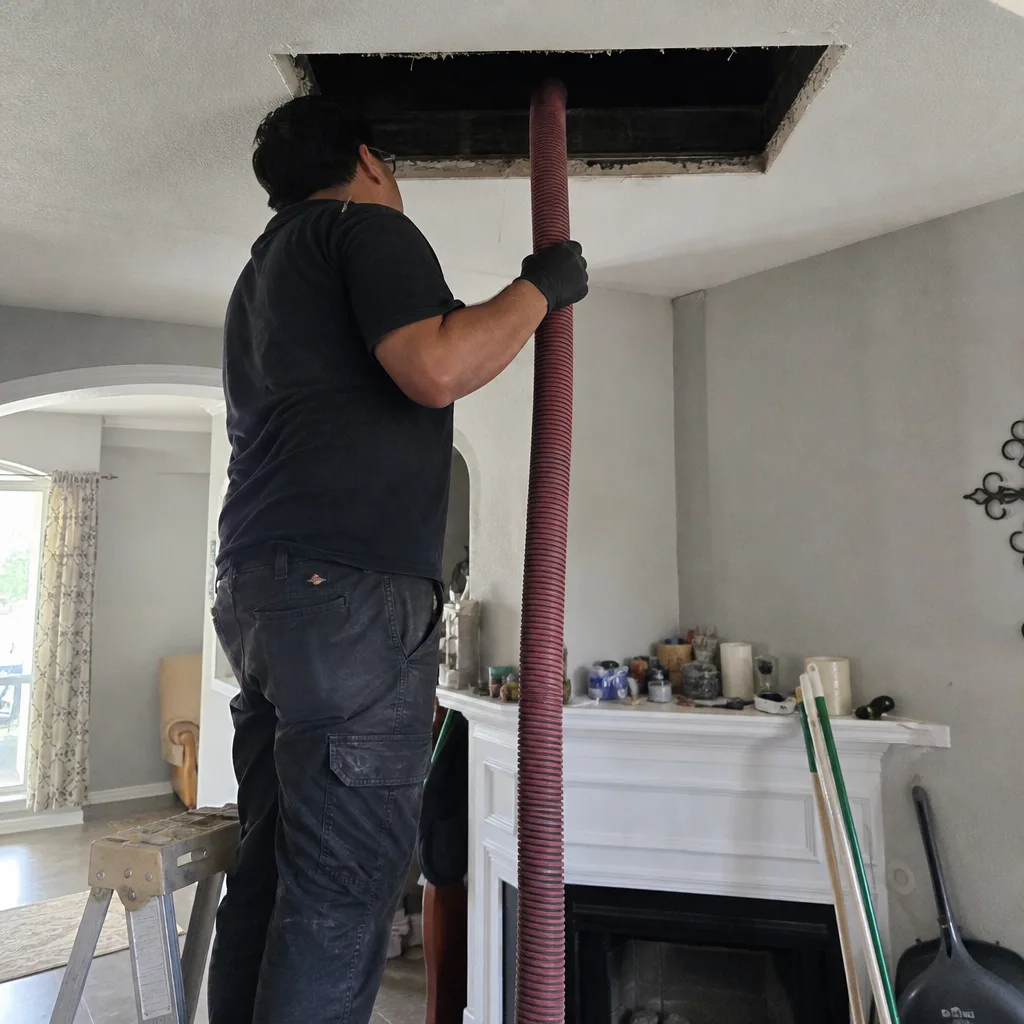
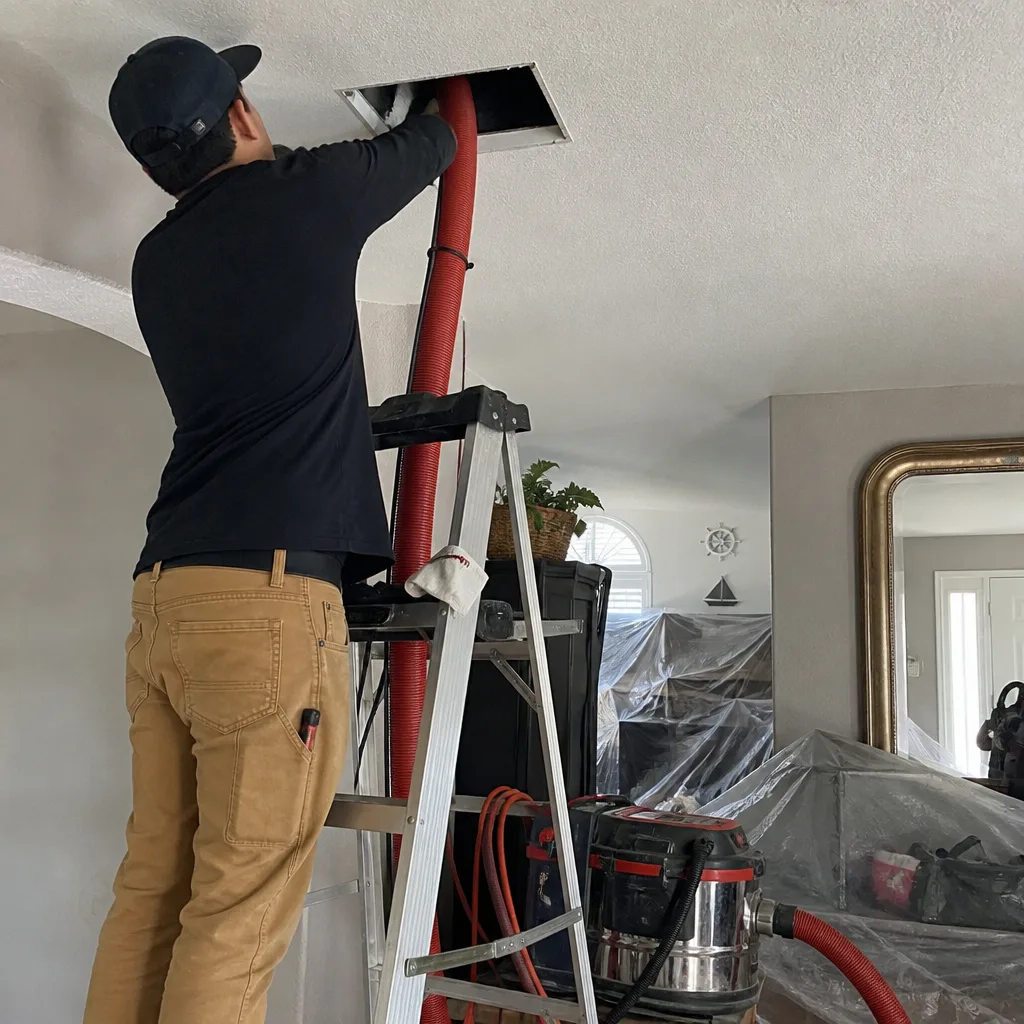
Professional negative-air extraction uses a large vacuum unit, often a Nikro HEPA-rated machine, connected to the duct system to create continuous negative pressure. That means the system is under suction the entire time. A rotary brush system, like a Rotobrush unit, agitates and dislodges debris from the duct walls, and the negative air stream carries that loosened debris straight into the HEPA-filtered collection unit. Negative-pressure extraction means the debris goes into the vacuum, not back into your living room. It’s the industry standard for a reason.
A shop-vac rig is a portable vacuum connected to a long hose fed into a vent. It has nowhere near the suction power of a truck-mounted or trailer-mounted negative-air unit, and it doesn’t create continuous negative pressure throughout the system. What it mostly does is clean the first few feet of each duct run and give the impression of cleaning. The debris deeper in the trunk line stays put. Some operators cut a hole in the plenum and feed a spinning brush through, but without true negative pressure, the dislodged debris recirculates into the house or settles deeper in the system.
How to tell them apart on arrival: a professional setup includes a large vacuum unit (usually truck-mounted) with thick hoses connected to the main trunk line, plus a separate air compressor and rotating brush system. A containment unit from a brand like Abatement Technologies is a good sign. A shop-vac rig is exactly what it sounds like: a contractor vacuum, some extension hoses, and a brush on a flexible rod. If the entire setup fits in the back of a minivan, you’re not getting professional-grade cleaning.
How Often Should Austin Homes Really Clean Their Ducts?
There’s no one-size-fits-all answer, but there is a sensible Austin-specific framework. National standards like NADCA (the National Air Duct Cleaners Association) recommend cleaning every 3 to 5 years for most homes. In Austin, the math shifts based on a few identifiable factors:
- Every 3 to 4 years: Homes with no pets, no smokers, and no recent renovation or construction activity nearby. Even then, Austin’s pollen seasons and soil dust mean the 3-year mark is a more honest target than the 5-year mark.
- Every 2 to 3 years: Homes with one or more indoor pets, because pet dander and fur bond with pollen and dust and form a sticky layer inside ducts that accelerates further buildup.
- Every 2 to 3 years: Homes within a mile of active construction corridors or newer subdivisions along 183, 71, or the 130 toll road, where construction dust is a constant environmental factor.
- Every 2 years or sooner: Homes with family members who have severe allergies or asthma, especially those triggered by cedar or oak pollen. Duct cleaning isn’t a cure, but it reduces the reservoir of irritants cycling through the system.
- Sooner than normal: After any major renovation, after a pest infestation, after water damage or mold remediation, or if you’ve just moved into a new build without prior duct cleaning.
One more Austin-specific factor: if you run your AC from March through November (which most of us do), your system moves more air annually than a comparable home in a cooler climate. More air movement means more particulates pass through the system, and more of them settle on duct surfaces. Frequency of use isn’t a reason to clean more often by itself, but it amplifies every other factor on this list.
What Air Duct Cleaning Costs in Austin (Real Numbers)
Let’s talk about the number most people actually care about. In the Austin market, most standard air duct cleanings for a typical single-family home run between $450 and $900. Homes under 1,500 square feet with a single return and simple duct layout often land on the lower end. Larger homes, multi-story systems, multiple returns, and older homes with significant buildup land on the higher end.
Here’s a breakdown of what factors move the price:
- Square footage and number of vents: More vents and longer duct runs mean more time, more hose, more brush work. A 1,200-square-foot bungalow in Crestview is a different job than a 3,500-square-foot home in Steiner Ranch.
- Number of systems: Two-story homes often have separate systems or zone dampers, which adds to the labor.
- Duct accessibility: Attic-mounted systems in Austin’s summer heat are slower to work on than systems in conditioned closets or garages.
- Level of contamination: A system with light dust loads cleans faster than one with construction debris, pet hair matting, or years of accumulated pollen-cement.
- Add-on services: Dryer vent cleaning, coil cleaning, and sanitizing treatments are typically priced separately and add $100 to $300 depending on scope.
Why are some quotes so much cheaper? If you see a $99 whole-house duct cleaning offer, you’re looking at a teaser price. The business model is to get a technician into your home at a loss and then upsell aggressively once the system is open. You’ll be told the job “actually” requires $1,200 in additional work, or the $99 price covers only the first four vents. The honest price in Austin is the honest price. Companies that give you a written quote before work starts and hold to it are operating on a different business model entirely: one flat price per system, agreed before anything is touched.
At Air Duct Cleaning in Austin, we quote the full system price in writing before work begins. That price doesn’t change at the door. It’s the same standard we apply whether we’re quoting a two-bedroom condo off South Lamar or a custom home in Westlake.
What a Modern Duct Cleaning Booking Should Look Like
You book home services from your phone, you expect to track the arrival, and you want proof the work happened. Duct cleaning is a service where proof matters more than almost any other trade, because the work is invisible once the registers go back on. Here’s what a modern, visibility-first booking should look like, and what you should hold any company to:
- You book and get a live arrival window. Not a four-hour block. A trackable ETA that updates as the technician moves. You should know the technician’s name before they knock on your door.
- Technician arrives in uniform, with identifiable equipment. You should see a negative-air vacuum unit, a rotary brush system, and HEPA filtration. If the tech shows up with a portable vac and a drill brush, you’re getting a different tier of service than what was sold.
- You get a written price before work starts. Not a verbal estimate. A written line-item price for the system. If the price is going to change for any reason, that’s a red flag, not a standard practice.
- The system is sealed and put under negative pressure before cleaning starts. Access holes are cut into the supply and return plenums, the vacuum is connected, and only then does the brush work begin. Debris is pulled out of the system, not pushed around it.
- Before-and-after photos are delivered. This is the non-negotiable. Every vent, every return, every access point should be photographed before and after. You should see the difference with your own eyes, not take anyone’s word for it.
- You pay from a digital invoice by link. No paper, no surprises, no “oh, and there’s a trip charge” at the end. The invoice matches the written quote.
This is the standard we’ve built at Cardinal Air Duct Austin, and it’s called the Relay Standard. Every booking comes with a live trackable arrival time, before-and-after photo documentation, and a digital invoice payable from your phone. It’s the minimum a homeowner in Austin should accept from any duct cleaning company, because the technology to deliver it has existed for years. Companies that still operate on four-hour windows and paper receipts are choosing not to offer it.
Common Mistakes to Avoid
- Falling for the $99 special. The teaser price gets a technician to your door, then the real invoice appears. In Austin, the honest whole-system price ranges $450 to $900, and anyone quoting dramatically less is running a bait-and-switch model.
- Cleaning at the wrong time of year. If you clean in November, you’re about to run cedar pollen through the system for three months. The strategic Austin window is late April through early June, after both major pollen seasons have passed.
- Not insisting on before-and-after photos. Duct cleaning happens inside walls and ceilings. If a company can’t or won’t show you proof, you have no way to verify the work was done at all, let alone done well.
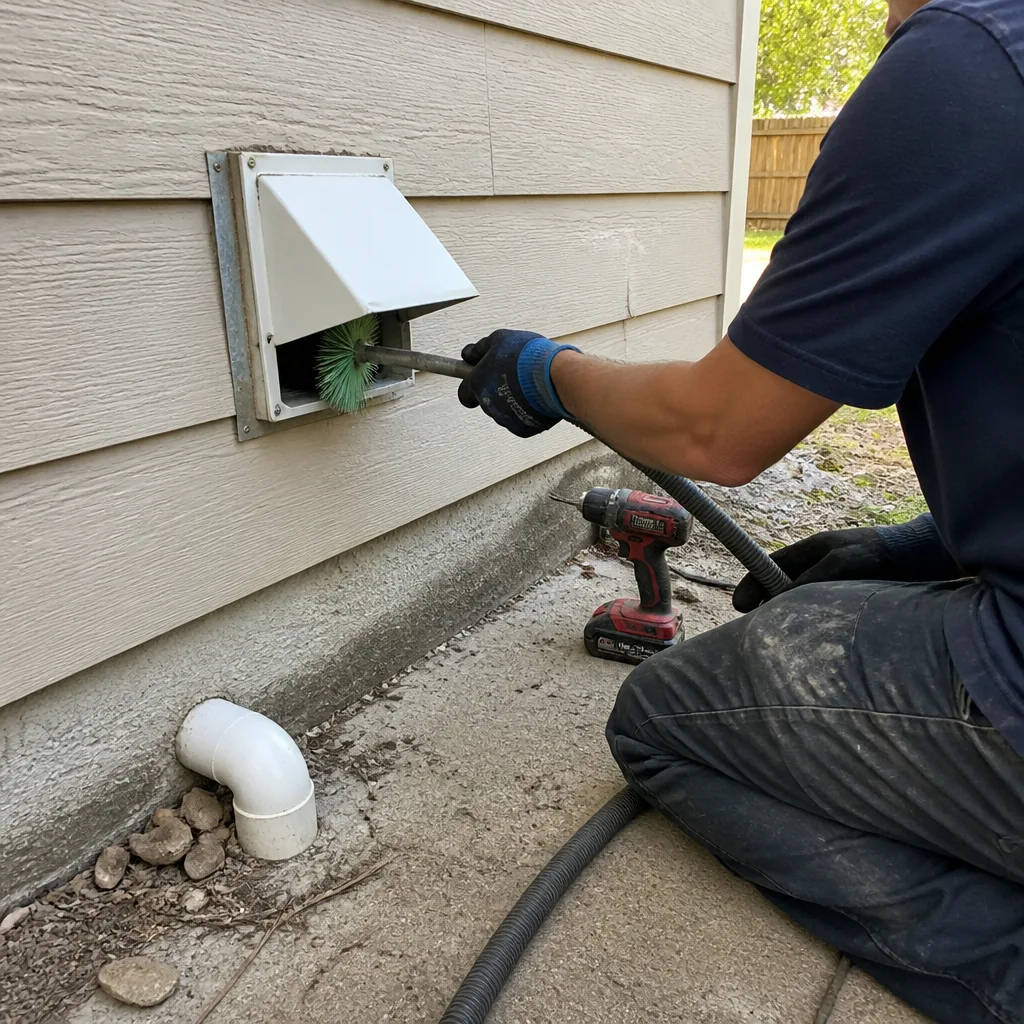
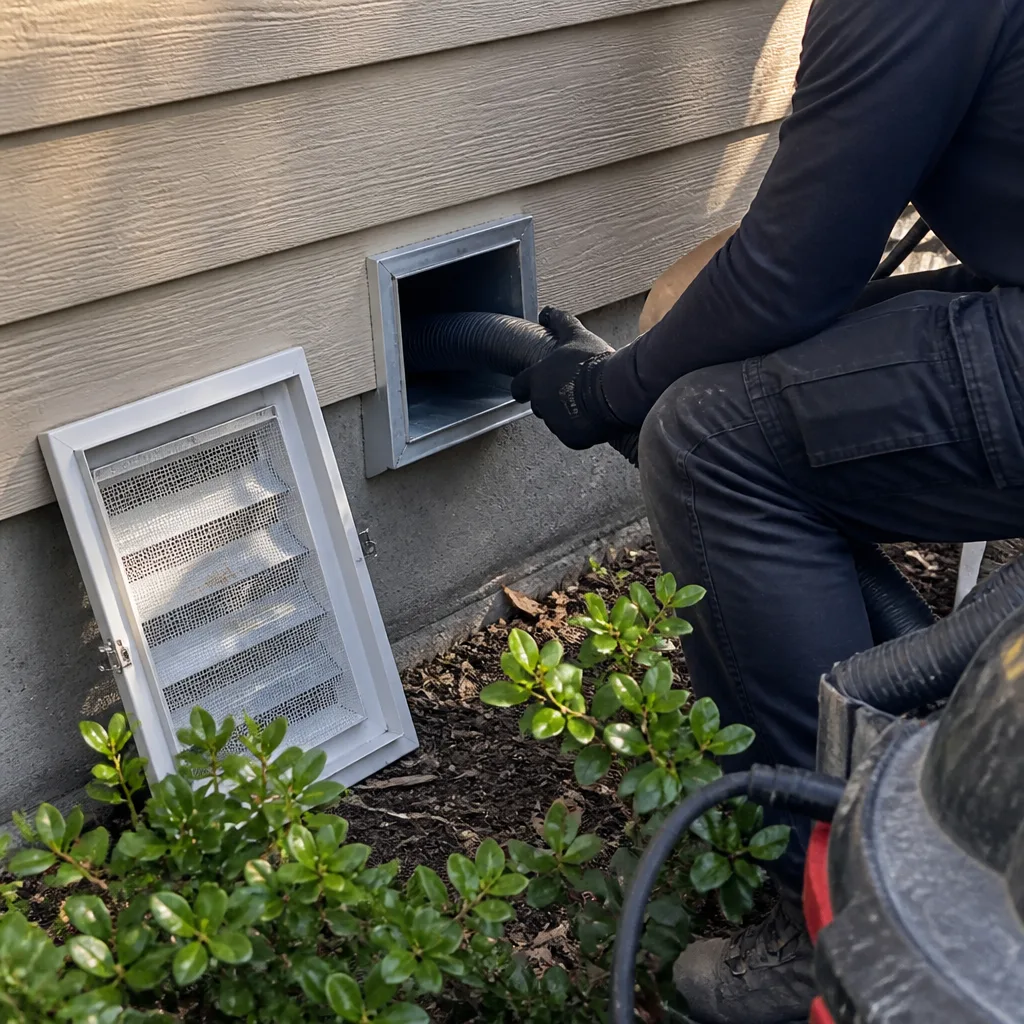
- Confusing dryer vent cleaning with air duct cleaning. They’re different services with different equipment. A Dryer Vent Cleaning in Austin addresses the exhaust line from your dryer to the outside. Air duct cleaning addresses the HVAC supply and return system. Some companies clean the dryer vent and imply the whole system was done.
- Skipping the return side. Some low-cost operators clean the supply vents and call it a day. The return ducts are where the contamination enters the system. If the return side isn’t cleaned, the job is half done, and the system will re-contaminate quickly.
- Not asking about HEPA filtration. Without HEPA filtration on the vacuum unit, fine particulates like pollen and soil dust get exhausted back into your home during cleaning. In Austin’s allergy season, that defeats the purpose.
- Ignoring the coils. Dirty ducts are often accompanied by dirty evaporator coils and a clogged blower. If the system is open anyway, coil cleaning is a sensible add-on. Some companies skip it because it’s slower work and they’re trying to turn the job fast. Ask about it specifically. Your HVAC Cleaning in Austin should address the full air path.
When to Call a Professional
If you’ve lived in your Austin home for three or more years and have never had the ducts cleaned, it’s time. If you have pets and allergies in the same house, don’t wait for the five-year mark. If you’ve recently renovated, move into a new build, or live near an active construction corridor along 183 or 71, get the system inspected sooner rather than later. If you can see dust puffing from your vents when the system kicks on, or if rooms in your home accumulate dust noticeably faster than others, the ducts are almost certainly the reservoir. And if you’re preparing for cedar fever season, the worst thing you can do is run a contaminated system while your family’s respiratory systems are already under attack. Cardinal Air Duct Austin offers free estimates in Austin – call (940) 283-6595 and we’ll give you a written quote before any work begins. For more guides & resources, visit our blog.
Frequently Asked Questions
Most Austin homes pay $450 to $900 for a full air duct cleaning, with the price driven by square footage, number of systems, and how much contamination is in the ducts. If you’re quoted a whole-house cleaning for under $200, you’re almost certainly looking at a teaser price that will escalate once the technician arrives. The honest way to price this work is a flat rate for the entire system, written down before anything is touched. Call (940) 283-6595 for a free estimate on your specific home.
In Austin, every 3 to 5 years is the honest range, with most homes landing closer to 3 years. Bigger homes are closer to 5. Homes with pets, allergy sufferers, or construction-dust exposure lean toward every 2 to 3 years. If you run your AC eight months a year, which most of Austin does, more air moves through the system and more dust settles in it.
Air duct cleaning addresses the HVAC system: supply ducts, return ducts, trunk lines, and plenums. Dryer vent cleaning addresses the exhaust line that carries lint from your dryer to the exterior of your home. They use different equipment and have different safety considerations, which is why they’re quoted and performed separately. Both matter, but one doesn’t substitute for the other.
Demand before-and-after photos of every vent and access point. A professional company using camera-equipped equipment can show you the inside of your ducts before cleaning and after. If a company can’t provide visual proof, you have no way to verify the work. This isn’t a luxury; it’s basic accountability for a service you’re paying hundreds of dollars for.
Duct cleaning removes the reservoir of pollen, dander, and dust that cycles through your HVAC system, but it won’t eliminate cedar fever symptoms entirely. Cedar pollen is airborne and enters your home through doors, windows, and on clothing. What duct cleaning does is stop your HVAC system from recirculating the pollen that has already gotten inside and settled in the ductwork. For allergy sufferers in Austin, it’s one piece of a broader strategy, but it’s a useful piece, especially if you time it after cedar season ends in late winter.
Low quotes in Austin usually mean one of three things: a teaser price that will grow once the technician is in your home, a shop-vac operation that can’t actually clean the full system, or a company that plans to skip the return side, the trunk lines, or the plenum. Professional negative-air cleaning with HEPA filtration takes time, trained technicians, and expensive equipment. The price reflects the work. A written flat-rate quote agreed before work starts is the best protection you have against bait-and-switch pricing.
The Bottom Line
Air duct cleaning in Austin is not a generic service, and it shouldn’t be priced or scheduled like one. With two major pollen seasons, soil that grinds into fine dust, and slab foundations that funnel particulates into low returns, Austin’s homes accumulate contamination faster and in different ways than homes in cooler, less allergenic climates. The honest price for a professional whole-system cleaning runs $450 to $900, and the work should be done with negative-air equipment, HEPA filtration, and photographic proof. If the price is written before work starts and the photos are delivered after, you’re dealing with a company that respects the standard. If not, keep looking. For a free estimate on your Austin home, call the Cardinal Air Duct Austin home team at (940) 283-6595.
Written by Omar Haddad, Owner at Cardinal Air Duct Austin, serving Austin since 2005.
See the difference
 Before
 After
After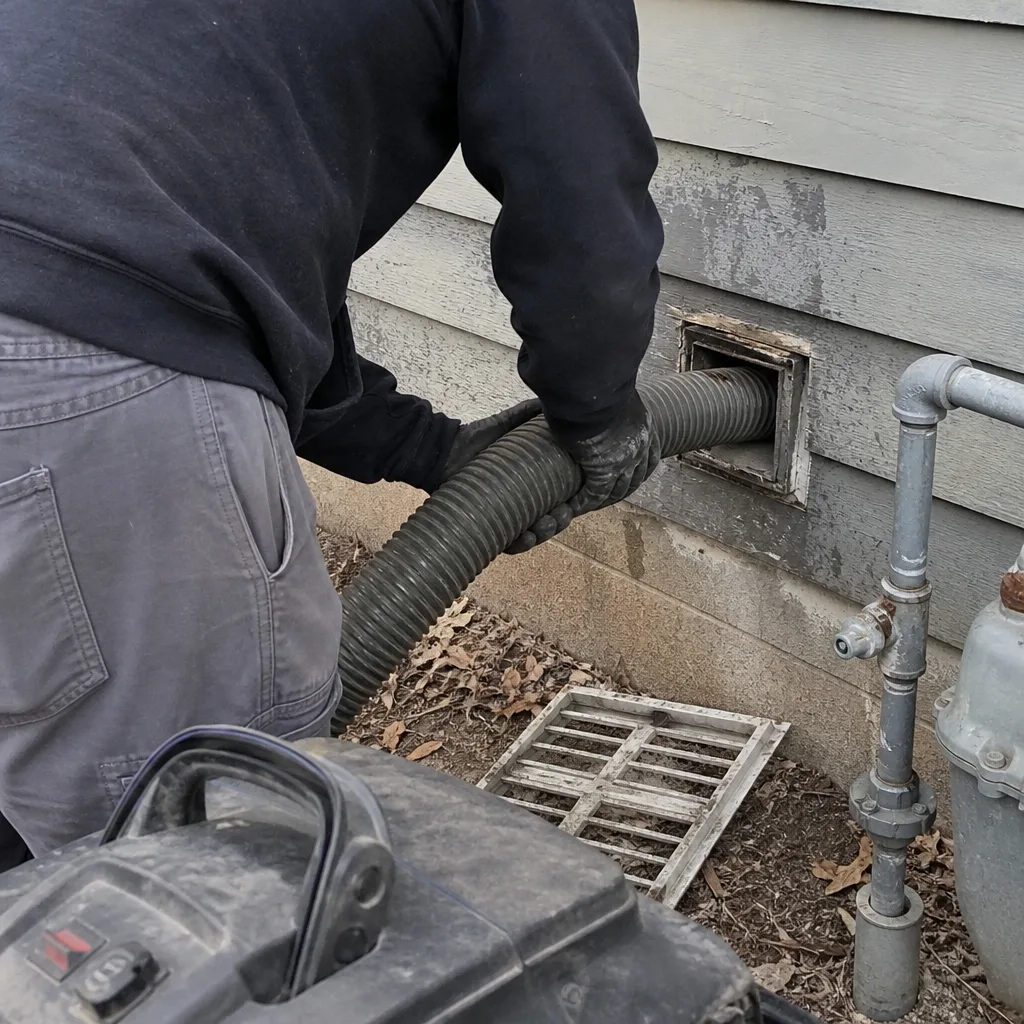 Before
 After
After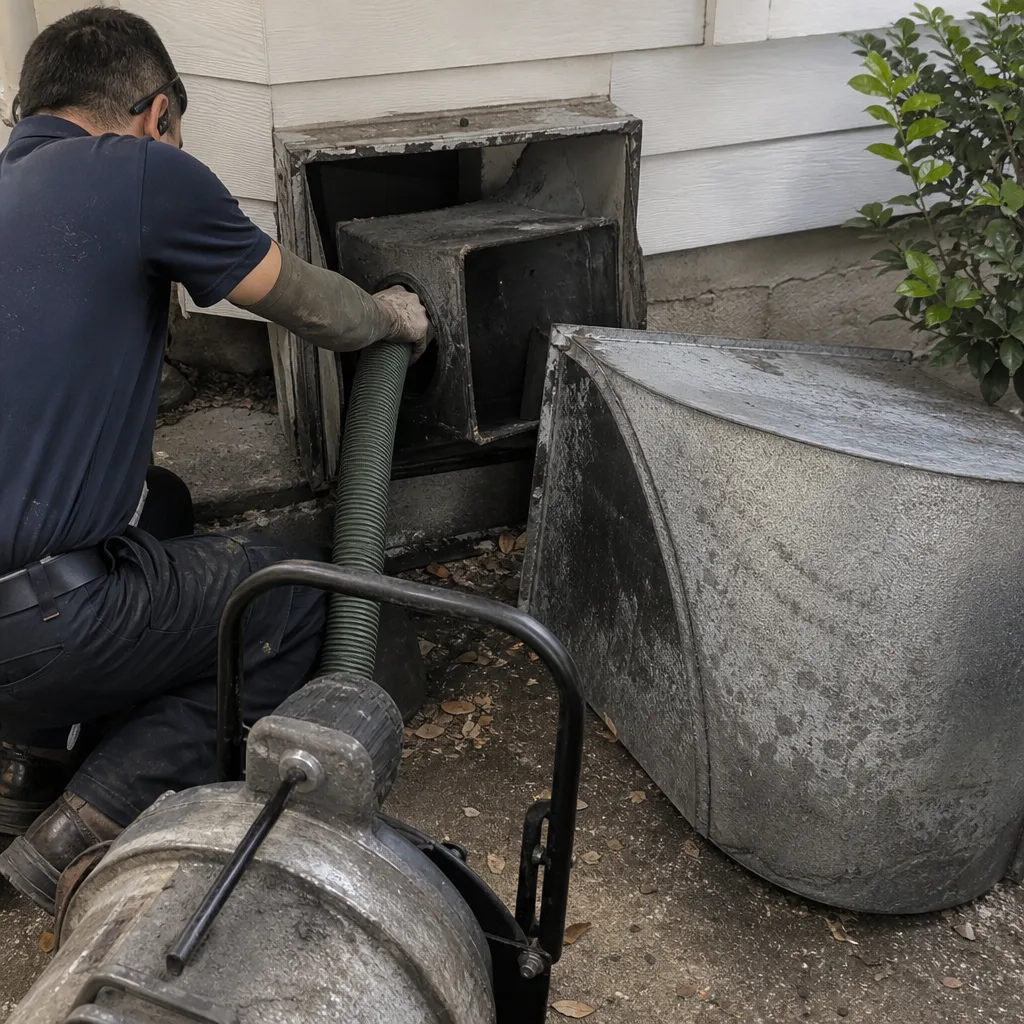 Before
 After
After