
Last updated October 15, 2026
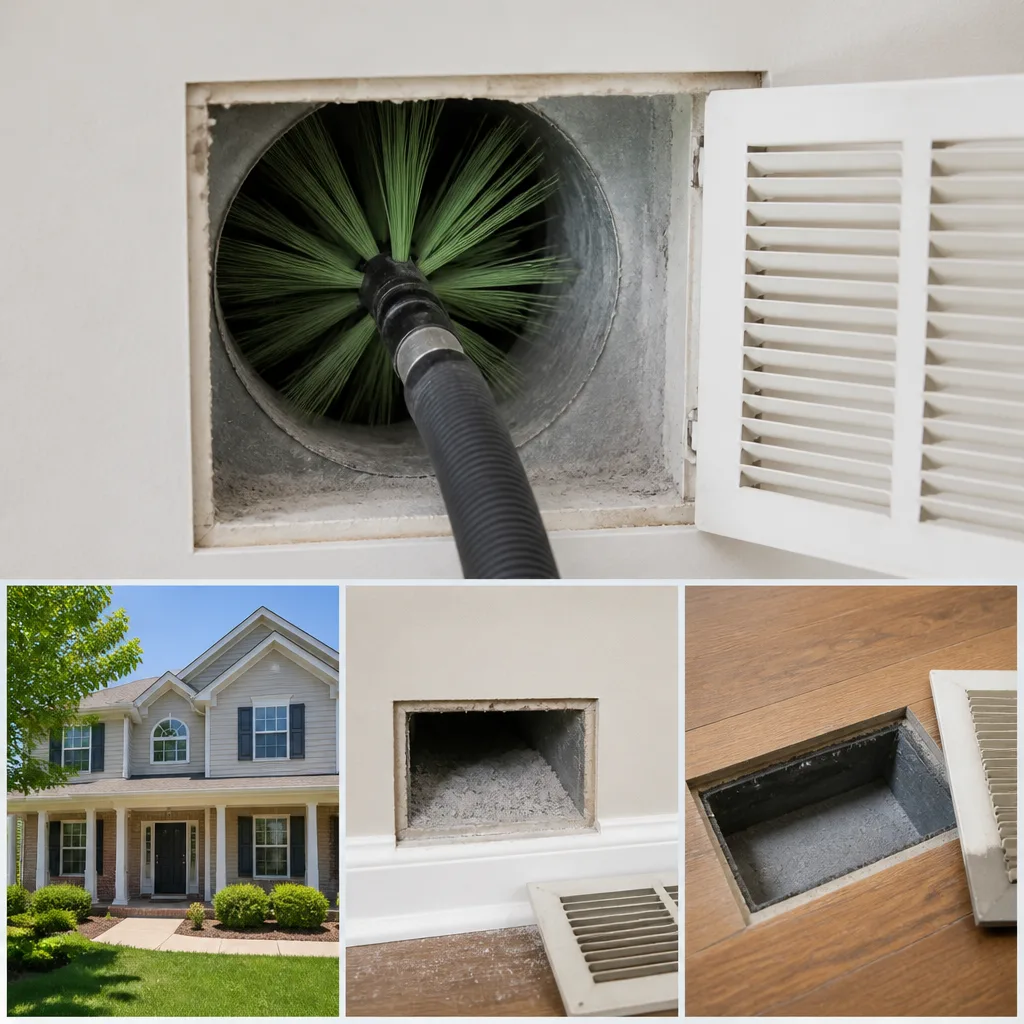 Whole-home duct cleaning
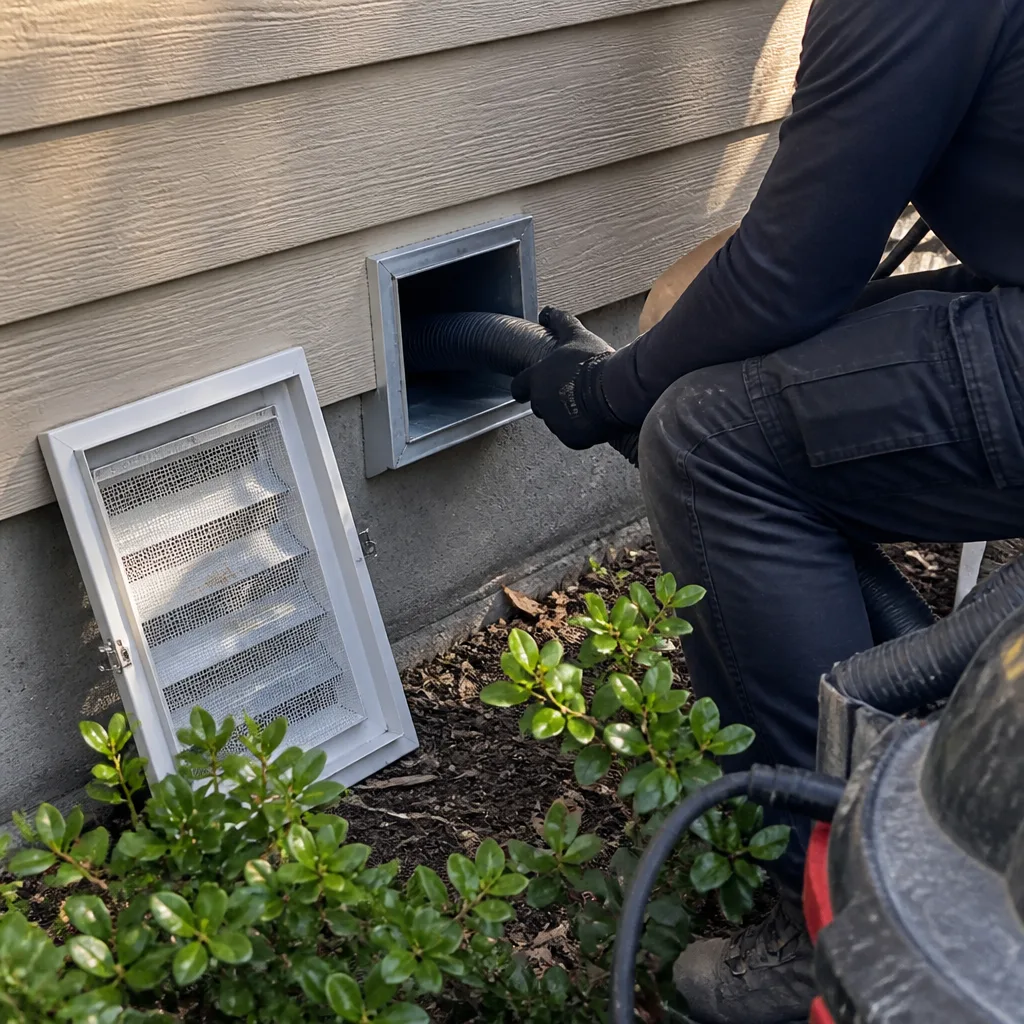
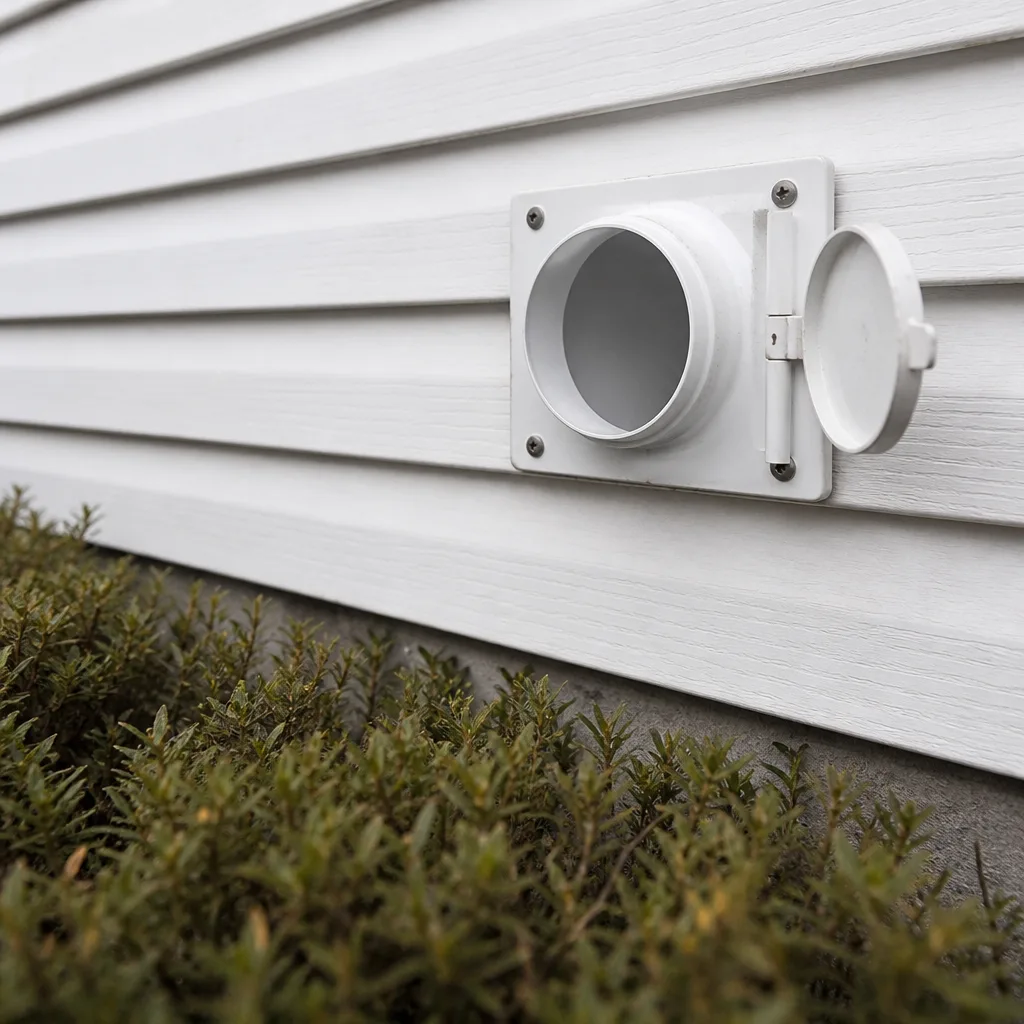 Dryer vent cleaning
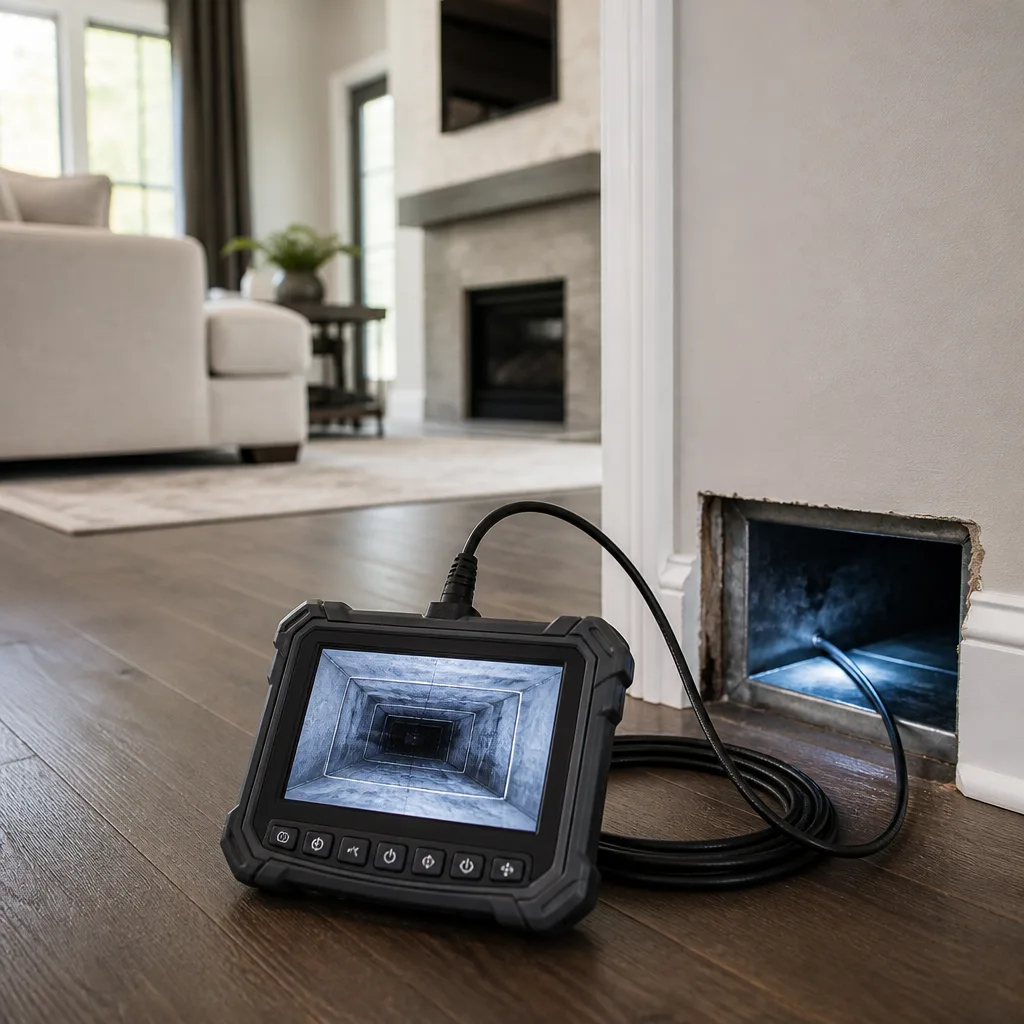 Camera inspection
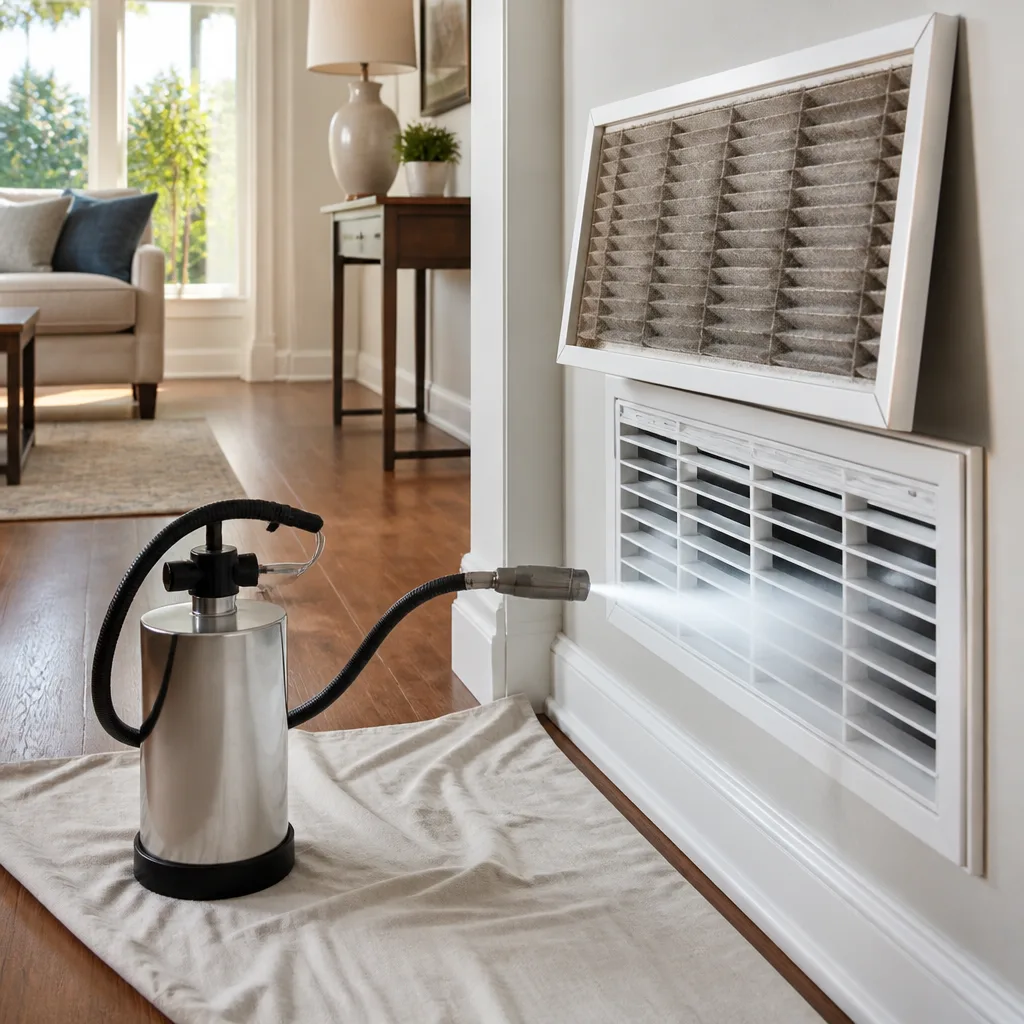 Sanitizing & deodorizing
Whole-system duct and dryer vent check with before-and-after photos - you see exactly what came out of your vents
That "$99 whole-house special" is a bait ad - the real number appears once they are in your hallway, or the "clean" is a shop-vac at the register. We photograph the inside of your ducts before and after instead.
DIY vs Professional Air Duct Cleaning: The Austin Homeowner’s Decision Guide
Here’s a number that surprises most Austin homeowners: a standard shop vac produces about 80 cubic feet per minute of airflow. The professional negative-air machines we run produce 4,000 to 5,000 CFM. That’s not a marginal difference. It’s the difference between waving a dust rag at your ducts and actually removing what’s packed inside them. This guide walks you through exactly what you can safely do yourself, where the line sits, and how to decide when our Air Duct Cleaning services in Austin make financial sense. By the end, you’ll know precisely which tasks a $30 brush handles and which ones it makes permanently worse.
Styles & brands we work with
Quick Answer
DIY air duct cleaning works for surface-level maintenance: vacuuming register covers, changing filters, and wiping down return grilles. But if your Austin home has flex duct, visible mold, rodent activity, or renovation debris inside the system, DIY tools physically cannot reach or remove what’s there, and in some cases they’ll damage the ductwork itself. Professional cleaning with negative-pressure extraction typically costs $350 to $600 for a standard Austin home, while damage from an overzealous DIY attempt can run $2,000 or more in duct replacement.
Table of Contents
- The Four DIY Tasks That Actually Work
- Why Flex Duct Changes Everything in Austin
- The Equipment Gap: Shop Vac vs Professional Extraction
- Three Situations Where DIY Makes It Worse
- The Cost-Benefit Breakeven: When Professional Pays for Itself
- What Professional Duct Cleaning Actually Looks Like
- Common Mistakes to Avoid
- When to Call a Professional
- Frequently Asked Questions
- The Bottom Line
The Four DIY Tasks That Actually Work
Let’s start with what we tell every Austin homeowner when they ask about cleaning their own ducts: there are exactly four tasks you can do yourself that genuinely help. None of them require opening the ductwork. None of them risk damage. All of them fit into a Saturday morning.
- Register and grille vacuuming. Remove each floor and ceiling register, vacuum the visible opening with a brush attachment, and wipe the register itself with a damp cloth. This clears surface lint, pet hair, and dust that settles at the opening. Do this twice a year, and you’ll reduce what circulates through the house in between professional cleanings.
- Filter changes. In Austin’s climate, a MERV 8 to MERV 11 filter typically lasts 60 to 90 days. Homes with pets or allergy sufferers should check monthly. A clogged filter forces your blower to work harder, shortens its lifespan, and pulls more debris into the system. Honeywell and Aprilaire make quality filters that fit most standard returns in Austin homes.
- Return grille wipe-downs. The large grille on your wall or ceiling that pulls air in collects a surprising amount of film. Wash it with warm water and mild dish soap every few months. This single task reduces the dust load entering your system more than most homeowners realize.
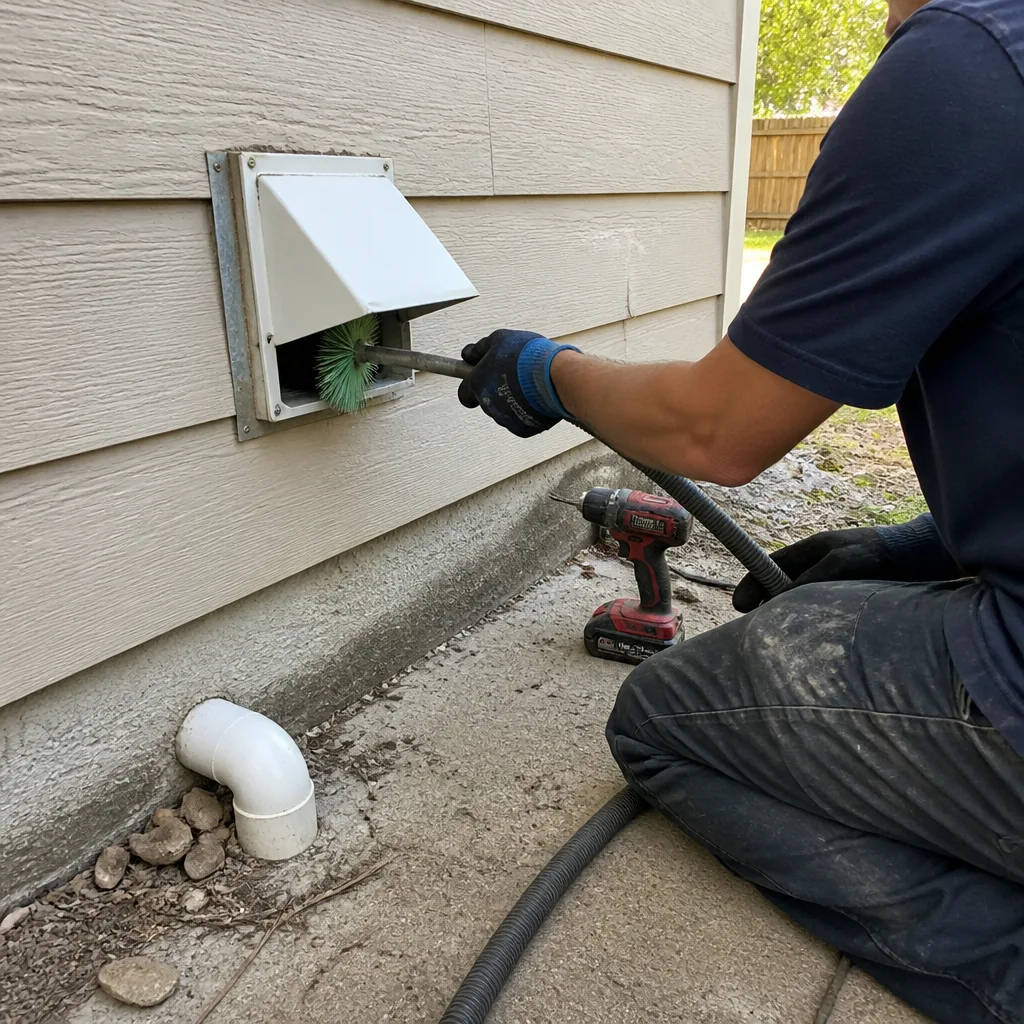
- Dryer lint trap and duct access point cleaning. Clean the lint trap after every load. Then, once a year, disconnect the dryer and vacuum the first few feet of duct where the dryer connects. This is the one spot where a shop vac genuinely helps, because lint accumulates right there, and it’s a leading cause of dryer vent cleaning in Austin calls we get.
Number four deserves emphasis: Austin homes often route dryer vents through attics or crawl spaces, and that first bend near the dryer is where fires start. For a complete safety walkthrough, see our Dryer Vent Cleaning Maintenance Checklist for Austin Homeowners. If you’re not comfortable pulling your dryer out, call us. This is the one DIY task where doing it wrong has genuinely dangerous consequences.
Why Flex Duct Changes Everything in Austin
If your Austin house was built after 1990, there’s a very good chance most of your ductwork is flex duct. It’s the silver, accordion-style tubing you can see snaking through attics across the city, from Steiner Ranch to Mueller to Circle C. Flex duct has a fiberglass insulation layer wrapped around a thin plastic inner liner, all held inside a foil outer jacket.
Here’s the problem: that inner liner is roughly the thickness of a grocery bag. We’ve seen homeowners run a rotary brush drill attachment they bought online into a flex duct run, and the bristles grabbed the liner and twisted it. Result: a torn inner liner, compromised insulation, and a duct that now leaks conditioned air into the attic. That’s a $300 to $800 repair per run, depending on length and access.
And it’s not just brushes. Even a standard shop vac hose pushed too far into a flex duct can snag the liner and collapse it. Once that liner is compromised, the duct loses its inner surface integrity, airflow drops, and the manufacturer warranty is void. Duct manufacturers explicitly state in their installation documentation that they do not warrant damage from unprofessional cleaning attempts.
Austin’s heat makes this worse. Flex duct in an attic that reaches 140 degrees in August is already brittle. The plastic inner liner loses flexibility over years of thermal cycling. What might survive a careful DIY brush in a mild climate can tear apart in a Travis County attic. We’ve replaced ducts in Round Rock, Pflugerville, and south Austin where the liner had crumbled from age, and a homeowner’s cleaning attempt finished the job.
The takeaway: if you can see flex duct when you look into your attic, the only thing you should put inside it is a professional’s equipment designed for negative-pressure extraction. Everything else is a gamble where the house loses.
The Equipment Gap: Shop Vac vs Professional Extraction
Most homeowners assume duct cleaning is just vacuuming with extra steps. It’s not. Here’s what actually differs between the equipment you can buy at Home Depot and what a professional Austin duct cleaning service runs.
A shop vac moves about 80 to 120 cubic feet per minute of air. It’s designed to pick up sawdust from a workshop floor. The debris in your ducts includes fine dust, pollen, pet dander, and construction material fragments, all of which have settled into the walls of the duct, not just sitting loose on the bottom. A shop vac’s airflow is simply not enough to pull that material off the surfaces where it’s adhered. It’s like trying to rinse a dirty pan under a faucet when you need a pressure washer.
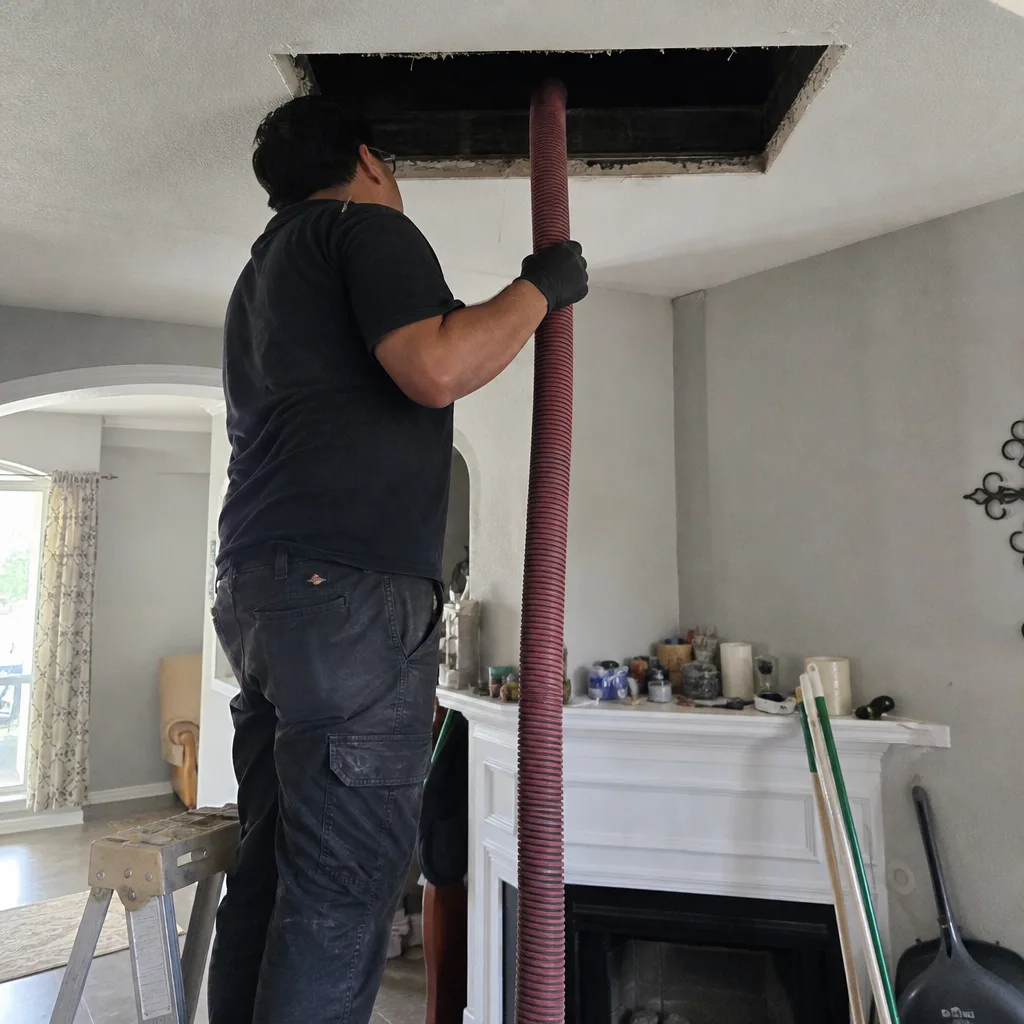
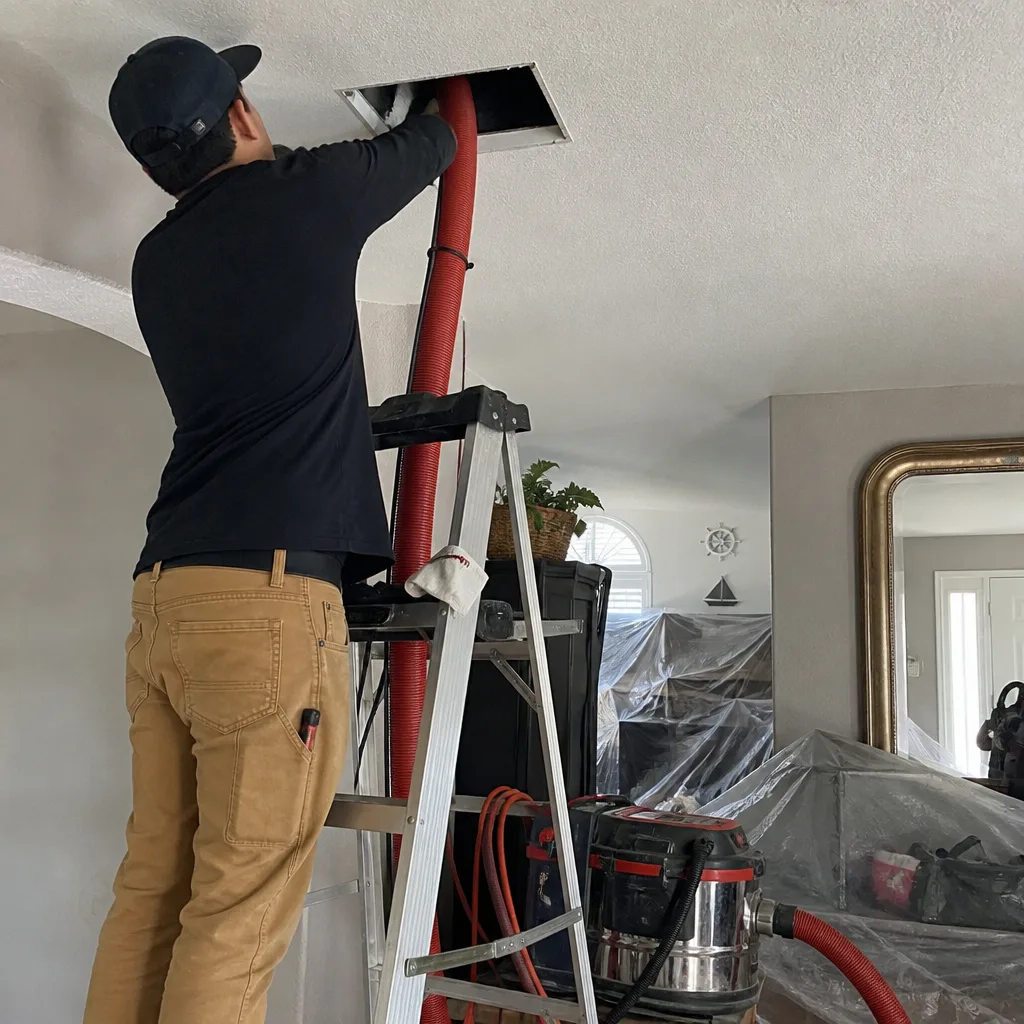
A professional system combines two things a shop vac cannot replicate. First, mechanical agitation: a Rotobrush rotary brush system physically scrubs the walls of metal duct and rigid trunk lines. The brush loosens caked-on debris that air alone won’t move. Second, negative-air extraction: a Nikro HEPA-filtered vacuum unit is connected to the supply or return plenum, pulling air through the entire system at 4,000 to 5,000 CFM. Negative-pressure extraction means the loosened debris goes straight into the vacuum, not back into your living room. The system is sealed with Abatement Technologies containment so the dust you’re removing doesn’t recirculate through the house while the work happens.
HEPA filtration matters too. A Nikro unit’s HEPA filter captures particles down to 0.3 microns. Your shop vac, unless you’ve specifically bought a HEPA filter for it, is blowing the finer dust right back out the exhaust port and into the room you’re standing in. That fine dust is exactly the respiratory irritant you’re trying to remove.
There’s also reach. A shop vac hose is typically 6 to 8 feet. The furthest register in a 2,500 square foot Austin house can be 40 feet or more from the air handler. Professional equipment connects at the plenum and pulls through the entire run. You can’t clean what you can’t reach.
Three Situations Where DIY Makes It Worse
Some homeowners think duct cleaning is always a cosmetic task. It’s not. In three specific situations, attempting to clean the ducts yourself actively spreads the problem rather than solving it. Here’s where the line sits.
1. Visible Mold
If you see green, black, or white growth on the inside of a register, around a supply boot, or on visible duct surfaces, do not put a vacuum hose anywhere near it. Vacuuming mold spores without proper HEPA containment aerosolizes them. You’ll take a localized problem and distribute it through every room in the house. Austin’s humidity, especially in spring and early summer, makes mold growth common in AC systems. Proper remediation requires professional cleaning with HEPA-sealed equipment and, in many cases, replacement of the affected duct section. This is also a health issue, not just a maintenance issue.
2. Rodent Evidence
If you see droppings, nesting material, or hear activity in your ducts, that’s a contamination event. Rodent droppings carry hantavirus risk, and their nesting material can contain bacteria and parasites. Cleaning this yourself with a shop vac risks aerosolizing those pathogens into your living space. Professional cleaning in these cases includes full PPE, HEPA containment, and often sanitizing agents applied to the interior surfaces. Austin’s older neighborhoods, parts of Hyde Park, Brentwood, and Crestview, have mature trees and older construction that make rodent intrusion more common.
3. Post-Renovation Debris
If you just renovated, and the contractor didn’t seal the ducts during drywall work, you have drywall dust inside the system. This is fine particulate silica dust, and it will destroy your blower motor over time. Drywall dust also cakes onto the evaporator coil and reduces efficiency. A shop vac at the register will get a tiny fraction of it. Professional cleaning with full-system negative-air extraction pulls the dust from the entire run and protects the air handler. In our experience across Cardinal Air Duct Austin home service calls, post-renovation cleaning is one of the most common reasons Austin homeowners call us, especially in neighborhoods like Allandale and Rosedale where mid-century homes are constantly being remodeled.
The Cost-Benefit Breakeven: When Professional Pays for Itself
Let’s talk dollars, because that’s what actually matters. A professional air duct cleaning in Austin typically runs $350 to $600 for a standard single-family home up to about 3,000 square feet. Larger homes, homes with multiple units, or homes with significant contamination run higher, but you should get a written price before any work starts.
What does that $350 to $600 actually buy you in return? Here’s the breakeven math.
- Energy savings. A system with debris-caked ducts and a dirty evaporator coil runs 10 to 15 percent less efficiently. On an Austin summer electricity bill that might run $250 to $400 a month, that’s $25 to $60 a month in avoidable cost. Over a single cooling season, professional cleaning can recover a third to half its cost in energy alone.
- Filter longevity. A dirty system loads filters faster. If you’re burning through a $15 filter every month instead of every three months, that’s $120 a year in filters. Clean ducts extend filter life meaningfully.
- Equipment lifespan. The single most expensive component in your HVAC system is the compressor, and the fastest way to kill a compressor is restricted airflow from dirty coils and ducts. A new compressor in Austin runs $1,500 to $2,800 installed. A $400 duct cleaning that adds three years to your compressor’s life has already paid for itself several times over.
- Health and cleanliness. This one’s harder to quantify, but if you have allergies or asthma in the household, removing the dust reservoir inside your ducts changes the indoor air profile immediately. Our customers with allergies notice the difference within a week, especially during Austin’s oak pollen season in March and April.
The honest breakeven point we tell homeowners: if your home is over 1,800 square feet with the original ductwork from construction, and you’ve lived there more than five years without a cleaning, professional cleaning pays for itself within 18 to 24 months through energy and filter savings alone. If you’ve had recent renovation, a pet population, or a smoker in the house, that timeline shortens. If your home is under 1,200 square feet, relatively new, and you’ve maintained filters diligently, your ducts are probably in decent shape, and your money is better spent on a good filter upgrade and basic register maintenance.
What Professional Duct Cleaning Actually Looks Like
If you’ve never had your ducts professionally cleaned, here’s what should happen, step by step. We’re describing the professional standard, because we think you should know what to look for from any company, including ours. For help vetting providers, read our How to Hire a Air Duct Cleaning Contractor in Austin: A Step-by-Step Guide.
- Inspection first. The technician should inspect your system before quoting: visual check of registers, a look at the air handler and coil, an assessment of duct type and condition. If a company quotes you a price over the phone without seeing the system, that’s a red flag.
- Setup and containment. The technician seals off supply and return openings, covers furniture and flooring near the work area, and connects the negative-air machine. In hot weather, they may need to access your attic, so expect some heat intrusion. We use Abatement Technologies containment equipment to keep the dust from migrating.
- Agitation and extraction. With the negative-air machine pulling through the system, the technician works through each run with a rotary brush or air whip. This is where Rotobrush equipment does what a shop vac can’t: the brush knocks debris loose, and the negative air immediately pulls it out of the system.
- Coil and blower cleaning. A proper cleaning includes the evaporator coil and blower assembly, not just the ducts. This is where the efficiency gains come from. If a company only cleans the ducts and never touches the coil, you’re getting half a job.
- Post-cleaning verification. After cleaning, the technician should show you what was removed, and ideally provide photos. We provide before-and-after photos on every job as part of how we work. You should see what came out of your system.
- Written guarantee. You should leave with a written guarantee on the work. Our 365-Day Done Right Promise applies to every job: if the work isn’t right within 365 days, we return and correct it at no charge. No fine print, no exclusions.
For more on what professional HVAC system work involves beyond the ducts themselves, see our guide to HVAC cleaning in Austin.
Common Mistakes to Avoid
- Using a rotary brush attachment inside flex duct. This is the single most expensive DIY mistake we see. The brush tears the inner liner, and you’re now paying for duct replacement, not cleaning. If your Austin home was built after 1990, you almost certainly have flex duct.
- Believing the “we’ll clean your whole house for $99” ad. That price is a loss leader designed to get a technician in your door, where the real invoice materializes. Most whole-system cleanings on a typical Austin home cost $350 to $600. If the advertised price is below $200, the math doesn’t work.
- Vacuuming mold or rodent-contaminated ducts yourself. You’ll aerosolize the contamination and spread it through the house. This is a containment job with proper PPE and HEPA equipment, not a weekend project.
- Neglecting the dryer vent while obsessing over the HVAC ducts. Your dryer vent is a fire hazard, not an air quality issue. Austin homes with long vertical dryer vent runs through attics are particularly vulnerable to lint accumulation. We handle this in our dryer vent cleaning in Austin service, and it’s a safety issue that deserves the same attention as your HVAC ducts.
- Using a fogger or sanitizer spray as a substitute for cleaning. Applying a sanitizer to dirty ducts without removing the debris first doesn’t clean anything. It just makes the dirt damp. The debris still needs physical removal.
- Waiting for visible dust to call a professional. By the time you see dust puffing from a register or smell mustiness when the AC kicks on, the buildup has been accumulating for years. The system that gets regular maintenance every 3 to 5 years costs less to clean and runs more efficiently in between.
When to Call a Professional
Call a professional if you see mold or rodent evidence in your ducts, if your home has flex duct and you’ve never had the system cleaned, if you’ve completed a renovation without sealed ducts, if your energy bills have crept up without explanation, or if anyone in the house has respiratory issues that worsen when the HVAC runs. Cardinal Air Duct Austin offers free estimates throughout Austin, Round Rock, Pflugerville, Cedar Park, and the surrounding metro. Call (940) 283-6595 and a live person answers, 24/7. You’ll get a written price before any work starts, and a live trackable arrival time when you book.
Frequently Asked Questions
Professional air duct cleaning in Austin typically costs $350 to $600 for a standard single-family home up to about 3,000 square feet, with larger homes or systems with significant contamination running higher. You should always receive a written price before any work begins. Call (940) 283-6595 for a free estimate specific to your home.
You can vacuum the visible portion of register openings and wipe down grilles with a shop vac, but that’s surface-only cleaning and doesn’t touch the interior of the duct runs. A shop vac produces about 80 to 120 CFM of airflow, while professional negative-air machines produce 4,000 to 5,000 CFM. The physics simply don’t allow a shop vac to remove adhered debris from duct walls.
For most Austin homes, professional air duct cleaning every 3 to 5 years is appropriate, with more frequent cleaning for homes with pets, smokers, allergy sufferers, or recent renovation. Austin’s climate contributes to faster dust and pollen accumulation, especially during the spring oak season. If you’ve never had your ducts cleaned and you’ve been in the home more than five years, it’s likely time.
Watch for visible dust puffing from registers when the system starts, musty odors when the AC runs, unexplained increases in energy bills, filters that clog unusually fast, or visible mold or debris around register openings. Any combination of these signs indicates buildup that surface cleaning won’t address. If you see mold or rodent droppings, don’t attempt DIY cleaning at all.
Yes, because the financial case for duct cleaning is primarily about equipment protection and energy efficiency, not allergies. A clean system with a clean evaporator coil runs 10 to 15 percent more efficiently and extends the life of your compressor, which costs $1,500 to $2,800 to replace in Austin. The allergy benefits are a bonus, not the whole story.
Because the equipment and containment standards matter, and because the price you’re quoted should be the price you pay. Professional cleaning includes HEPA-filtered negative-air extraction, rotary brushing appropriate to your duct type, coil and blower cleaning, and a written guarantee. Cheap advertised specials typically exclude the coil, skip the containment, and inflate the invoice once the technician is in the door. Look for a written price upfront and a written guarantee after. Cardinal Air Duct Austin provides both on every job, backed by our 365-Day Done Right Promise. Call (940) 283-6595 to get your written quote.
The Bottom Line
DIY duct maintenance is real and useful: change your filters, vacuum your registers, wipe your grilles, and clean your dryer lint trap. For more guides & resources, explore our blog. Those tasks genuinely help. But the moment you’re talking about cleaning the inside of duct runs, especially flex duct, the equipment gap is too wide to bridge, and the risk of permanent damage is real. Austin’s climate, with its 100-degree attics and humidity-driven mold growth, makes professional cleaning both a health consideration and a financial one. If your ducts are due, get them done right. Get a written price, get before-and-after photos, and get a guarantee that lasts a full year.
Written by Omar Haddad, Owner at Cardinal Air Duct Austin, serving Austin since 2005.
See the difference
 Before
 After
After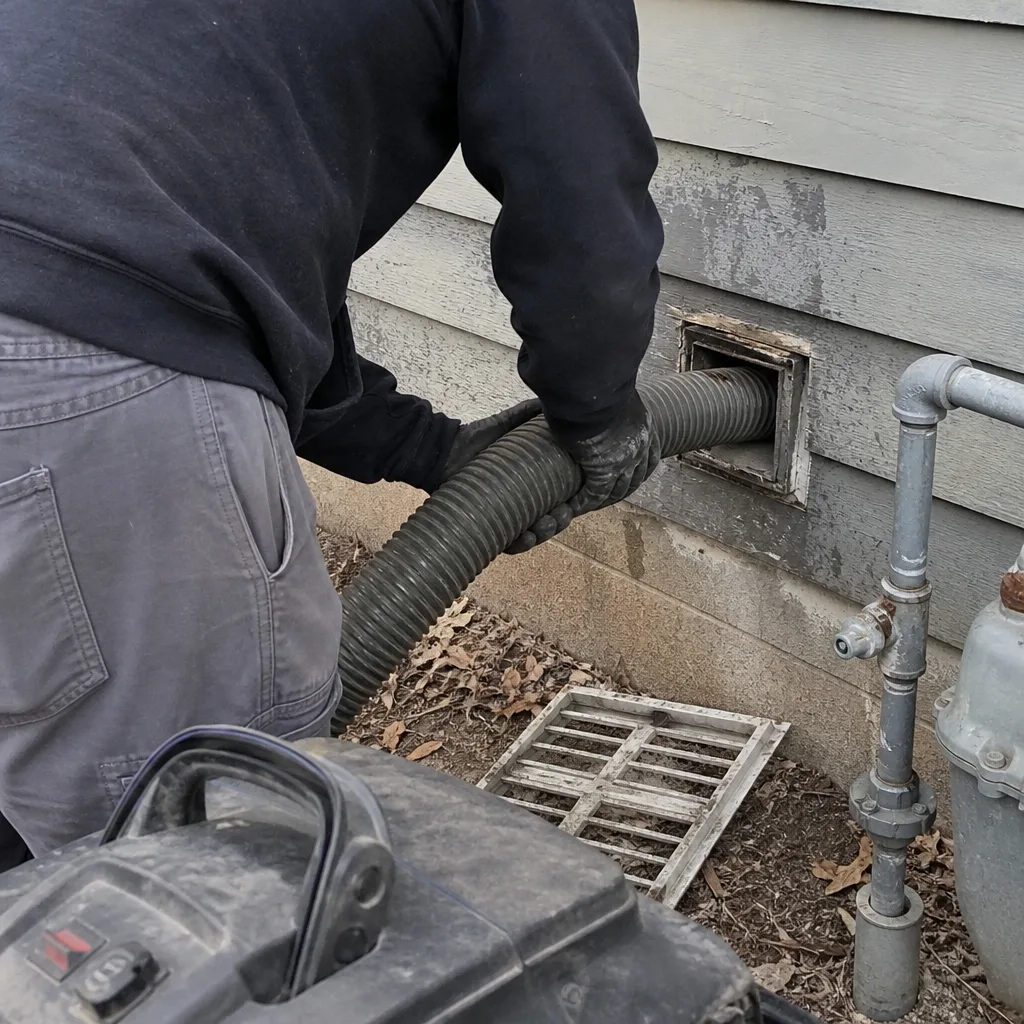 Before
 After
After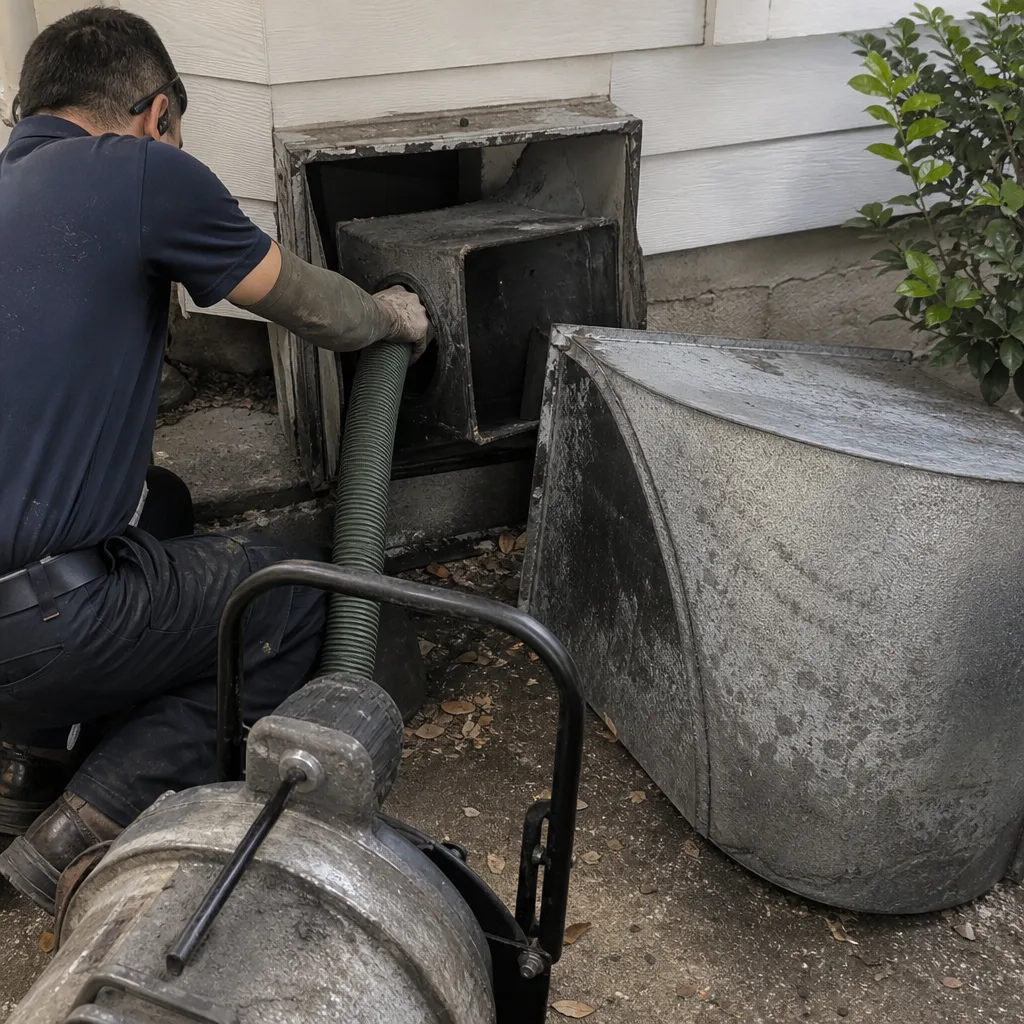 Before
 After
After