
Last updated October 15, 2026
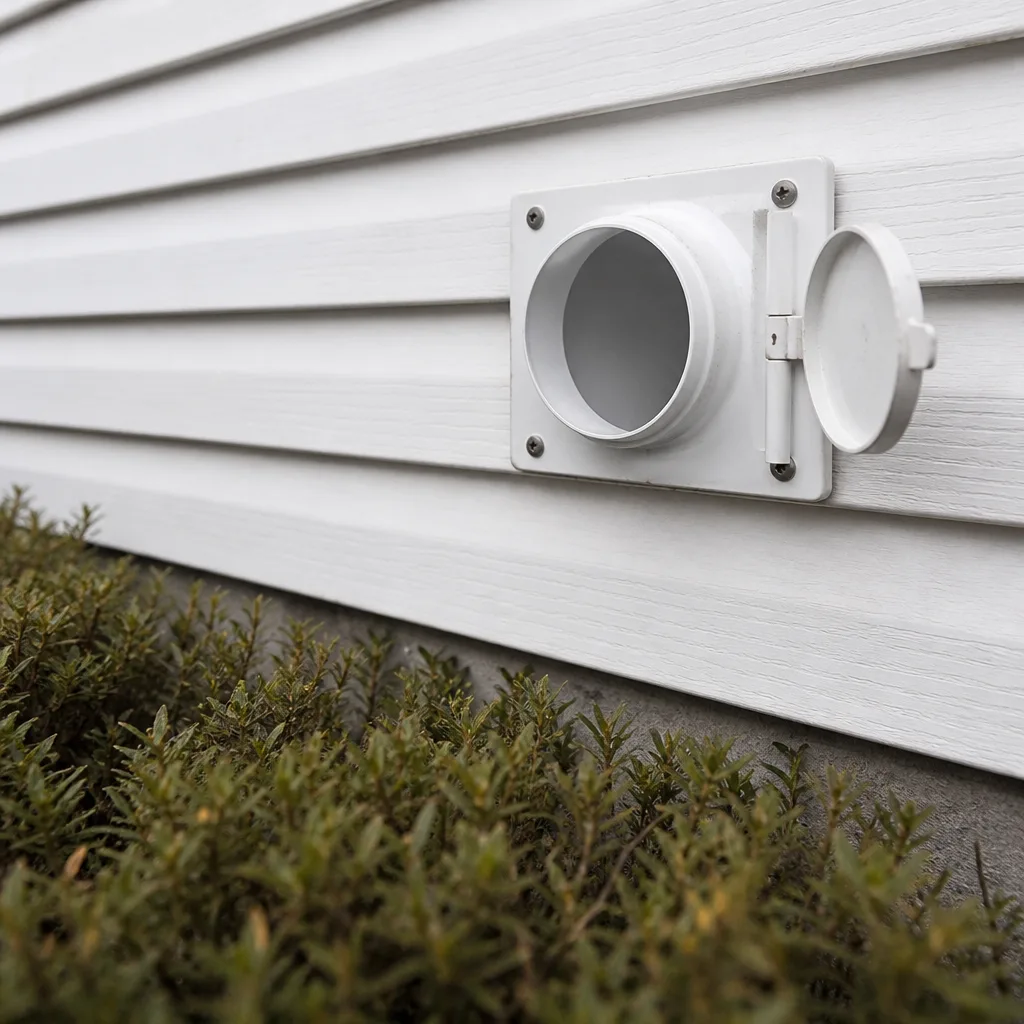 Dryer vent cleaning
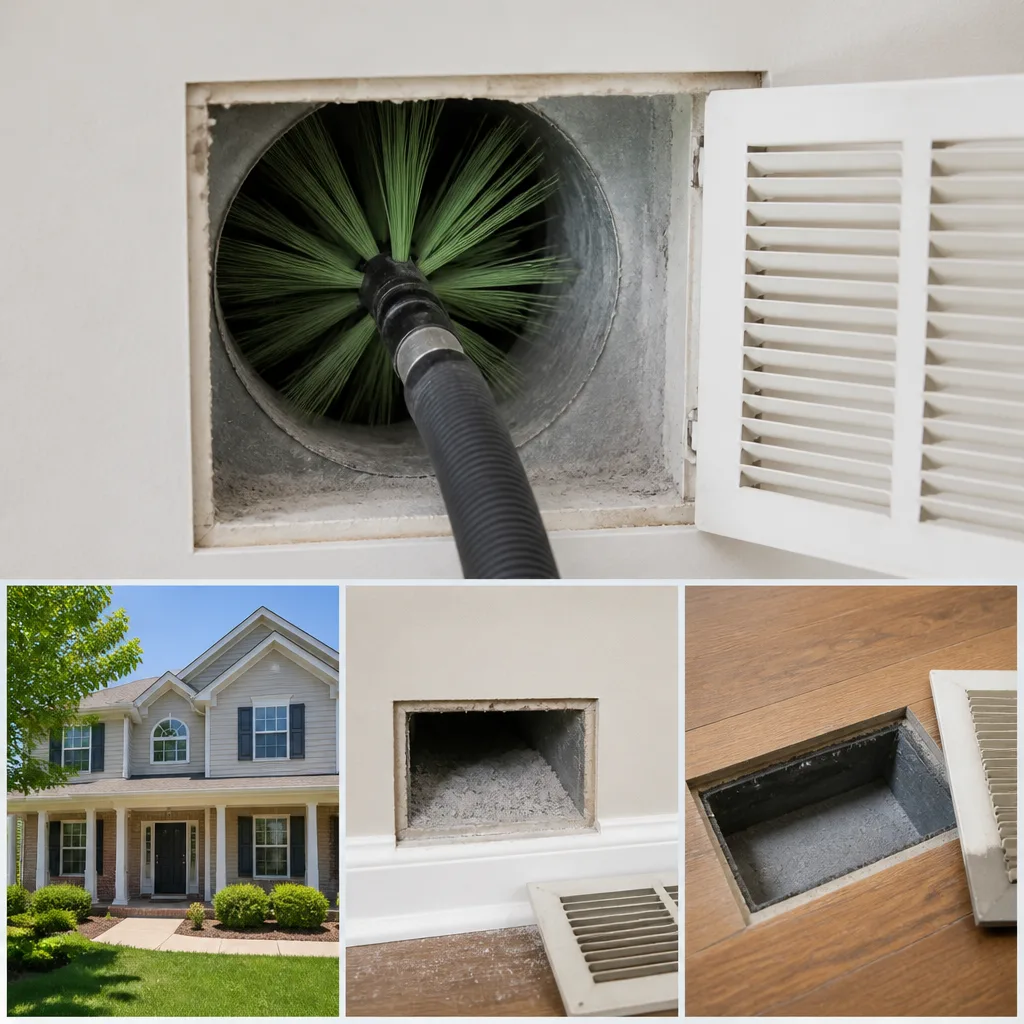 Whole-home duct cleaning
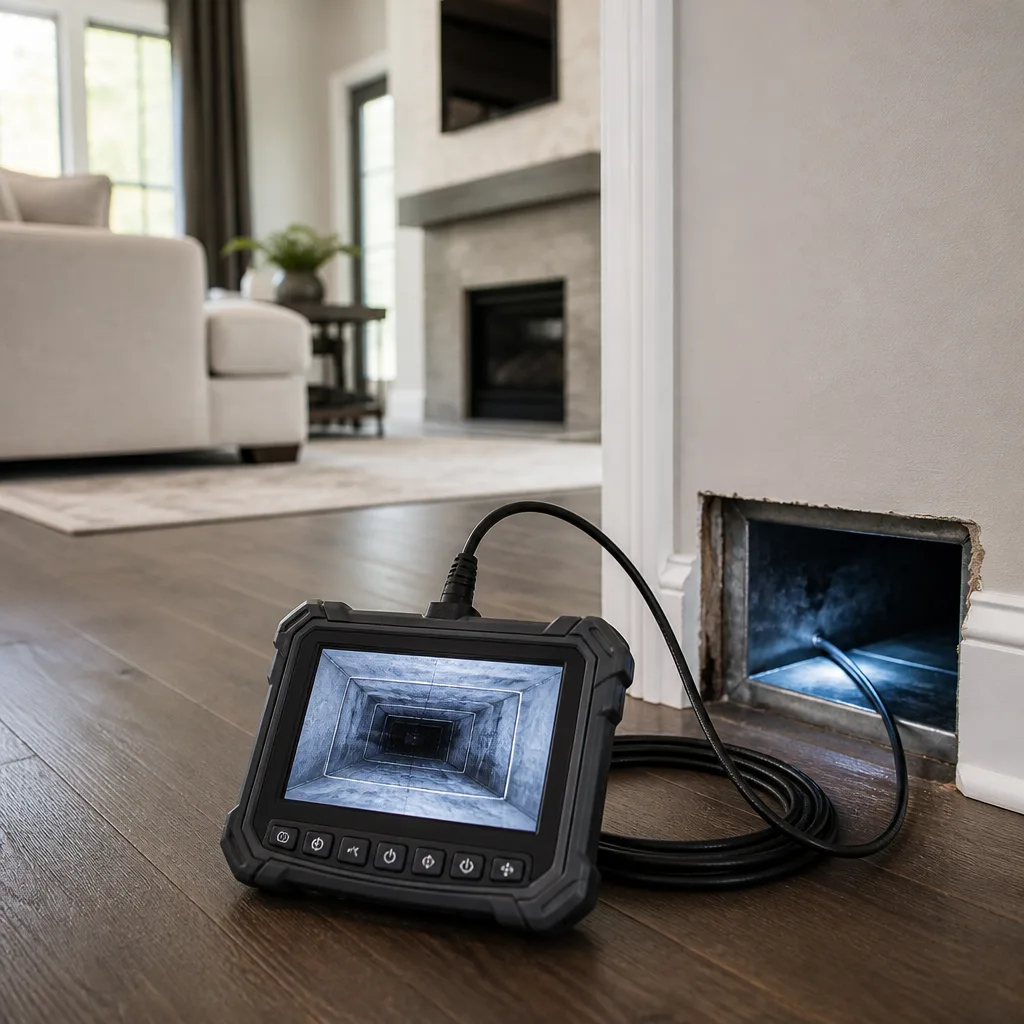 Camera inspection
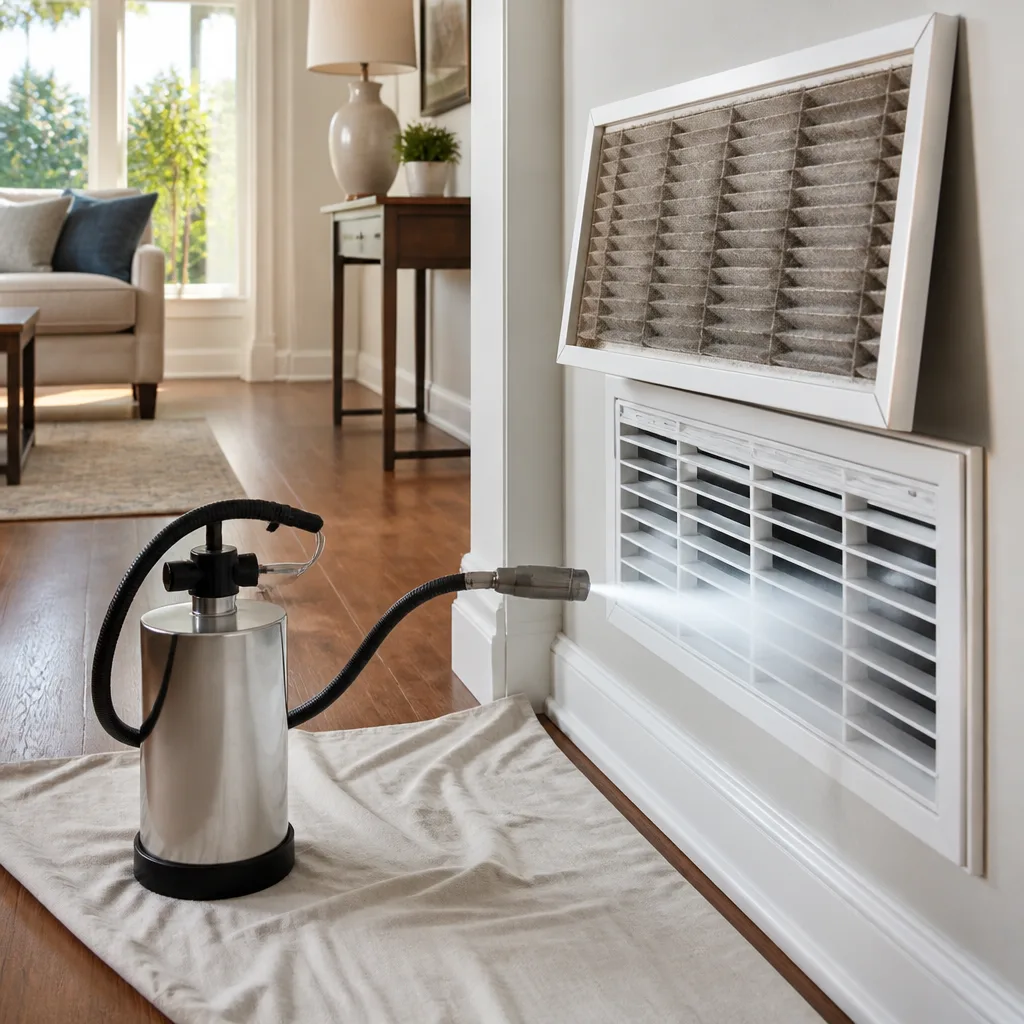 Sanitizing & deodorizing
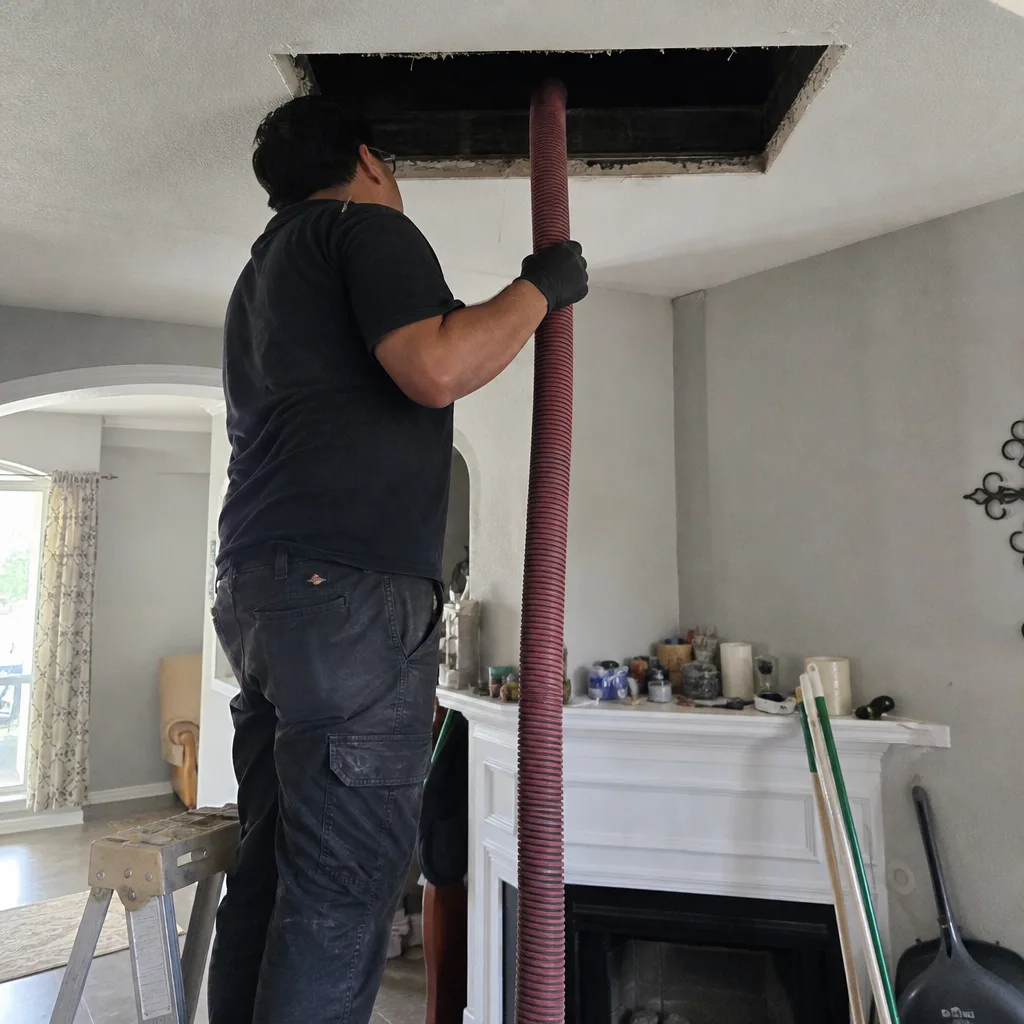
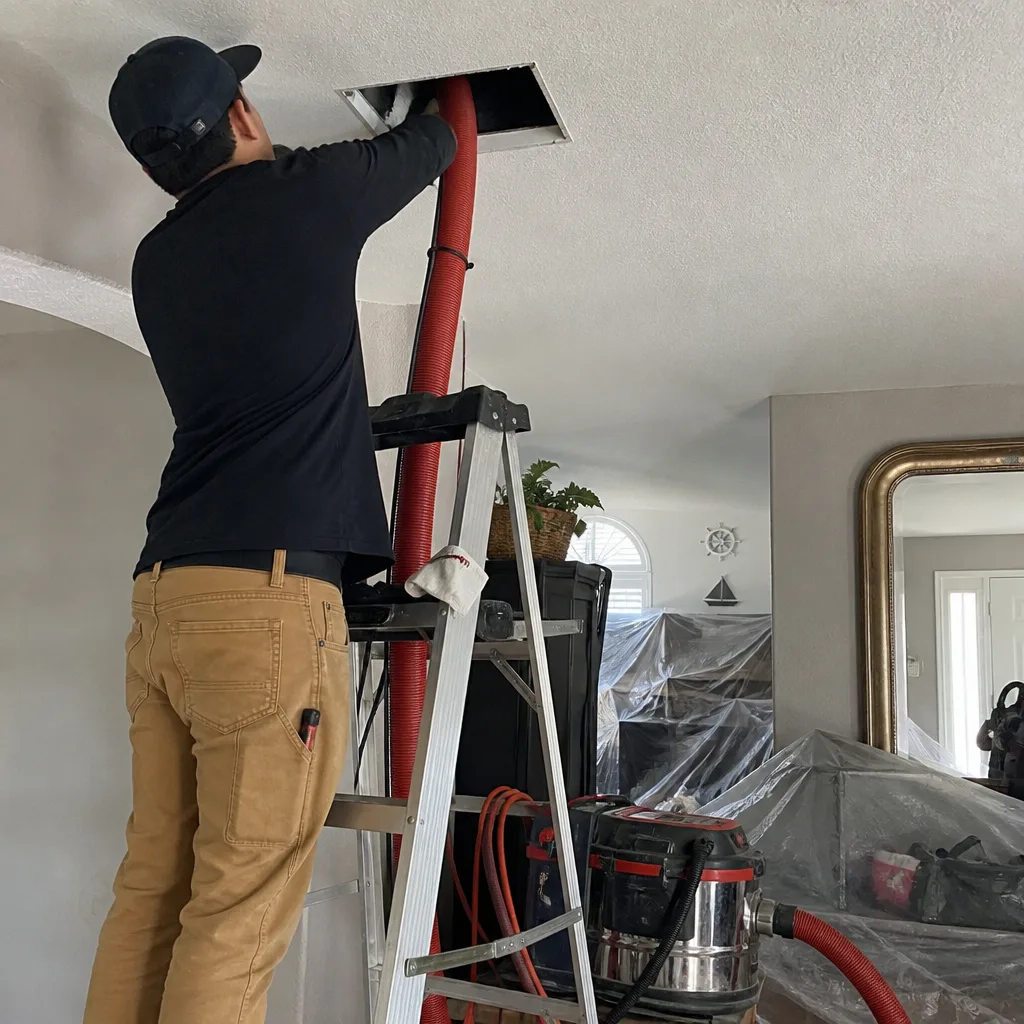
Whole-system duct and dryer vent check with before-and-after photos - you see exactly what came out of your vents
That "$99 whole-house special" is a bait ad - the real number appears once they are in your hallway, or the "clean" is a shop-vac at the register. We photograph the inside of your ducts before and after instead.
Dryer Vent Cleaning Maintenance Checklist for Austin Homeowners
Dryers cause roughly 15,000 U.S. house fires every year, and the No. 1 cause isn’t a faulty dryer. It’s a vent that hasn’t been cleaned since the Clinton administration. In Austin, the problem runs deeper than neglect. Our long cooling season means dryers work hard from April through October, pushing moisture-laden lint through vent runs that were often installed decades ago in homes across Hyde Park, Bouldin, and Crestview. This guide walks you through a complete maintenance checklist built for Austin’s specific climate, housing stock, and laundry habits. You’ll learn what to check monthly, what to inspect seasonally, what it costs to fix problems early, and when a professional cleaning makes financial sense.
Styles & brands we work with
Quick Answer
Dryer vent cleaning in Austin should happen at least once a year for most households, and twice a year if you run more than five loads weekly or have a vent run longer than 15 feet. The maintenance checklist boils down to four habits: clean the lint trap after every load, inspect the exterior vent flap monthly, schedule a professional Rotobrush or HEPA vacuum cleaning annually, and replace any foil accordion duct with rigid metal immediately. A professional our Dryer Vent Cleaning services in Austin typically costs $120 to $220 for a standard single-story vent run under 15 feet.
Table of Contents
- The Monthly Checklist: What Austin Homeowners Should Check
- Austin’s Two Heavy Laundry Seasons: A Seasonal Cleaning Schedule
- How to Measure Your Vent Run and Why Code Matters
- Foil Accordion vs. Rigid Metal: The 1950s Housing Stock Problem
- How Austin’s Humidity Makes Lint Clogs Worse
- What a Professional Rotobrush Cleaning Actually Includes
- Warning Signs Your Dryer Vent Is Failing Right Now
- Common Mistakes to Avoid
- When to Call a Professional
- Frequently Asked Questions
- The Bottom Line
The Monthly Checklist: What Austin Homeowners Should Check
A monthly dryer vent check takes less than ten minutes and catches most problems before they become expensive or dangerous. Here’s the routine we recommend to homeowners in Austin, where cottonwood pollen in spring and dust from summer construction both add to the lint load.
- Clean the lint trap after every load, not just monthly. Pull the screen, roll the lint off with your fingers, and reinsert it. If water beads on the screen instead of passing through, wash it with warm soapy water and let it dry. A coated lint screen restricts airflow from the very first minute of every cycle, and dryer sheets are the usual culprit.
- Inspect the exterior vent flap. Walk outside and look at the vent hood where it exits the house, usually on a side wall or roof. The flap should open freely when the dryer runs and close fully when it stops. In Austin, mud dauber wasps and birds love building nests inside vent openings from March through October. A stuck flap is a standing invitation.
- Run a full load and time it. If a standard load of towels takes longer than 45 to 50 minutes on high heat, the vent is restricting airflow. Modern dryers sense moisture and will keep extending the cycle. A 70-minute dry time doesn’t mean the dryer is working harder, it means the vent is working worse.
- Check the area behind the dryer. Pull the dryer out about six inches and look at the transition duct, the short connector between the dryer and the wall. In Austin garages and hall closets where space is tight, this duct gets crushed. A kinked or flattened transition duct constricts airflow at the most critical point in the system.
- Smell the exhaust while the dryer runs. Standing near the exterior vent during a cycle, the air should smell like clean laundry. A musty or burning odor means lint is smoldering inside the vent somewhere, or condensation is pooling and growing mold. Either way, stop using the dryer and schedule a professional inspection.
We know from years of cleaning dryer vents in Austin that the monthly check is the single highest-leverage habit a homeowner can build. It costs nothing, and it reveals problems when they’re cheap to fix. Neglect it, and problems reveal themselves when they’re expensive or destructive.
Austin’s Two Heavy Laundry Seasons: A Seasonal Cleaning Schedule
Austin doesn’t run on the same seasonal rhythm as most of the country. We have two dramatic spikes in laundry volume: late August through September, when school starts and sports uniforms pile up, and mid-November through early January, when holiday guests and bedding loads multiply. Both spikes hit after months of continuous dryer use in humid conditions, which is exactly when vents are already most loaded.
Back-to-School Season: Late August through September
The first semester rush means daily loads of sports gear, towels, and school clothes. The dryer is running five or six days a week, often with tighter turnaround times. Schedule a professional vent cleaning in late July or early August, before the spike. The dryer runs more efficiently when the vent is clear, and you’ll notice shorter dry times during the busiest laundry weeks of the year every single cycle.
During this season, check the exterior vent flap twice a month instead of once. Mud daubers are most active in late summer in Austin, and the extra laundry volume means more lint exiting the system for them to build on. If the flap sticks open even slightly, clean the area and re-check the next day. If it still sticks, a professional cleaning is overdue.
Holiday Season: November through January
Holiday visitors mean guest bedding, extra towels, and continuous cleaning cycles. This is also when dryer fires peak nationally, because cold weather keeps homes sealed tight and dryer loads are at their highest. Schedule a second professional vent cleaning in late October or early November if your household runs more than five loads per week during the fall. The cost is modest compared to hosting a house full of people without a working dryer.
Between these two seasons, a monthly checklist catches most problems. But Austin’s climate means lint never stops accumulating, even during lighter months. A vent that sat untouched through the spring will carry a compacted layer of humidified lint into the summer, which is harder to remove than the dryer flakes of a dry climate like Phoenix or El Paso.
How to Measure Your Vent Run and Why Code Matters
This is the section most dryer vent guides skip, and it’s the one most likely to save an Austin homeowner from a preventable fire. The International Residential Code, which Austin enforces with local amendments, specifies how long a dryer vent run can be and how many turns it can make. Measuring your own vent run before a technician arrives tells you exactly what you’re dealing with.
The Rule
A dryer vent may be a maximum of 35 feet long in total. Every 90-degree elbow counts as 5 feet against that total. Every 45-degree elbow counts as 2.5 feet. So a vent that runs 20 feet with two 90-degree elbows is effectively 30 feet under code. A vent that runs 15 feet with four 90-degree elbows is effectively 35 feet, right at the limit. Anything longer than 35 equivalent feet is prohibited by code, and for good reason: the dryer’s blower simply cannot push lint and moisture effectively beyond that distance. The result is condensation inside the vent, lint caking, and airflow dropping to dangerous levels.
How to Measure Your Own Vent
- Count the elbows. Walk the vent path from the dryer to the exterior wall. Every visible turn in the pipe is an elbow. Count the 90s and 45s separately. Attics in Austin bungalows built from the 1940s through the 1970s often have two or three extra bends where the vent snakes around framing members.
- Estimate the straight runs. Measure wall segments or use a tape measure if the vent runs through an unfinished attic or garage. The distance from the dryer to the wall cap is what counts, not the interior wall thickness alone.
- Do the math. Add the straight feet plus 5 feet per 90-degree elbow and 2.5 feet per 45. If the total exceeds 35, the vent violates code and needs rerouting or a booster fan. A professional duct cleaning company can install a code-compliant booster fan to restore proper airflow without tearing out drywall.
This is not theoretical. In our experience cleaning dryer vents in Austin, vent runs that exceed code limits are the single most reliable predictor of a future lint fire. The run may have been acceptable when the house was built with a less powerful dryer in 1968, but a modern high-efficiency dryer pushes air with much more force, and that force hits the same old vent run at exactly the wrong angle.
Foil Accordion vs. Rigid Metal: The 1950s Housing Stock Problem
Austin’s older neighborhoods, Hyde Park, Bouldin Creek, Crestview, Allandale, Travis Heights, are filled with homes built between 1945 and 1975. Many still have original dryer vent systems made from foil accordion duct, the flexible silver tubing that crinkles when you touch it. The problem with foil accordion duct is baked into its design: the corrugated ridges collect lint on every single cycle, reducing airflow with each load. After a few years, the interior surface looks like a shag carpet made of flammable material.
Modern building code and the dryer manufacturers themselves require rigid metal duct, either smooth-wall aluminum or galvanized steel. The smooth interior surface moves air and lint through the system efficiently, without giving lint anyplace to grab hold. A full replacement of foil accordion duct with rigid metal typically runs $150 to $500 in Austin depending on run length and accessibility, and it’s the single best upgrade you can make to an older home’s dryer system.
One nuance worth knowing: semi-rigid flexible metal duct is acceptable for the transition duct, the short connector between the dryer and the wall. This is the corrugated aluminum tubing, not the foil sleeve. Semi-rigid metal is the current code-compliant choice for tight spaces where a rigid elbow won’t fit. But from the wall onward, the entire run should be a smooth, rigid metal pipe. If a technician or handyman suggests replacing your entire run with flexible foil, stop and call someone else.
Homeowners in Austin’s older homes should also know that many of these original vent runs terminate on the roof, not the wall. Roof vents are legal but should be avoided when possible because they require more vertical runs and more turns, both of which shorten the effective code limit. They also put the vent opening where it’s hardest to inspect and clean. If you buy an older Austin home, check the vent termination point before the first load goes in.
How Austin’s Humidity Makes Lint Clogs Worse
Lint in a dry climate behaves differently than lint in a humid one. In Phoenix, lint stays dry and fluffy. It’s easier to dislodge and moves through the vent as loose debris. In Austin, our subtropical humidity adds a compounding factor: moisture from the drying clothes condenses inside the vent, and that moisture cements lint into a dense, fibrous mat that clings to the pipe walls. This process is called lint compaction, and it’s one reason Austin dryer vents clog faster than vents in Dallas or San Antonio, despite having similar laundry habits.
The mechanics are straightforward. Warm, moisture-rich air from the dryer hits a cooler vent pipe, especially in air-conditioned walls or attics where the vent runs through chilled space. Water condenses on the pipe walls. Lint passing through sticks to the wet surface and dries in place. The next load adds another layer, and the next, until the vent is lined with a hard, felted shell that a leaf blower or a shop vac cannot remove. Professional HEPA vacuum systems from Nikro and rotary brush systems from Rotobrush are designed specifically to break up compacted lint, grinding it loose while the vacuum extracts it simultaneously.
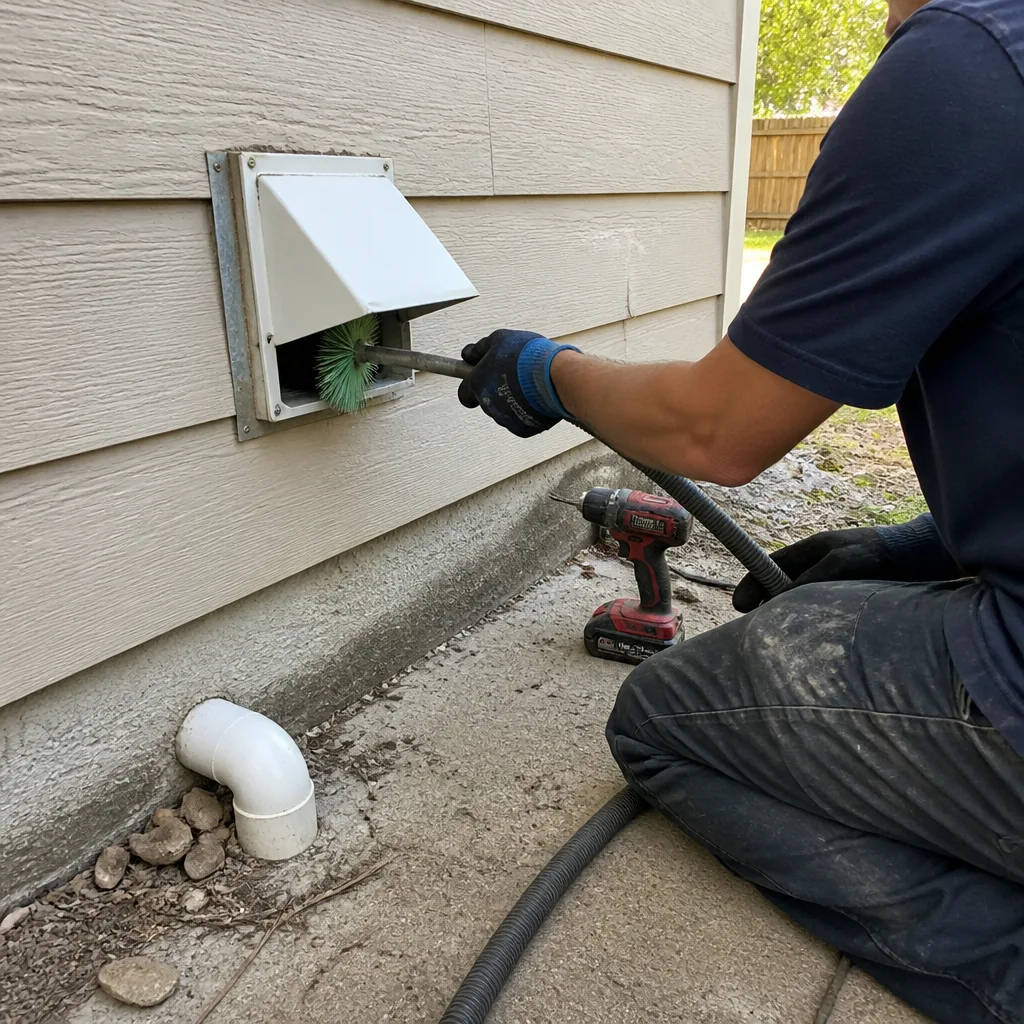
Austin homeowners should also consider that the same humidity affects the exterior vent hood. We see exterior vent flaps on south-facing walls in Austin that rust and bind within five years. The humidity speeds up corrosion, and a rusted flap that cannot open causes the same airflow restriction as a clogged vent. If the exterior flap on your home is rusted or the plastic has gone brittle from sun exposure, replace it before scheduling the cleaning. A good duct cleaning technician should inspect and report on the vent hood condition during the service.
What a Professional Rotobrush Cleaning Actually Includes
There are two levels of dryer vent cleaning in Austin, and the difference matters for what you pay and what you get. The first is a basic purge: the technician uses a leaf blower or a shop vac at one end of the vent to push or pull loose lint out. This removes the light, fluffy debris from the middle of the pipe and nothing else. The compacted lining remains. The elbows remain untouched. The exterior vent hood gets a quick visual check and the job is done in 20 minutes. Many Austin homeowners pay $79 to $99 for this service and believe their vent is clean. It isn’t.
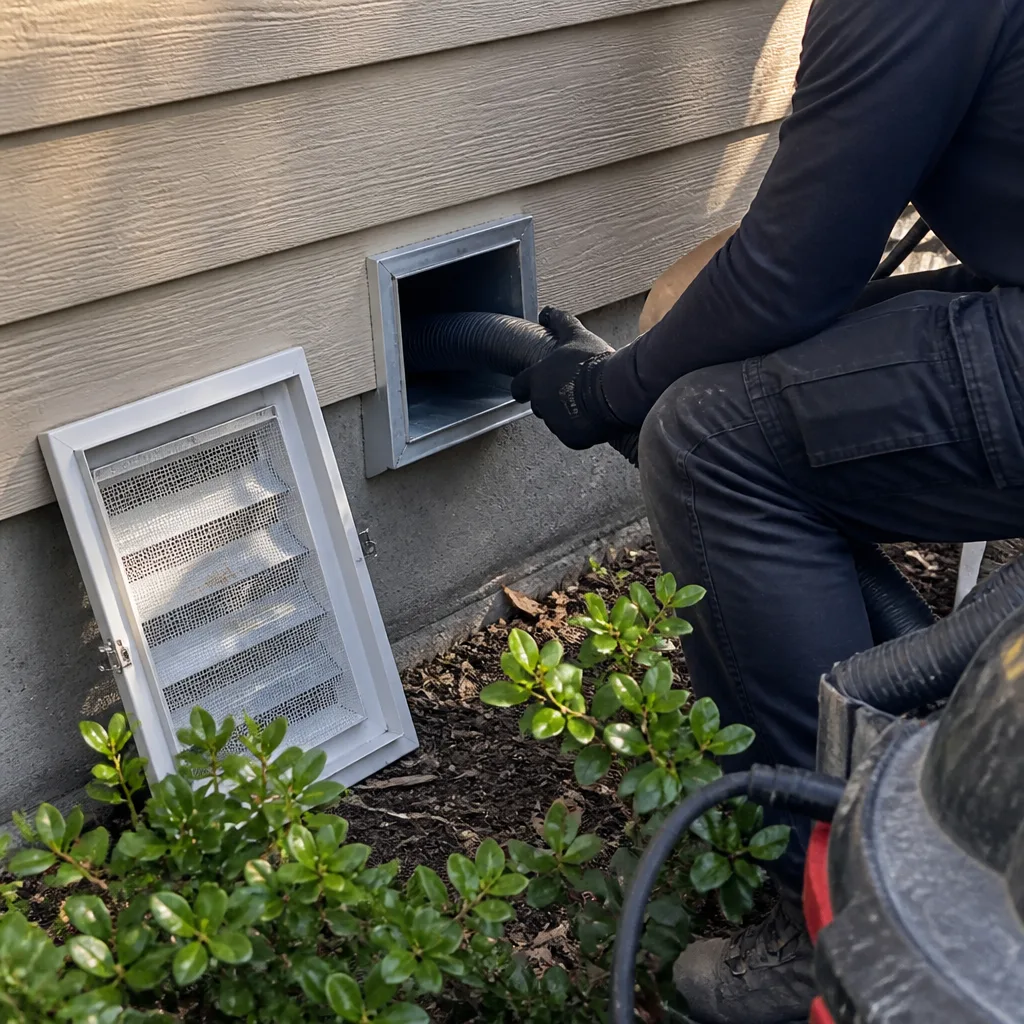
The second is a professional rotary brush cleaning, typically performed with a Rotobrush system. This is the method we use at Cardinal Air Duct Austin, and it’s what the dryer manufacturers recommend. A flexible nylon or polypropylene brush spins inside the vent run, breaking the compacted lint loose from the pipe walls. A HEPA vacuum, usually a Nikro unit, runs simultaneously to extract the debris from the pipe as the brush passes through. This negative-pressure dual system removes not just the loose lint in the middle of the vent, but the hard, felted lining that a shop vac can’t touch. The result is a vent that is clean to the metal, not just to the middle.
How to verify what you paid for: ask the technician to show you before and after photos of the interior of your vent. Any professional-grade duct cleaning company in Austin should be running a camera scope through the vent and capturing before and after footage. This is part of The Relay Visibility Guarantee at Cardinal Air Duct Austin, and it’s the single best way to know the work was actually done. If a company won’t show you photos, ask what they’re hiding. The answer is usually that they only ran a vacuum from one end and are hoping you won’t ask.
Warning Signs Your Dryer Vent Is Failing Right Now
Most dryer vent failures announce themselves weeks or months before they become fires. Here are the specific signs Austin homeowners should watch for, with the urgency level for each.
- Clothes take two full cycles to dry. This is the most common complaint we hear, and it’s almost always vent restriction. Modern dryers are efficient enough that a properly vented system dries a standard load in 40 to 50 minutes. Anything consistently longer means the air has nowhere to go. Urgency: schedule a cleaning within two weeks.
- The exterior vent flap doesn’t open when the dryer runs. If no air is escaping the vent hood, the moist air and lint are backing up inside the pipe. This increases drying time, but more importantly it’s the condition that precedes a lint fire when the built-up material ignites. Urgency: stop using the dryer and call a professional.
- The laundry room gets hot and humid during a cycle. Excessive heat in the laundry area means the dryer is radiating heat back into the room instead of pushing it outside. This points to a blockage or a crushed transition duct. Urgency: schedule a cleaning and move the dryer away from the wall to inspect the connector.
- A burning smell during or after a cycle. Lint smoldering inside the vent produces a distinct campfire-like odor. This is the immediate precursor to a full vent fire. Urgency: unplug the dryer, do not run another load, and call a professional cleaner in Austin today.
- Visible lint accumulating around the exterior vent hood. Lint outside the home means the vent isn’t clearing fully, which means it’s building up inside the pipe. Urgency: clean the visible area and schedule a professional cleaning within a month.
One pattern worth noting for Austin specifically: homes with laundry rooms in the center of the house, not on an exterior wall, are the highest-risk configuration. The vent run begins by traveling under the slab or through the ceiling joists before it ever reaches an exterior wall, and that means more elbows, more length, and more opportunity for lint to compact. Many of the worst vents we’ve cleaned in Austin started in a hallway closet or a utility room with no exterior wall access.
Common Mistakes to Avoid
- Assuming the lint trap catches everything. The lint screen catches about 75% of the lint a load produces. The other 25% travels into the vent. Over a year of regular use, that’s several pounds of material accumulating where you can’t see it.
- Using a leaf blower as a DIY vent cleaning method. A leaf blower at the interior end of the vent pushes loose lint to the exterior and nothing more. The compacted layer stays. In our experience, homeowners who DIY with a leaf blower often pack the lint tighter into the elbows, making the eventual professional cleaning more difficult, not less.
- Ignoring a long dry time because the dryer “eventually gets it done.” A dryer that takes 70 minutes instead of 45 is running twice as long as it should, which means twice the energy cost, twice the wear on the heating element, and twice the lint production. Fix the vent and the dry time drops immediately.
- Replacing foil accordion duct with more foil accordion duct. If you’re paying someone to replace ductwork in an older Austin home and they quote flexible foil, they’re quoting a material that will fail again within a few years. Rigid metal is the only correct material for the main vent run.
- Waiting until the vent is completely blocked before cleaning. A fully blocked vent is a fire hazard, but a partially blocked vent is an efficiency problem that costs money every single load. The dryer runs longer, uses more electricity, and ages faster. Annual cleaning is cheaper than the extra energy cost of neglecting it.
- Hiring based on the lowest coupon price. A $69 vent cleaning coupon in Austin typically covers a basic purge from one end that leaves most of the compacted lint in place. Honest whole-system pricing for a professional rotary brush and HEPA vacuum cleaning runs $120 to $220, and it’s the only version that actually cleans the vent.
When to Call a Professional
Call a professional dryer vent cleaner in Austin when any of these conditions applies: your dryer takes more than 50 minutes for a standard load, the exterior vent flap doesn’t open during a cycle, you smell burning during or after drying, your home has a foil accordion vent or a vent run longer than 35 equivalent feet, or you’ve lived in the home more than a year without a cleaning. These aren’t borderline cases. They’re conditions that produce lint fires. A professional cleaning takes 45 to 90 minutes and removes the compacted lint layer that DIY methods can’t touch. Dryer vent cleaning in Austin is a scheduled service, and a good company will give you a written price before the work starts. Cardinal Air Duct Austin offers free estimates for dryer vent cleaning in Austin. Call (940) 283-6595 and a live person answers, day or night.
Frequently Asked Questions
Professional dryer vent cleaning in Austin typically costs $120 to $220 for a standard single-story vent run under 15 feet with one or two elbows. Longer runs, multi-story homes, roof terminations, and heavily compacted vents may run higher. A basic one-end purge can be found for $69 to $99, but it doesn’t remove compacted lint from the pipe walls. Call (940) 283-6595 for an exact quote on your Austin home. Estimates are free.
Ask for before and after photos of the interior of your vent. Any professional dryer vent cleaning company should run a camera scope and document the work. Cardinal Air Duct Austin includes before and after photo documentation on every job as part of The Relay Visibility Guarantee. If a company won’t show you photos, they probably only ran a vacuum from one end.
Once a year is the baseline for most Austin households. I’d recommend twice a year if you run more than five loads a week, have a vent run over 15 feet, have more than two elbows in the run, or have pets that shed into the laundry. Austin’s humidity accelerates lint compaction, so vents here plug faster than in drier Texas cities. See more guides & resources for maintenance tips.
You can clean the first few feet of the transition duct behind the dryer and the exterior vent hood, but the main run requires professional rotary brush equipment to do properly. A leaf blower or shop vac cannot remove the compacted lint layer that Austin’s humidity creates. If you try, you’ll typically pack lint into the elbows and make the eventual professional cleaning harder.
The cheap quote is almost always a basic purge from one end using a leaf blower or shop vac. This removes loose lint from the middle of the pipe and leaves the compacted lining untouched. The honest whole-system price covers a rotary brush cleaning with HEPA vacuum extraction, which actually cleans the vent to the metal. Get the method written on the invoice before you agree to anything.
They’re different systems with different tools and different purposes. Air duct cleaning in Austin addresses the HVAC ductwork that moves conditioned air through your home, while dryer vent cleaning addresses the dedicated exhaust pipe that carries hot, lint-laden air from the dryer to the outside. Both use HEPA vacuum systems, but dryer vent cleaning also requires rotary brushing to break up compacted lint. Some companies, including Cardinal Air Duct Austin, offer both services. If you need HVAC cleaning in Austin as well, ask about bundled pricing.
The Bottom Line
Austin’s climate and housing stock make dryer vent cleaning non-negotiable. Our humidity compacts lint into a hard shell that cheaper cleaning methods can’t remove. Our older neighborhoods are full of foil accordion ducts and code-violating vent runs that were never designed for modern dryers. And our two heavy laundry seasons, back-to-school and the holidays, hit when vents are already most loaded. The solution is simple: check the lint trap after every load, inspect the exterior vent flap monthly, and schedule a professional rotary brush cleaning with HEPA extraction at least once a year. It costs $120 to $220 and it removes the single most common cause of house fires in the United States. Cardinal Air Duct Austin home is where you can learn more, or call (940) 283-6595 and talk to a real person right now.
Written by Omar Haddad, Owner at Cardinal Air Duct Austin, serving Austin since 2005.
See the difference
 Before
 After
After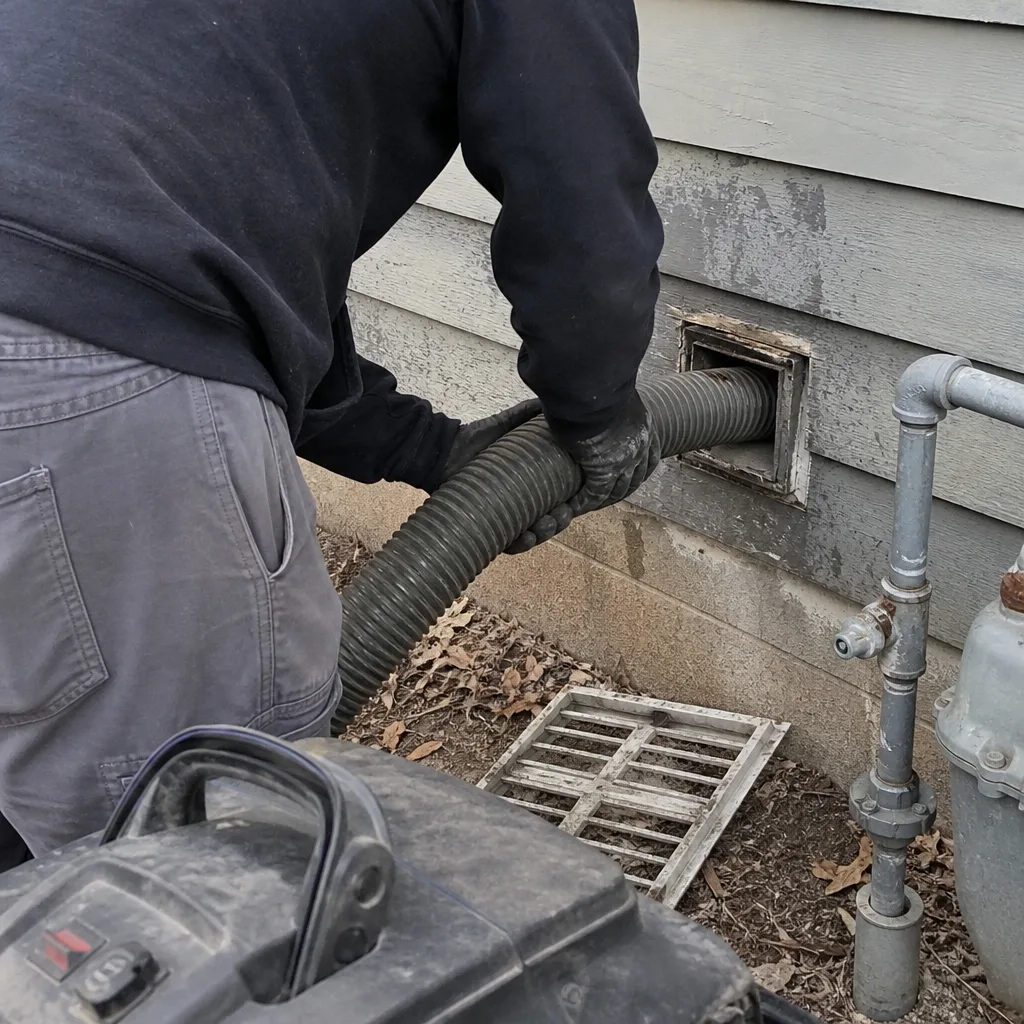 Before
 After
After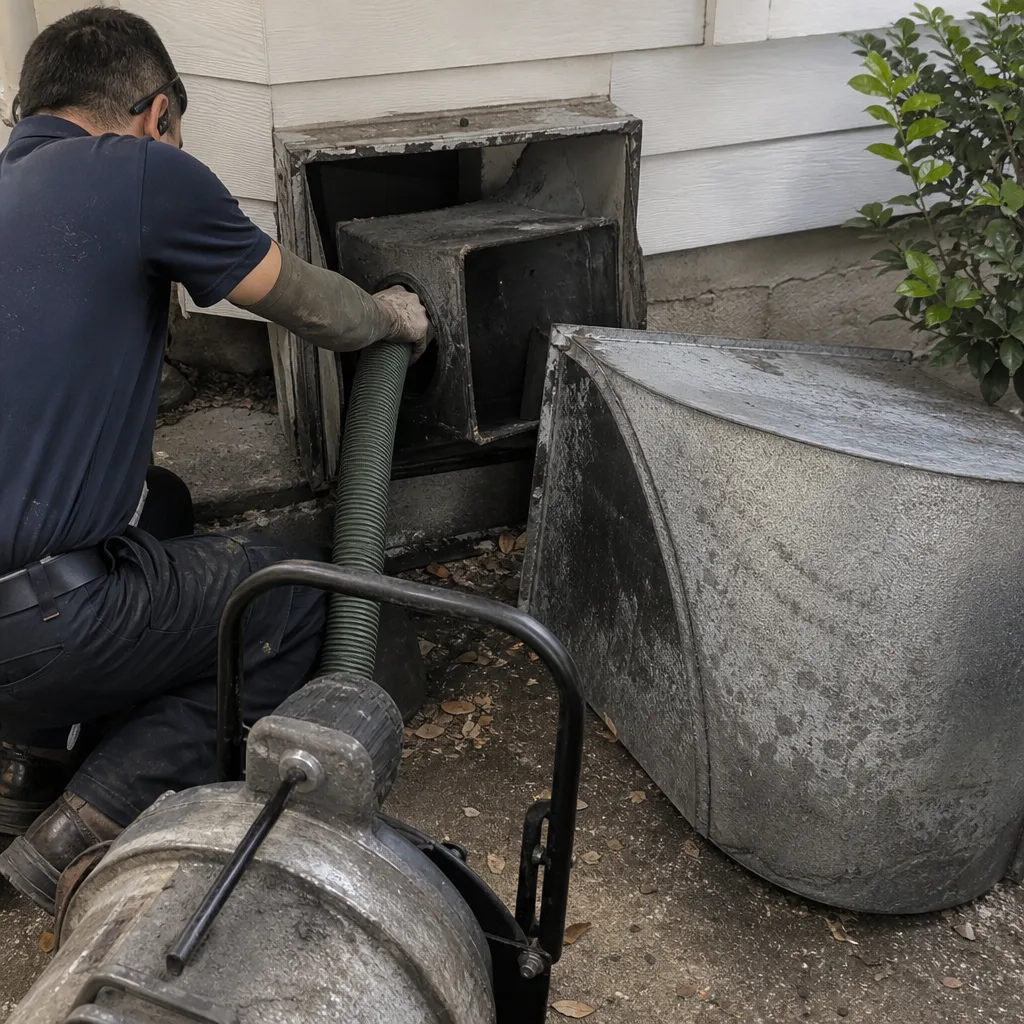 Before
 After
After