
Last updated October 15, 2026
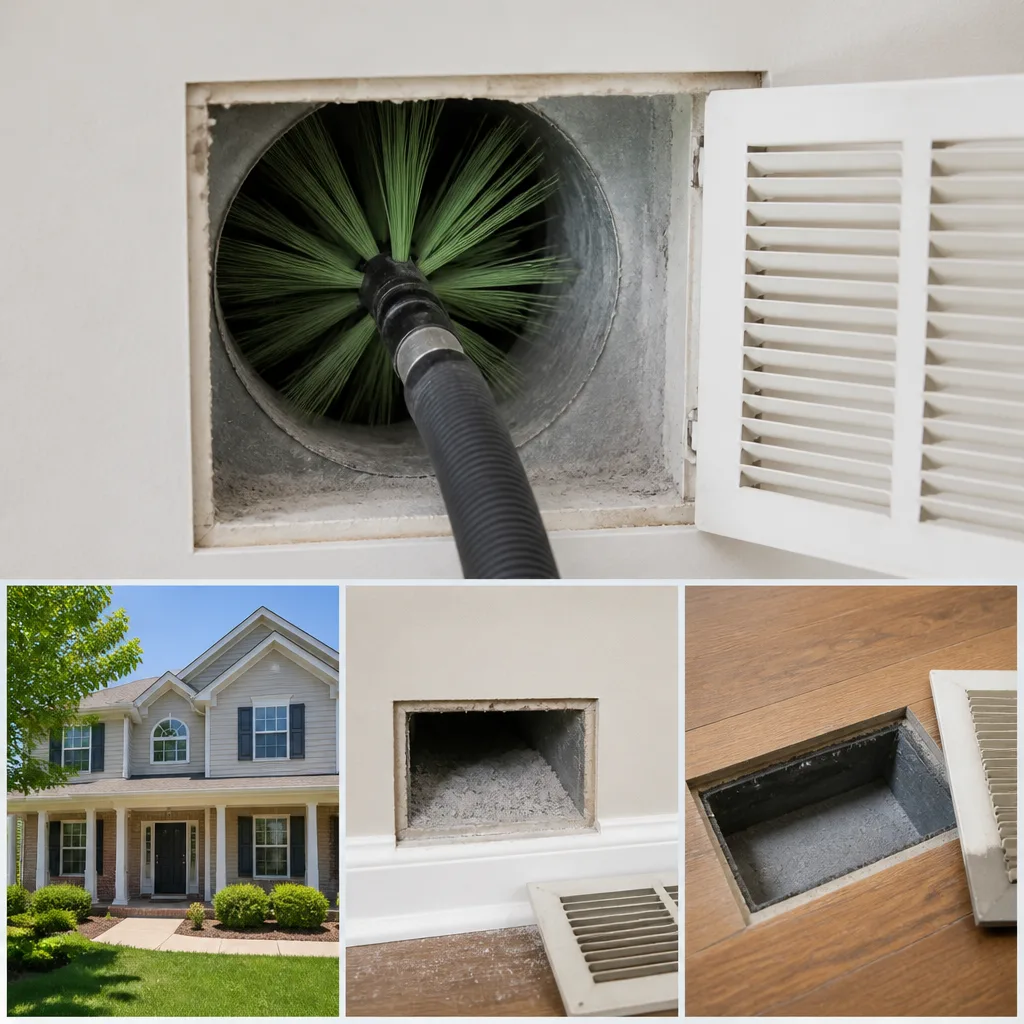 Whole-home duct cleaning
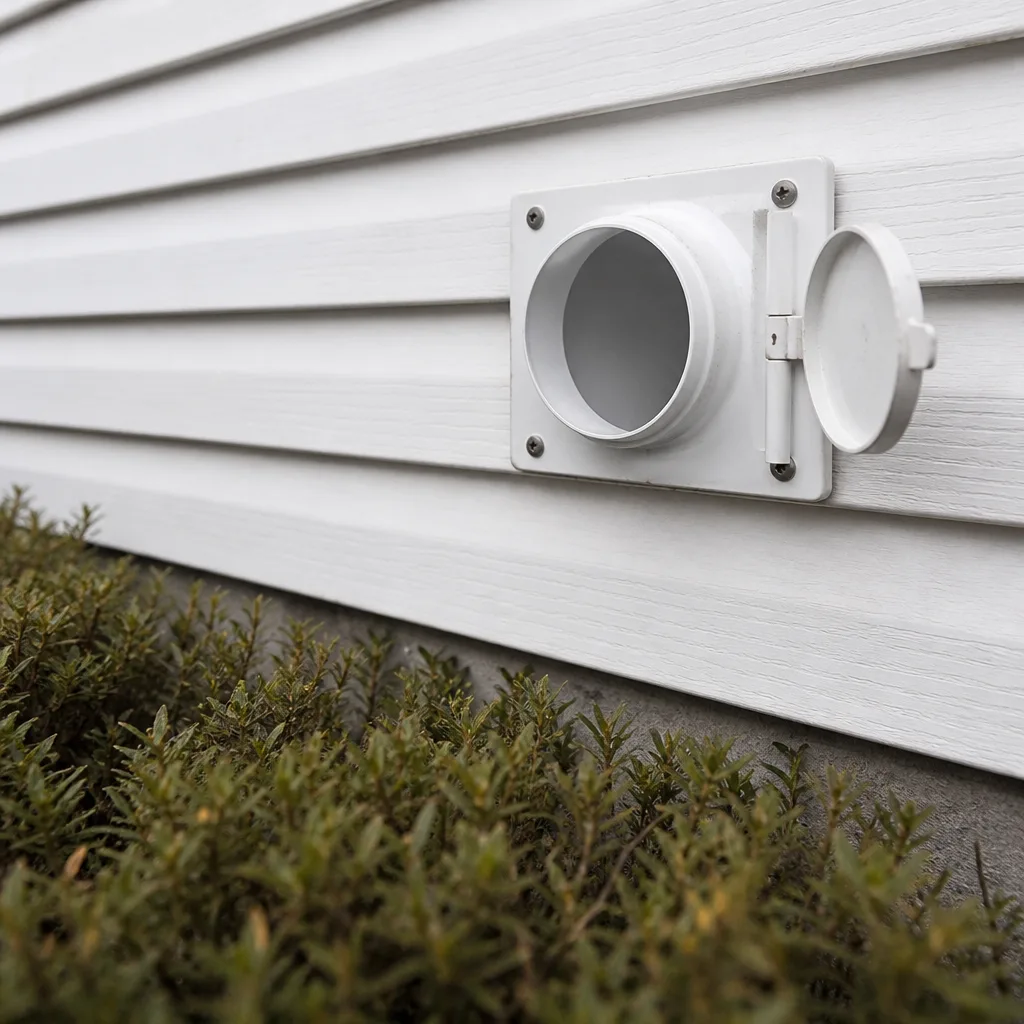 Dryer vent cleaning
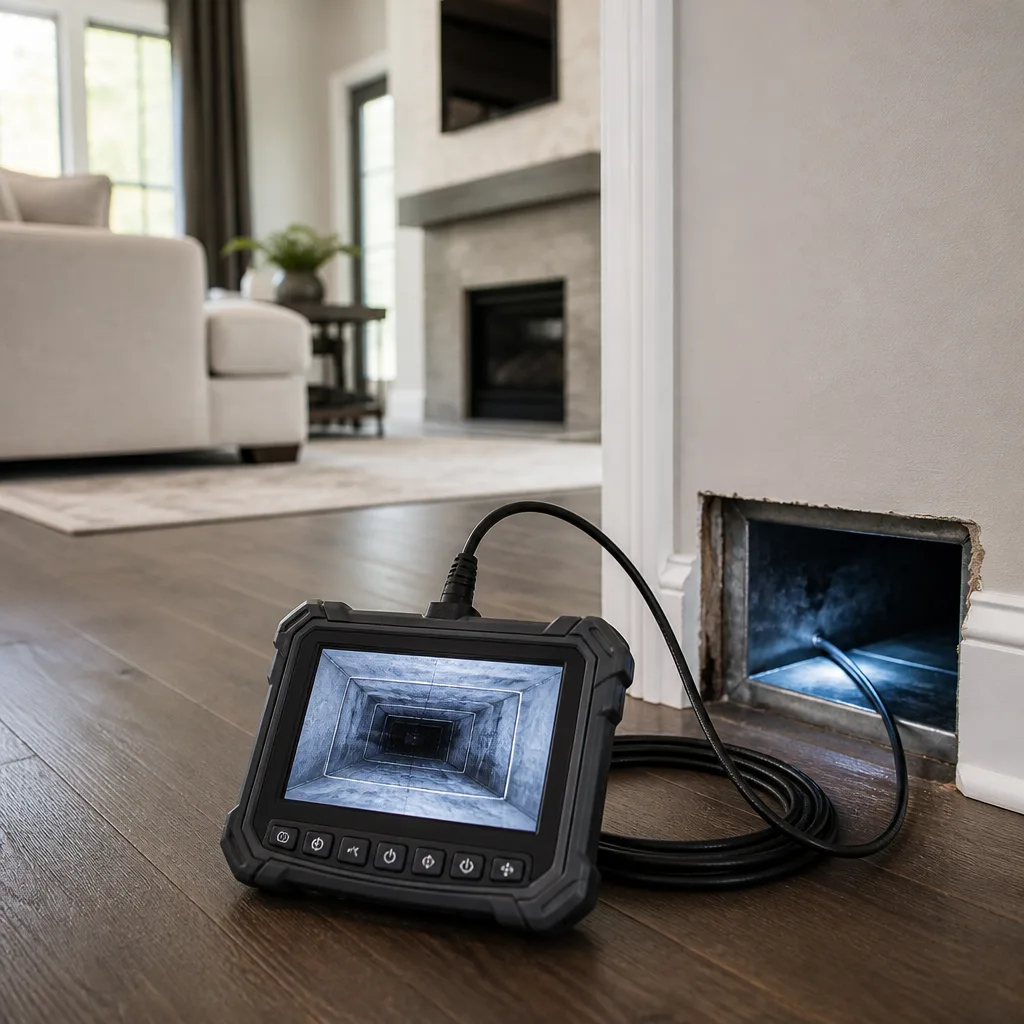 Camera inspection
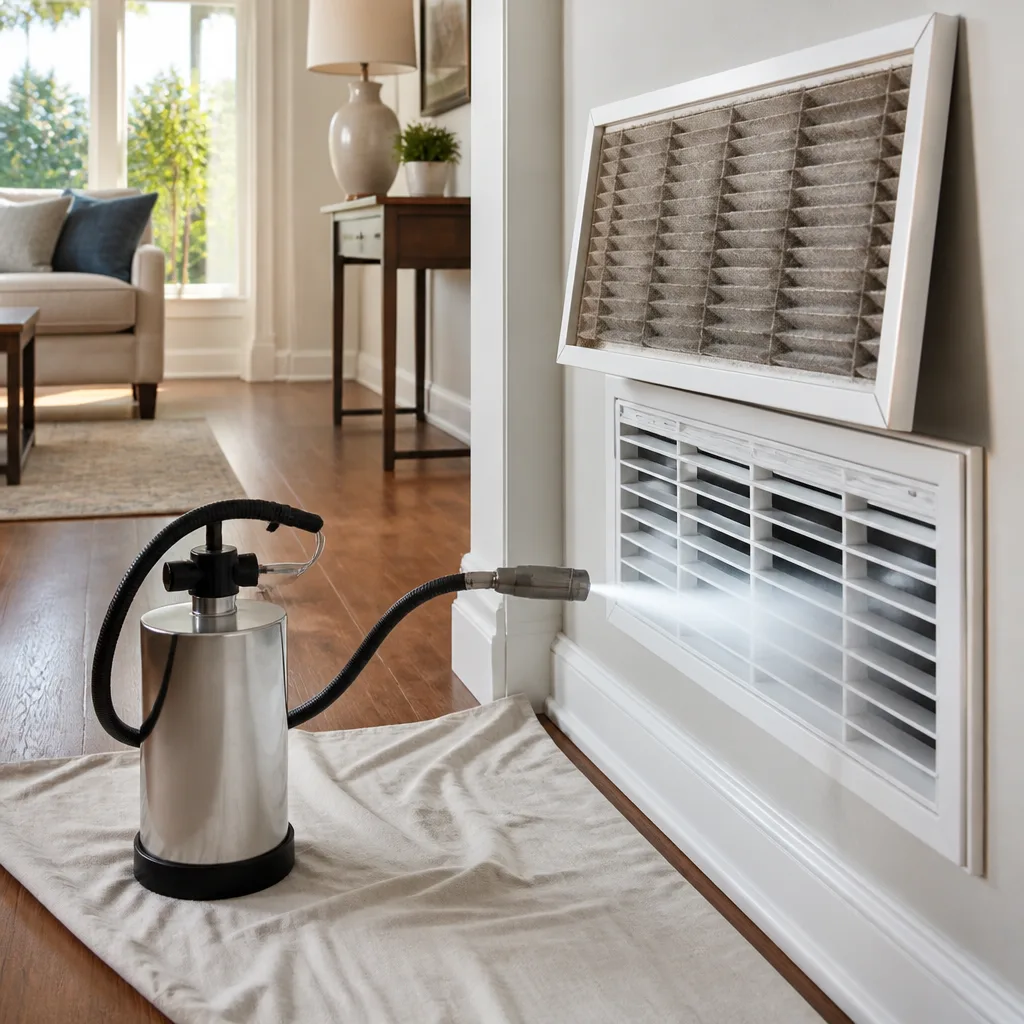 Sanitizing & deodorizing
Whole-system duct and dryer vent check with before-and-after photos - you see exactly what came out of your vents
That "$99 whole-house special" is a bait ad - the real number appears once they are in your hallway, or the "clean" is a shop-vac at the register. We photograph the inside of your ducts before and after instead.
Air Duct Cleaning Warning Signs: A Austin Homeowner’s Reference Guide
Here’s a number that surprises most Austin homeowners: the air moving through your ducts right now carries roughly the same particle load as the dust settling on your bookshelves, and in a city where the AC runs nine months out of the year, that air makes about 50 to 70 passes through your system every single day. That means a contaminated duct system isn’t a once-a-year problem. It’s an all-day, every-day recirculation engine. This guide matches specific duct warning signs to the Austin home types and ages where they most commonly appear, so you can self-diagnose with real accuracy before anyone ever steps foot in your house.
Quick Answer
The most reliable air duct cleaning warning signs in Austin are a musty or stale odor when the AC kicks on, visible dust accumulation around supply registers within days of cleaning, allergy symptoms that get worse inside your home than outside, and visible mold or discoloration on register grilles or duct interiors. If you’re seeing any two of these together, especially in a home built between 1970 and 1999, your duct system is almost certainly due for our Air Duct Cleaning services.
Styles & brands we work with
Table of Contents
- The Musty Odor Test: What Austin Humidity Does to Duct Systems
- Dust Buildup That Comes Back Too Fast: The Pillowcase Test
- The Allergy Pattern That Points to Your Ducts, Not the Pollen Count
- Visible Mold on Supply Registers: What It Actually Means
- The 1970s – 1990s Austin Home Checklist
- Photo-Based Severity Guide: Cleaning vs. Remediation
- Rising Energy Bills and Weak Airflow: What Your Vents Are Telling You
- Rodent and Pest Activity: The Warning Sign Nobody Wants to Find
The Musty Odor Test: What Austin Humidity Does to Duct Systems
A musty smell after your AC kicks on isn’t just “old house smell.” In Austin’s humidity, it’s one of the more reliable early indicators of biological growth inside your air handler or duct lining. Here’s why: when cool air moves through ducts in a hot, humid attic, condensation forms on the interior surfaces. That moisture, combined with the dust that naturally collects in any duct system, creates exactly the environment where mold and mildew thrive. It doesn’t need a leak or a flood. It just needs Austin’s dew point and a normal amount of household dust.
The key diagnostic here is timing. If the smell is present when the AC first starts blowing and fades within a minute or two, the source is likely right at the evaporator coil or in the first few feet of supply duct. If the smell lingers the entire time the system runs, and you notice it more strongly in certain rooms than others, the contamination is probably spread throughout the duct network. A third scenario: the smell is strongest in the morning, before the AC has run much, and disappears once the system has been going for a while. That pattern suggests the issue is in the return ductwork, where air sits stagnant overnight.
In our experience across Austin neighborhoods like Mueller, Tarrytown, and Circle C, the musty-odor complaint follows a seasonal arc. We hear about it most in April, May, and September, when AC systems are cycling between heavy use and short rests. Those short rest periods are exactly when condensation sits long enough to support microbial growth, but not long enough to fully dry out.
What you can check yourself:
- Stand near a supply register when the system first kicks on. Breathe normally and note the first three seconds of airflow.
- Repeat the check in the room farthest from your air handler, often an upstairs bedroom in Austin’s two-story homes.
- If the smell appears in every room at startup, the source is central, not isolated to one branch line.
One more consideration: odor-reducing products like duct sprays or register fresheners mask this symptom without addressing the moisture source. If a technician’s first solution is a spray, that’s a red flag. Proper duct cleaning uses mechanical agitation and HEPA extraction, not air freshener for the ductwork.
Dust Buildup That Comes Back Too Fast: The Pillowcase Test
Every house in Austin collects dust. The question isn’t whether you dust your furniture. The question is how quickly it comes back, and where it appears first. If you’re wiping down surfaces every two or three days and still seeing a film, your HVAC system is likely redistributing dust faster than you can remove it.
Here’s a practical test any homeowner can do, and it costs nothing. Take a clean white pillowcase and hang it over a supply register using a piece of tape or a rubber band, making sure the fabric covers the vent completely but still allows air to pass through. Run your system for 30 to 60 minutes during a normal cooling cycle. Then remove the pillowcase and look at it in good light. Light gray to white dust is normal household dust, mostly skin cells, fabric fibers, and dirt tracked in from outside. Dark gray or black residue means you’re seeing soot, possibly from a gas appliance or candle use, which moves through duct systems differently. Brown or tan dust with visible particles suggests construction infiltration or degraded duct liner, common in homes that have had recent renovations or are located near Austin’s many active construction zones.
Now here’s how to distinguish HVAC-sourced dust from construction infiltration, because Austin has both in abundance. Construction dust is heavier. It settles quickly and concentrates near the renovation area or near windows and doors. HVAC-sourced dust is finer and more uniform. It appears on horizontal surfaces in every room at a similar rate, including rooms with closed doors and closed windows. If your closed-off guest bedroom gets just as dusty as your open living room, the distribution is coming through the duct system, not through open windows.
A second tell: look at the dust pattern relative to the register. If dust accumulates in streaks or lines pointing away from the vent, the air velocity is carrying particles out of the ducts and depositing them on surfaces. If dust gathers on the register grille itself, clogging the fins, that’s even more direct evidence of a dirty duct interior. Clean ducts don’t coat their own exit points.
The Allergy Pattern That Points to Your Ducts, Not the Pollen Count
Austin’s allergy season is brutal. Cedar fever in the winter, oak in the spring, ragweed in the fall. It’s easy to blame every sneeze on what’s blooming outside. But the pattern of your symptoms tells you more than the KXAN allergy report does. Here’s the specific pattern that points to duct contamination rather than ambient pollen: you feel worse inside your home than outside. Your symptoms fade when you leave for work or school but return within 30 to 60 minutes of getting home. And the symptoms are worst in one specific room, often the room farthest from the air handler, where airflow is weakest and particulates linger longest.
That last detail matters. Pollen allergies tend to hit evenly everywhere because the pollen concentration in outdoor air is roughly uniform across your property. But if your home office in the converted garage takes your allergies from a 3 to an 8 while the kitchen feels fine, the issue isn’t ambient pollen. It’s what’s coming out of the register in that specific room, or what’s collecting in the branch line that feeds it.
Here’s a simple three-day tracking exercise:
- Day 1: Note your symptom level in the morning before the AC runs, in the afternoon while it’s running, and in the evening after it cycles off.
- Day 2: Note your symptom level outside the home for at least four consecutive hours. Be honest about the baseline.
- Day 3: Note which room you’re in when symptoms peak. Rate each room on a 1 to 10 scale while the system is actively cooling.
If days 1 and 3 show a clear inside-and-specific-room pattern while day 2 shows relief outdoors, you’re not dealing with cedar fever. You’re dealing with your duct system. The particulates that trigger this response are most often dust mite byproducts, pet dander, and mold spores, all of which concentrate in ductwork over time. A professional cleaning with HEPA extraction removes them from the system rather than just stirring them up.
Visible Mold on Supply Registers: What It Actually Means
Visible mold on a supply register is the warning sign that makes people pick up the phone, and for good reason. But here’s what most homeowners don’t understand: the mold you can see on the grille is rarely the whole story. It’s the visible edge of a contamination pattern that almost always extends back into the duct branch and often into the main supply trunk. Mold doesn’t colonize a metal grille and politely stop at the drywall seam. The grille is just the coolest surface in the room, so it’s where condensation is heaviest and where growth is most visible. The rest of the colony is inside, where you can’t see it.
This is also why surface-cleaning the grille is not the fix. You can scrub that register with bleach until it shines, and it will grow back within weeks, because the moisture source and the interior contamination remain untouched. The supply air is still carrying spores past that grille every time the system runs.
Here’s the distinction that matters for any homeowner trying to decide what to do:
Picture one: The grille has dusty, gray-green fuzz around the edges, and the visible duct opening behind it looks dry. This is a cleaning problem. The system needs mechanical cleaning and HEPA extraction, but the materials are likely intact.
Picture two: The grille has black, green, or brown staining that extends into the ductwork itself, and the interior surfaces look damp or show water staining. This is a remediation problem. The contaminated material, often duct liner or flex duct, needs to be replaced, not just cleaned. Cleaning alone will not solve it.
In Austin’s climate, picture one is more common in homes with good attic ventilation and functioning AC systems. Picture two appears most often in homes with AC equipment that’s oversized for the home, which short-cycles and never removes enough humidity, or in homes where the attic is poorly ventilated and traps hot, moist air around the duct runs. Either way, a professional inspection with photo documentation of the duct interior is the only way to know which picture you’re looking at.
The 1970s – 1990s Austin Home Checklist
If your Austin home was built between 1970 and 1999, you have a different duct system than the newer construction around you, and it fails differently. Homes from this era, common in neighborhoods like Northwest Hills, Allandale, and Wells Branch, were typically built with rigid metal ductwork lined with fiberglass insulation on the interior. That fiberglass duct liner was the standard for two decades. It quiets the system and insulates the air stream. But after 30 to 50 years, that liner degrades. It gets brittle. It collects dust within its fibers. And eventually, it sheds.
This is the specific failure mode for your home’s era: fiberglass duct liner shedding particles into your air stream. The particles are tiny, pinkish or yellow-brown fibers that don’t look like normal household dust. Under a magnifying glass, they have a glass-like sheen. If you’re finding this kind of dust on surfaces near your registers, especially in a home from this era, your duct liner is degrading and the system likely needs professional evaluation. Cleaning can remove loose fiberglass particles, but severely degraded liner needs replacement.
Newer homes, roughly 2000 and later, mostly use flex duct. Flex duct is a wire coil wrapped in plastic and insulation. It doesn’t shed like fiberglass liner, but it has its own failure modes: tears from rodents, crushing from poor installation, sagging that creates low spots where dust and moisture collect. If you’re in a newer Austin home with a sudden dust problem, look for crushed or disconnected flex duct in the attic before you blame the duct system as a whole.
The 1970s – 1990s Austin checklist:
- Fiberglass-like dust particles on surfaces near registers, especially in the rooms farthest from the air handler.
- Original ducts. If your home is 40+ years old and the ducts have never been replaced, you’re on borrowed time for liner integrity.
- Reduced airflow in one or two rooms that used to cool fine. Sagging or separated metal duct sections from this era reduce static pressure.
- Musty odor that persists year-round despite changing filters and running a dehumidifier. Fiberglass liner holds moisture far longer than bare metal.
If you’re checking off more than one of these, your next step is a professional inspection with camera documentation of the duct interior. That’s the only way to see liner condition without cutting into ducts.
Photo-Based Severity Guide: Cleaning vs. Remediation
When you hire any duct cleaning company in Austin, you should expect before-and-after photos of your own ducts. Those photos aren’t just proof of work, they’re your diagnostic baseline. Here’s how to read them. The Complete Guide to Air Duct Cleaning in Austin will help you compare photos from any company you hire, including ours, because the visual evidence tells you whether you’re dealing with a cleaning job or a remediation job.
Level 1: Dust film. The duct interior has a light gray, even coating of dust. No debris piles, no moisture staining, no visible growth. This is normal accumulation. Cleaning should remove virtually all of it, returning the metal or flex to its original color. Before-and-after photos should show a dramatic difference.
Level 2: Debris accumulation. You can see actual piles or clumps of debris, often construction material, drywall dust, or pet hair matted into the corners of the duct. This is common in Austin homes that have had renovations without proper containment. Cleaning should remove the debris, but the after photo should also show no signs of moisture damage underneath.
Level 3: Moisture staining or visible growth. Dark or greenish staining is visible on the duct interior, or the duct liner looks damp and discolored. This is the boundary zone. If the staining is surface-level and the material underneath is sound, professional cleaning with sanitizing may be enough. If the staining penetrates the material or the liner is delaminating from the duct wall, you’re looking at remediation, which means material replacement, not just cleaning.
Level 4: Active deterioration. Deteriorated liner, rusted duct sections, collapsed flex, or visible pest nesting. No amount of cleaning fixes this. The affected sections need replacement, and any company that says otherwise is not being straight with you.
One more note on photos: at Air Duct Cleaning in Austin, we photograph every duct run before and after every job as part of The Relay Standard. That’s not a selling point to us, it’s just the only way to prove the work was done, and done correctly. If you’re comparing quotes, ask every company whether they photograph the interior of your ducts, not just the registers.
Rising Energy Bills and Weak Airflow: What Your Vents Are Telling You
Your energy bill is a data stream. If your kilowatt-hour usage is climbing year over year while your cooling habits haven’t changed, your system is working harder to move the same amount of air. That’s the first clue. Weak airflow from one or more registers is the second, and it’s the one you can feel.
Dirty ducts don’t cause weak airflow by themselves, not directly. What they do is accelerate the conditions that do. A thick layer of dust on the blower motor and evaporator coil reduces heat exchange efficiency, which means the system runs longer to hit the same temperature. That’s more wear, more energy use, and a higher Austin Energy bill. Meanwhile, dust and debris collecting in duct turns and branch connections creates turbulence that reduces effective airflow to the rooms at the end of the line.
Here’s the practical check: walk through your home and feel the airflow at every register, including the return. If the room nearest the air handler feels like a wind tunnel and the upstairs back bedroom feels like a whisper, you have a distribution problem. That problem might be dirty ducts, crushed flex, a disconnected branch, or an undersized return. The only way to know is to have someone actually look inside the ducts, with a camera, while the system runs.
One Austin-specific factor that compounds this: our cooling season is long and our systems run hard. A system in Austin chips through more hours of operation in one summer than a comparable system in Philadelphia runs in a full year. That means dust accumulates faster. The filter that lasted three months in a milder climate lasts about six weeks here. If you can’t remember the last time you changed your filter, the residual dust has already moved past it and into the system.
Rodent and Pest Activity: The Warning Sign Nobody Wants to Find
Here’s the warning sign that never makes the generic lists, and it should, especially in Austin. Our city has a healthy rodent population, and attics are prime real estate. Rats and mice chew through flex duct, nest in duct insulation, and leave droppings and urine inside duct runs. If you’ve ever had rodents in your attic, even if you’ve since sealed the entry points, the question isn’t whether they got into your ducts. The question is how much contamination they left behind.
The telltale signs are specific. Crinkling or scratching sounds in the ceiling when the system cycles on or off. A stale, ammonia-like odor that comes and goes with the seasons. Small tears or chew marks visible on flex duct in the attic. And the most direct sign: droppings visible inside a register when you remove the grille and look in with a flashlight.
This matters because rodent contamination is not a cleaning problem in the usual sense. The droppings and urine require a different approach than household dust: containment during removal, proper disposal of contaminated materials, and in many cases, replacement of the affected duct sections rather than cleaning. This is also where HVAC Cleaning in Austin overlaps with duct cleaning, because the air handler often needs attention at the same time.
If you suspect rodent activity, do not attempt to clean the ducts yourself. The health risks from aerosolized rodent waste are well documented, and professional containment is not optional. At Cardinal Air Duct Austin, our techs use Abatement Technologies containment units on jobs like this specifically to keep contaminated air from circulating through your home during removal.
Common Mistakes to Avoid
- Changing the filter and calling it done. Your filter protects the equipment, not your ducts. The dust that’s already in the system stays there until someone removes it mechanically.
- Cleaning the register grilles and assuming the problem is solved. The grille is the visible 5 percent. The other 95 percent of the surface area is invisible from your living room.
- Waiting for a smell to become unbearable before calling. By the time a musty odor is strong enough to notice in every room, the contamination is well established. Early intervention costs less and cleans up faster.
- Hiring on price alone. Duct cleaning is the classic bait-and-switch industry. A low teaser price often becomes a much larger invoice once the tech is in your attic. At Cardinal Air Duct Austin home, the written price you get before work starts is the price you pay, full stop.
- Assuming a new home means clean ducts. New construction leaves drywall dust, sawdust, and paint overspray in the ducts. If the builder didn’t clean them before you moved in, you’re breathing construction debris.
- Running the system while doing dusty renovations. If you’re refinishing floors or sanding drywall, close the supply registers in the work area and turn the AC off. Once renovation dust gets pulled through the return, it coats the entire system.
See the difference
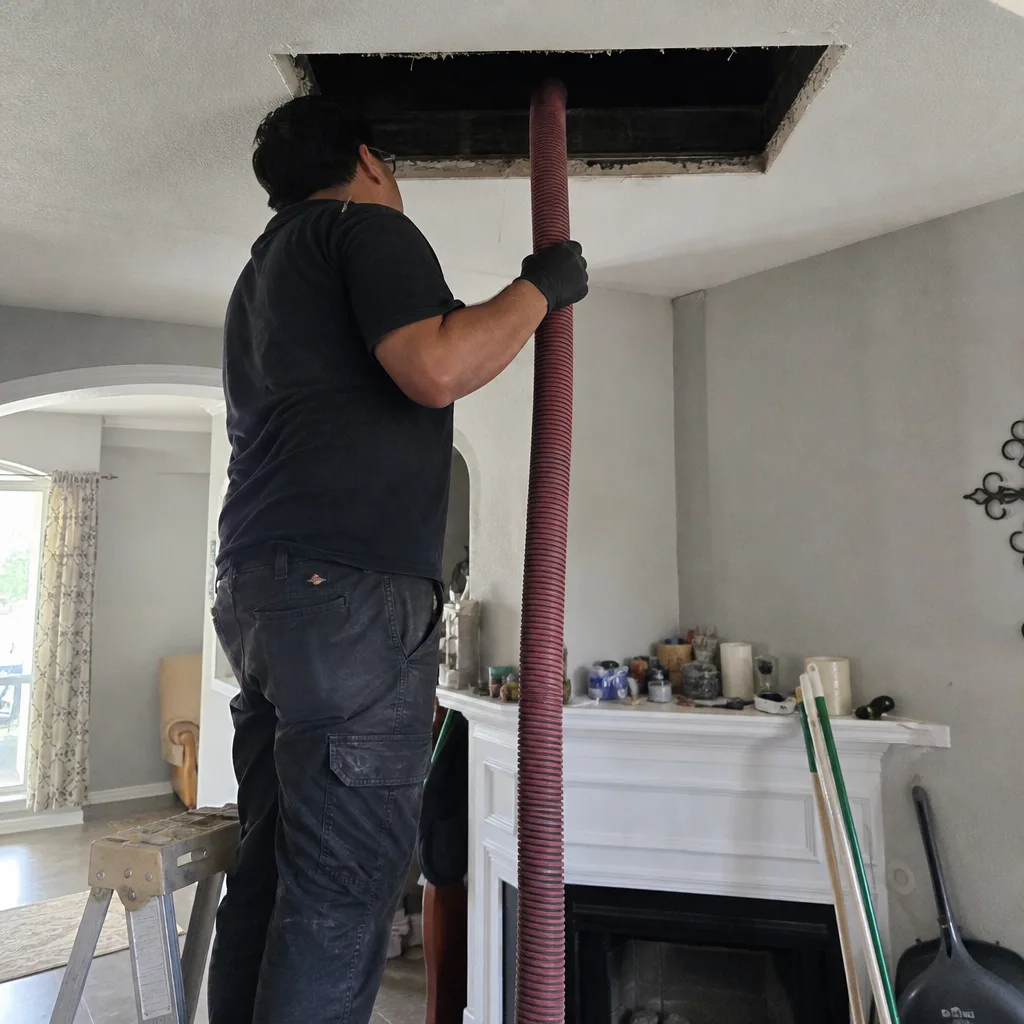 Before
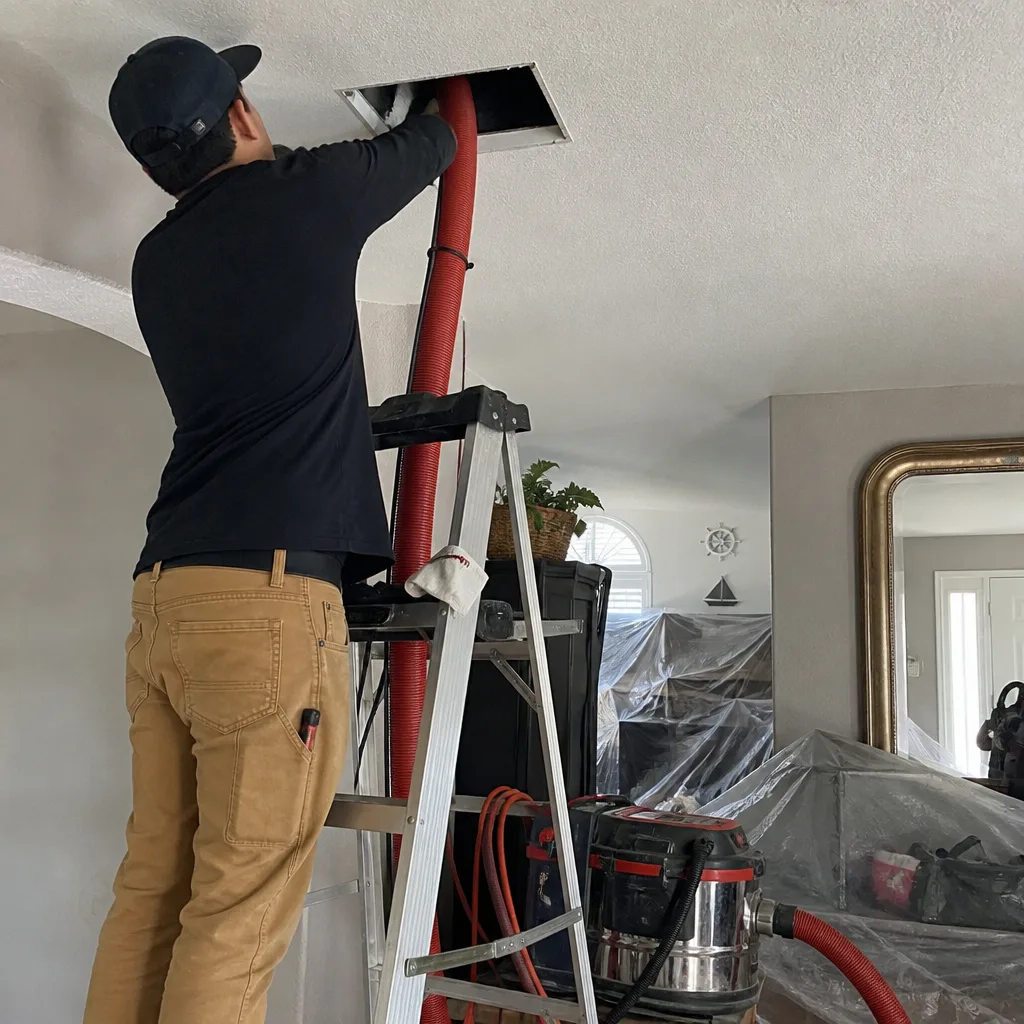 After
After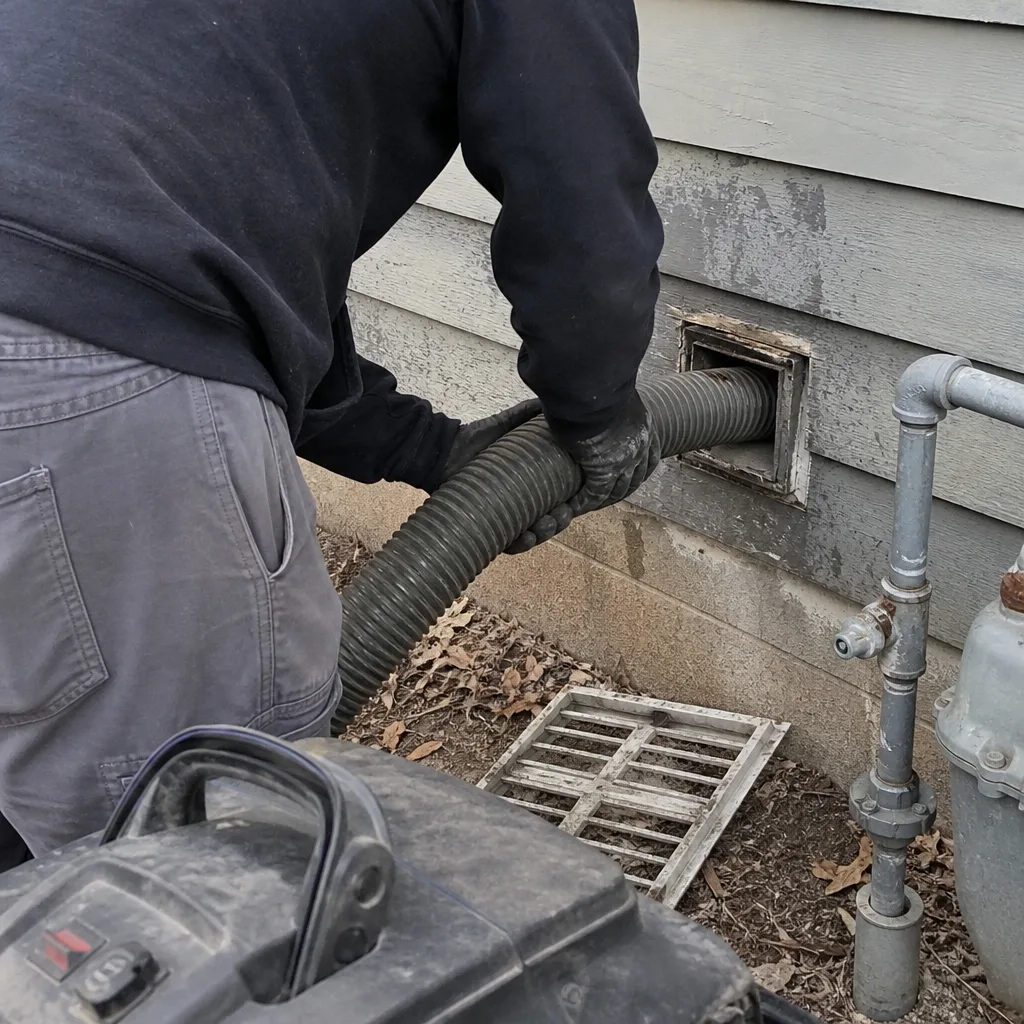 Before
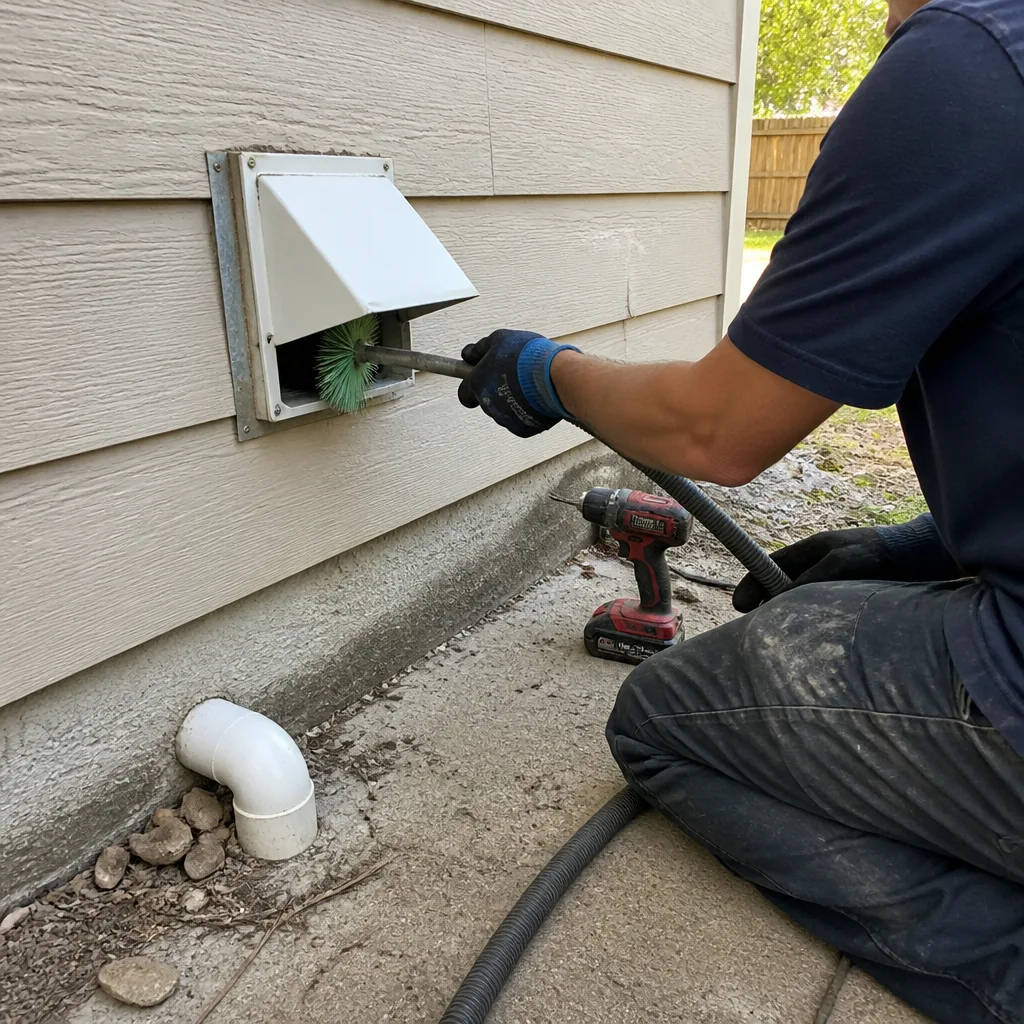 After
After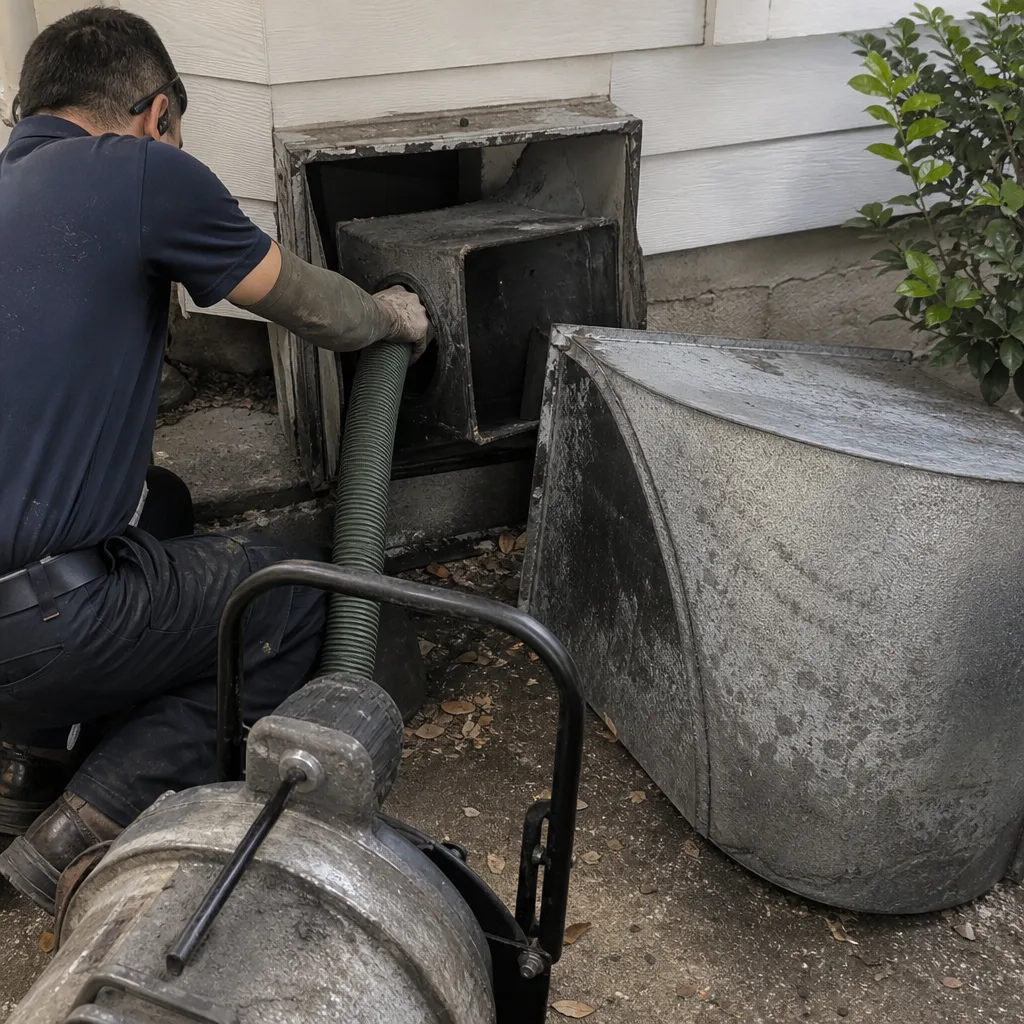 Before
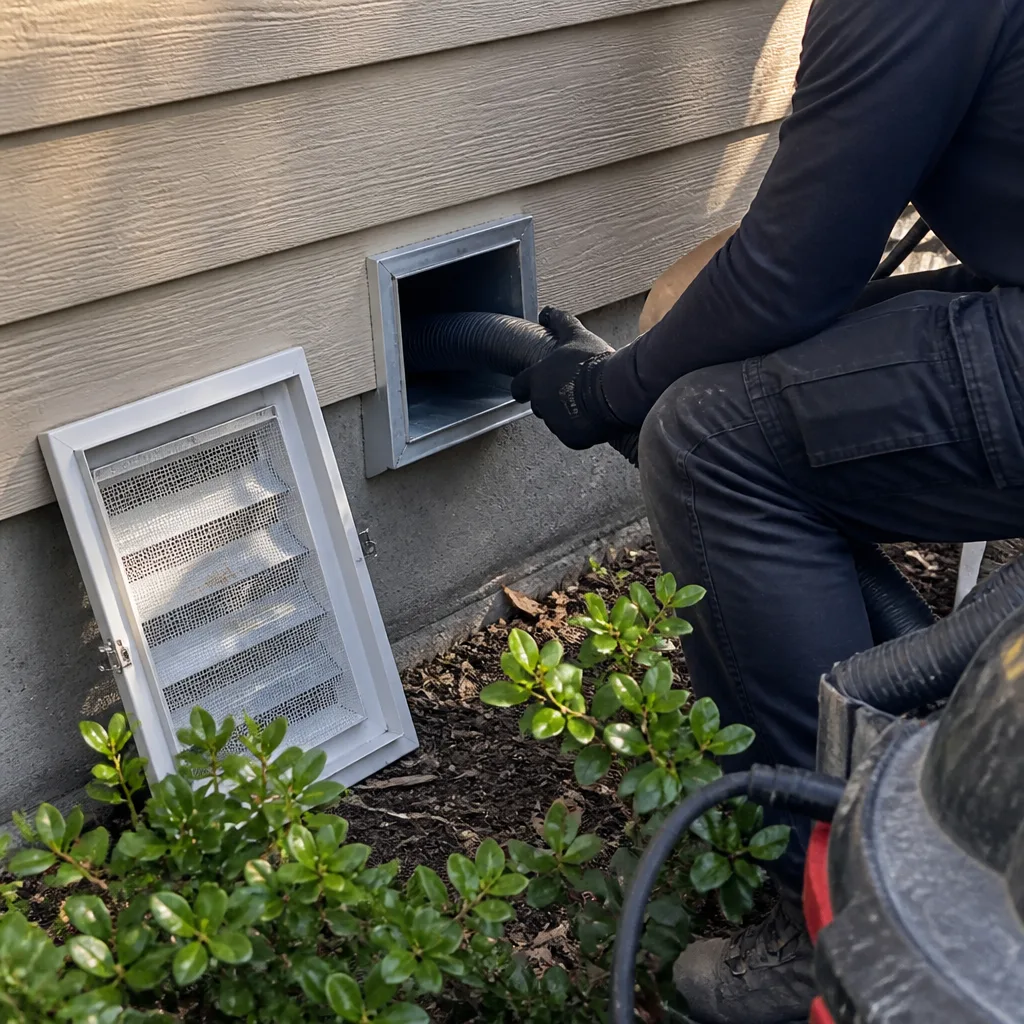 After
AfterWhen to Call a Professional
If you’ve checked off two or more of the warning signs in this guide, you’re past the point of filter changes and register scrubbing. The specific triggers for a professional call: a musty odor that returns every time the AC runs, dust that reappears within 72 hours of cleaning, allergy symptoms that peak inside your home, visible mold on or behind the register grille, evidence of rodents in the attic, or a home built before 2000 with original ducts. Any one of these justifies an inspection. Two or more means you should schedule a cleaning and get a camera in those ducts.
Cardinal Air Duct Austin offers free estimates in Austin. Call (940) 283-6595 and we’ll walk you through what we’re seeing and what it costs before anyone sets foot in your attic. Every job includes a written price before work starts, before-and-after photos of your own ducts, and the 365-Day Done Right Promise: if the work isn’t right within a full year, we come back and make it right at no charge.
Frequently Asked Questions
You know your ducts need cleaning when you see or smell persistent evidence: dust accumulating on surfaces within days of cleaning, a musty odor when the AC runs, visible dust or discoloration on register grilles, or allergy symptoms that are worse inside your home than outside. Any two of these together is a strong signal.
For a typical Austin home, most standard air duct cleanings run between $350 and $650 depending on the number of ducts, accessibility, and the level of contamination. Homes with rodent activity or degraded duct liner may cost more because remediation and replacement work are different services. We give a written price before any work starts, so the number you’re quoted is the number you pay. Call (940) 283-6595 for an exact quote. Estimates are free.
Cheap duct cleaning quotes usually come from companies that cut corners: shop-vac equipment instead of HEPA extraction, no containment, no before-and-after photos, and a per-vent price that balloons once the tech is inside your home. The most common pattern is a low teaser price followed by add-on charges once the work begins. A legitimate whole-system cleaning with professional equipment and photo documentation costs more up front but leaves you with proof the work was done.
You know the work was actually done when the company photographs the interior of your ducts before and after, and can show you the debris that was removed. Any company that won’t show you before-and-after photos of your own ducts, not stock photos, is not being transparent. We photograph every duct run on every job as part of The Relay Standard.
In Austin, where systems run nine months a year and humidity is high, most homes benefit from professional duct cleaning every 3 to 5 years. Homes with pets, rodents, recent renovations, or family members with allergies often need it every 2 to 3 years. Homes built before 2000 with original fiberglass-lined ducts may need more frequent attention due to liner degradation.
Dirty ducts contribute to high energy bills indirectly by reducing airflow and forcing your system to run longer to hit the same temperature. The primary culprits are a clogged evaporator coil and a dirty blower motor, but duct contamination accelerates both. Clean ducts alone won’t fix a failing AC, but they remove one of the variables working against your system’s efficiency.
Dryer vent cleaning is a separate service from air duct cleaning and uses different tools and access points. Clogged dryer vents are a fire hazard and should be cleaned annually in most Austin homes. If you’re already having your ducts cleaned, ask about Dryer Vent Cleaning in Austin as an add-on service, but don’t assume one covers the other.
The Bottom Line
Your duct system is the circulatory system of your Austin home, and like any circulatory system, it shows symptoms when something is wrong. The musty smell, the dust that returns too fast, the allergy pattern that follows you from room to room, the visible growth on the grille. None of these go away on their own. They compound. The good news is that duct cleaning is a known quantity: a professional job with HEPA extraction and photo documentation removes the contamination and gives you a clean baseline. A 365-day guarantee backs that baseline in writing. If you’re seeing the signs, call (940) 283-6595 and get a straight answer. It costs nothing to ask, and the answer might change how your home feels by this time next week.
Written by Omar Haddad, Owner at Cardinal Air Duct Austin, serving Austin since 2005.