
Last updated October 15, 2026
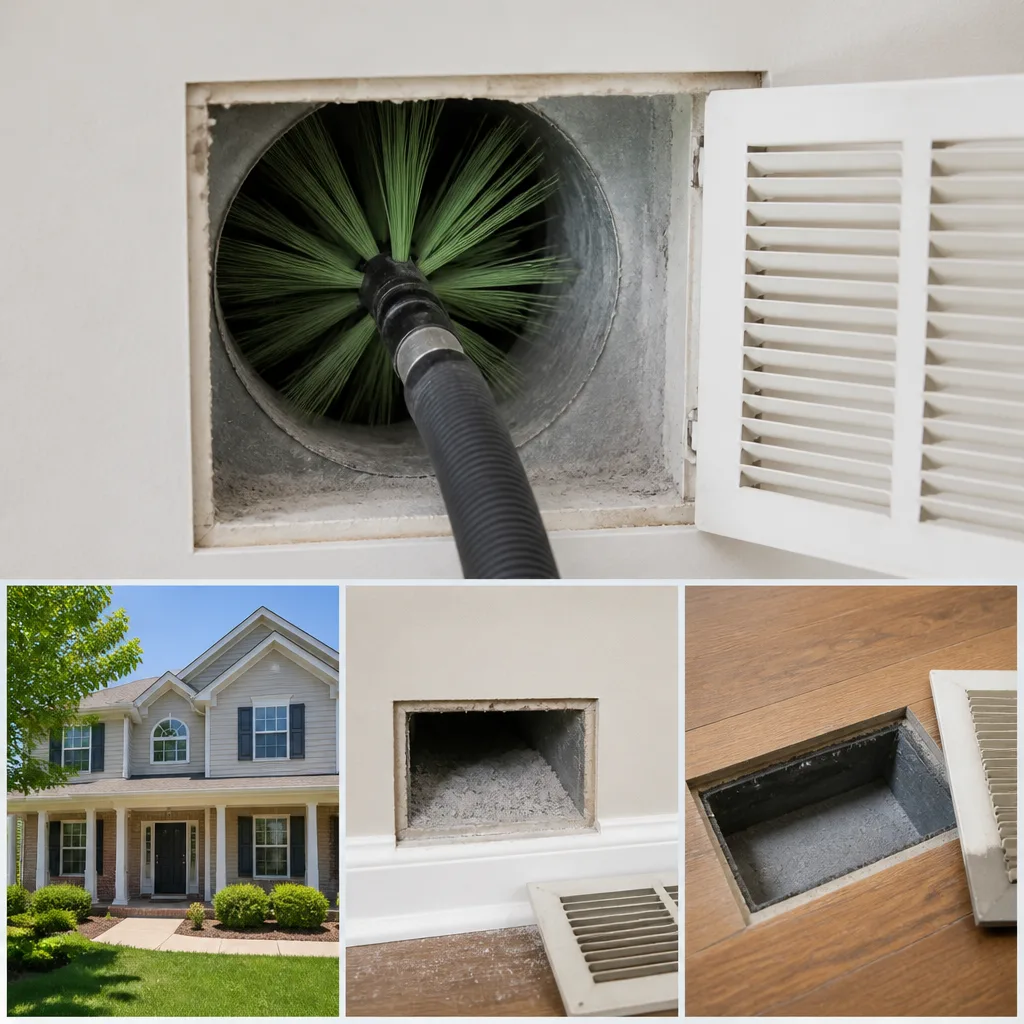 Whole-home duct cleaning
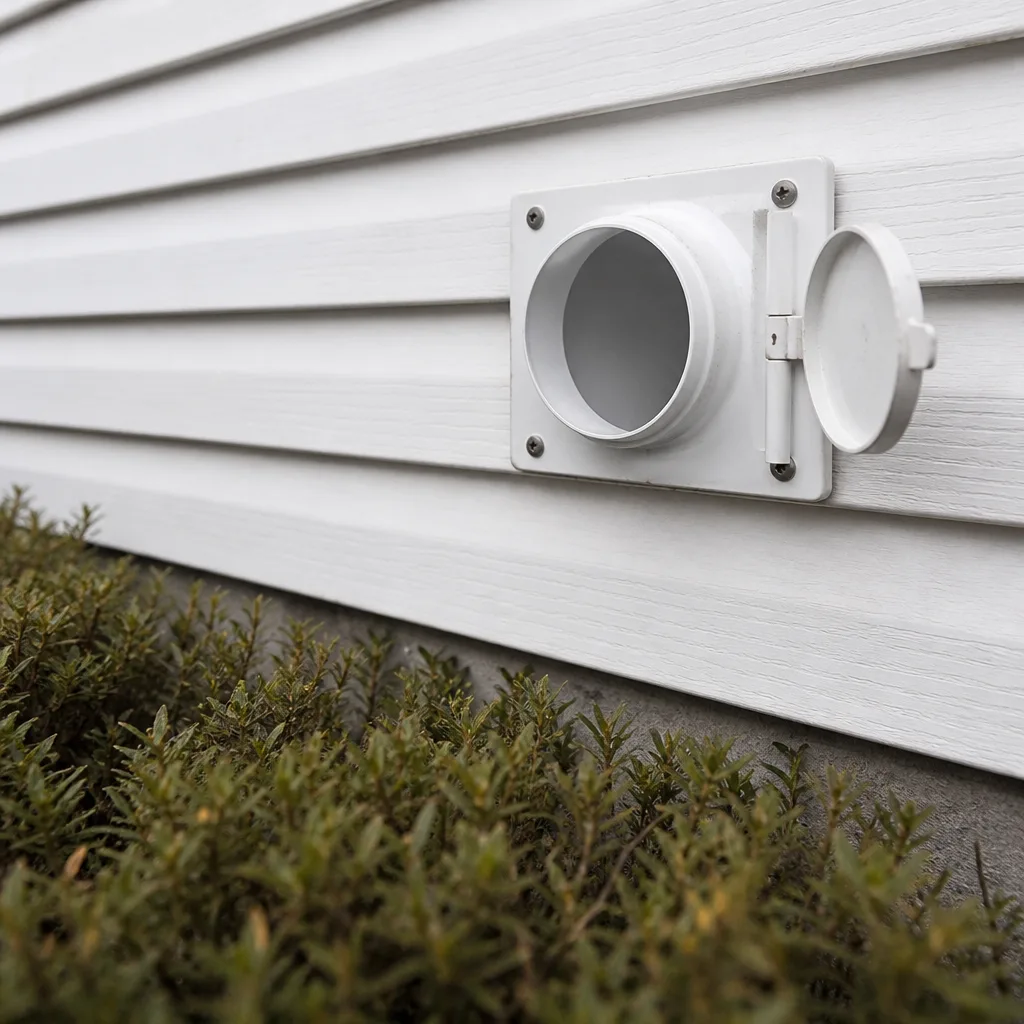 Dryer vent cleaning
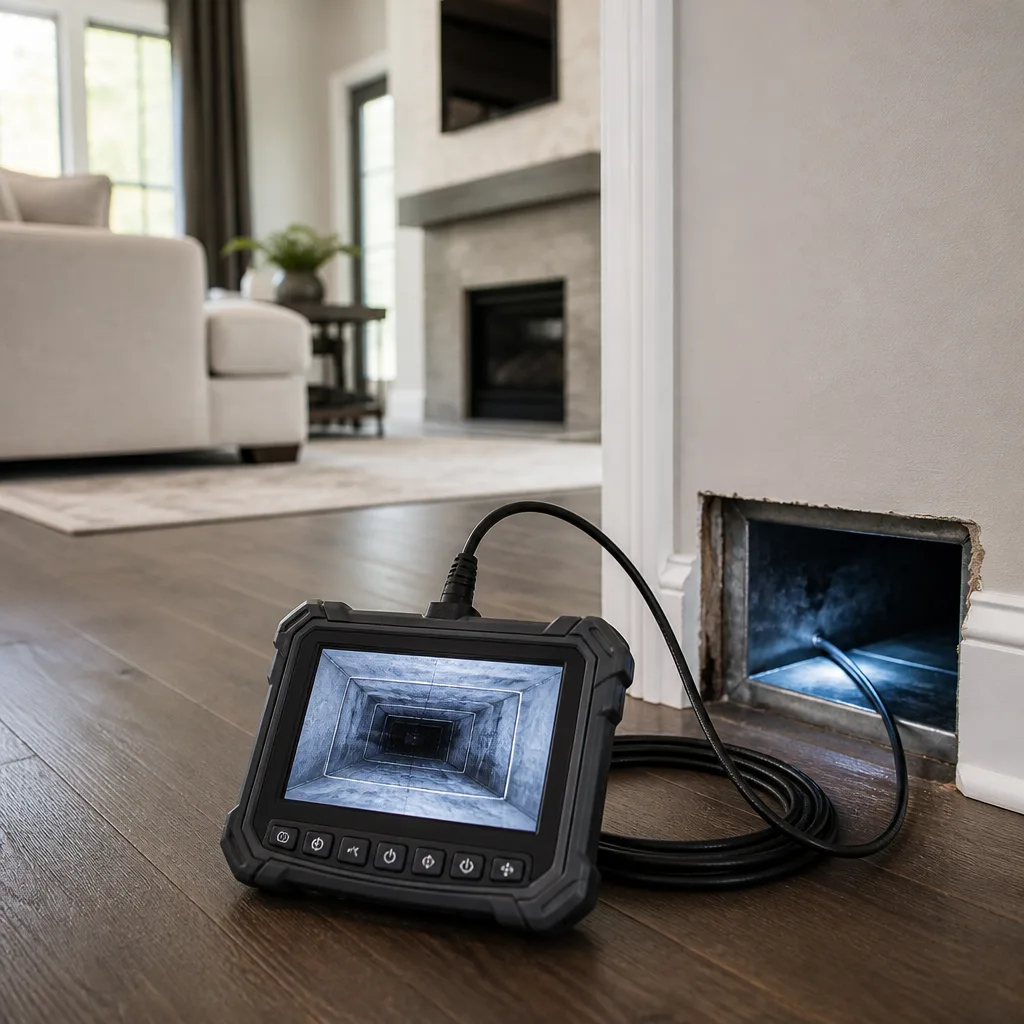 Camera inspection
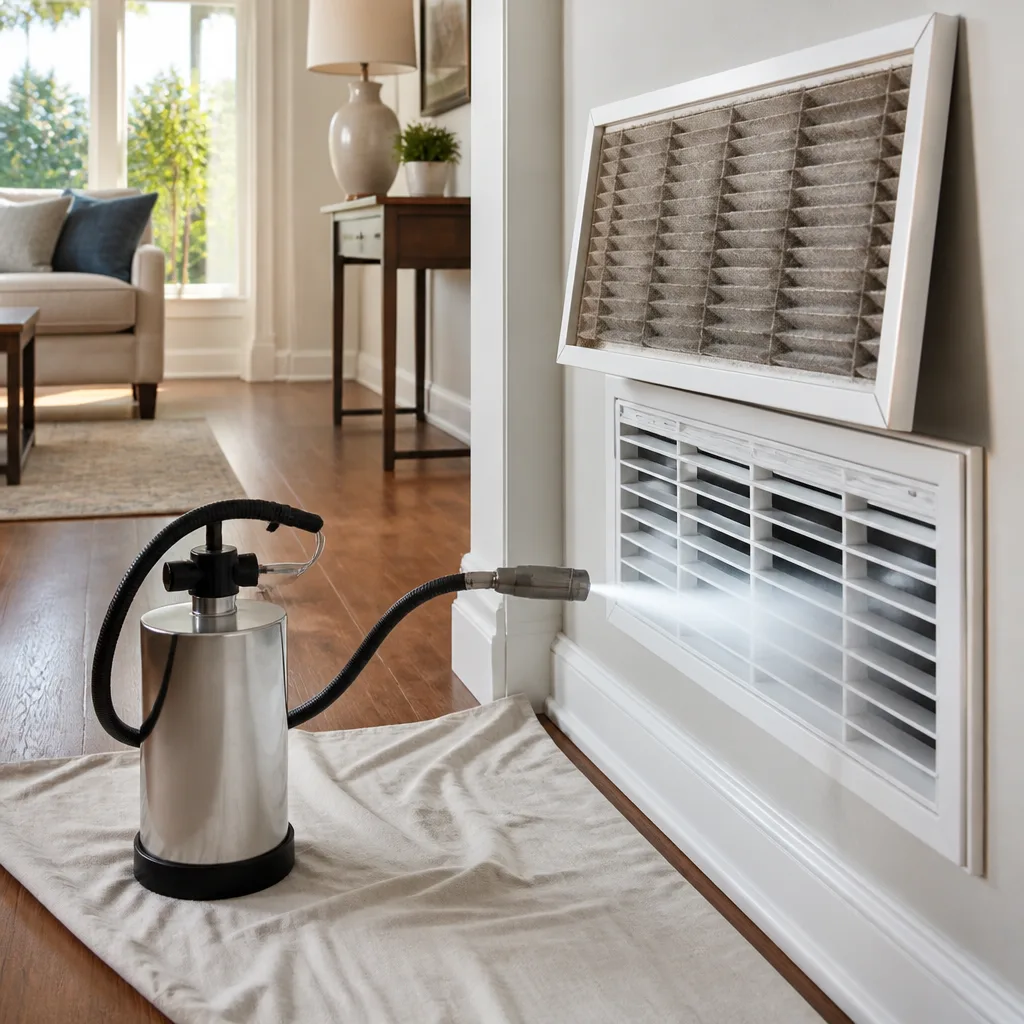 Sanitizing & deodorizing
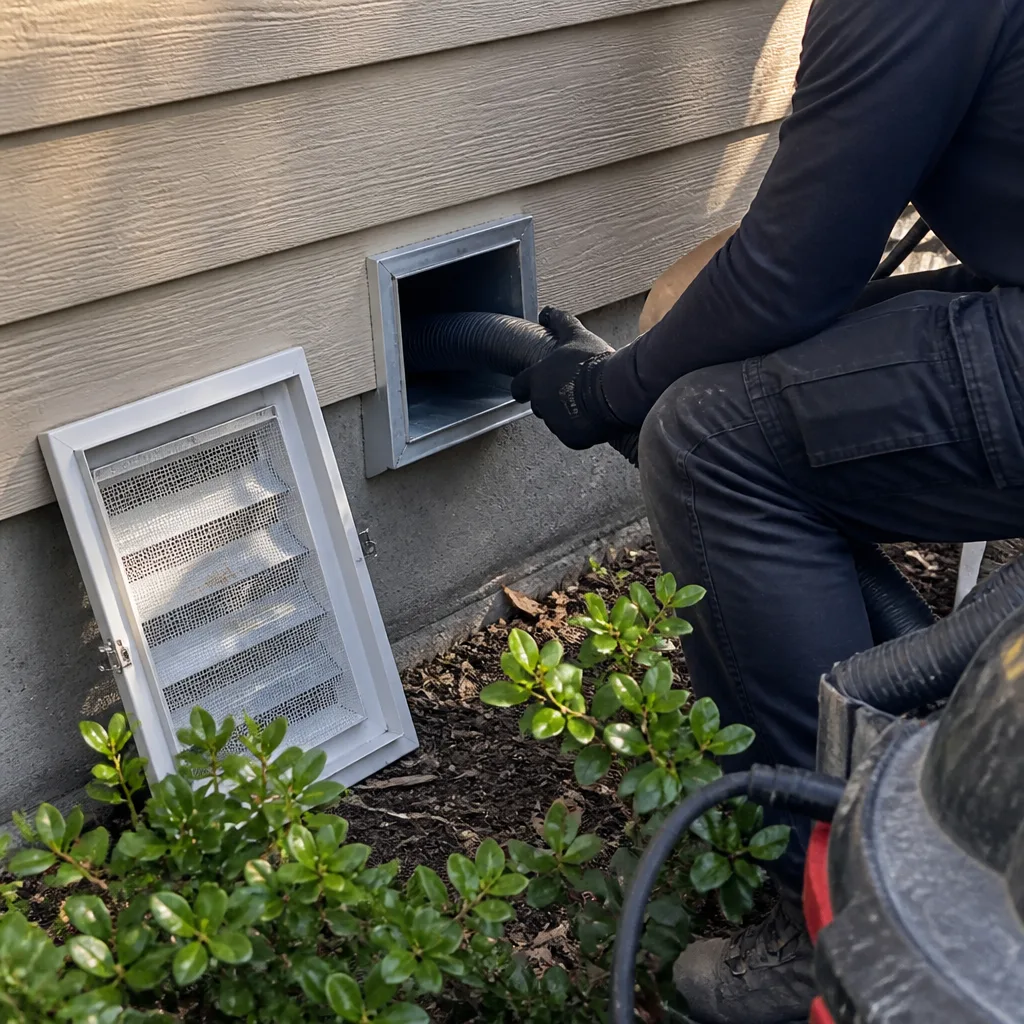
Whole-system duct and dryer vent check with before-and-after photos - you see exactly what came out of your vents
That "$99 whole-house special" is a bait ad - the real number appears once they are in your hallway, or the "clean" is a shop-vac at the register. We photograph the inside of your ducts before and after instead.
Air Duct Cleaning Cost Breakdown: The Austin Homeowner’s Reference for 2026
The $99 whole-house duct cleaning ad you saw on Facebook is not a deal. It’s a business model, and the profit comes from pressure-selling $400 add-ons once a technician is already standing in your living room. In Austin, where summer air conditioning runs six months of the year and cedar pollen settles into every return vent, duct cleaning prices in 2026 span a wider range than almost any other home service: from $99 bait-and-switch specials to legitimate $1,200-plus whole-system jobs. This guide breaks down exactly what drives each price point so you can tell a fair quote from a scam without needing an HVAC degree, and if you want Air Duct Cleaning Warning Signs: A Austin Homeowner’s Reference Guide, it’s a useful companion. By the time you finish reading, you’ll know what a real Austin duct cleaning invoice should look like, which add-ons earn their price, and which ones exist only to inflate the bill.
Quick Answer
Most standard whole-house air duct cleanings in Austin run between $450 and $850 in 2026, depending on home size, number of vents, and duct material. A legitimate per-vent price averages $30 to $45 per vent, with most Austin homes having 12 to 20 vents. Add dryer vent cleaning ($80 to $150), air handler coil cleaning ($150 to $300), or antimicrobial fogging for confirmed mold ($250 to $500), and a comprehensive job can reasonably reach $1,000 to $1,300. Anything below $300 for a whole house is almost certainly a loss-leader built to upsell you once the crew arrives.
Styles & brands we work with
Table of Contents
- The Line-Item Breakdown: What a Legitimate Austin Job Actually Costs in 2026
- What ‘Whole-House’ Really Means: Reading a Reputable Invoice vs. a Bait-and-Switch Invoice
- Add-Ons Worth Paying For vs. Upsells to Decline
- How Austin’s Housing Stock Shifts the Real Cost: Age, Square Footage, and Duct Material
- Cardinal’s Written Price Guarantee in Practice: What Gets Quoted, What Changes, What Never Does
- The $99 Ad, Deconstructed: How Bait-and-Switch Pricing Works in Austin
- What You Can Check Yourself (Without Risking Your Ducts or Your Safety)
- How Often Austin Homes Really Need Duct Cleaning
The Line-Item Breakdown: What a Legitimate Austin Job Actually Costs in 2026
Transparent duct cleaning companies in Austin price the job in one of two ways: per vent or flat-rate by system. Both are legitimate. What separates the honest operators from the bait-and-switch crowd is whether the price you’re quoted on the phone matches the invoice you sign at the end. Here’s what each component of a real duct cleaning costs in Austin in 2026, based on what we see across the metro area every week.
Base Duct Cleaning: Per Vent and Whole-System Pricing
The core work, cleaning the supply and return duct runs that carry conditioned air through your home, is typically priced per vent. In Austin, a reputable per-vent rate lands between $30 and $45. Most single-story homes built after 1990 have 12 to 15 vents. Two-story homes and larger floor plans run 16 to 22 vents. That puts the honest base price for a standard three-bedroom Austin home between $420 and $680 before any add-ons.
Some companies quote a flat system price instead. Flat-rate pricing is fine, provided the invoice names the number of vents and supply runs being cleaned. A $599 flat rate for a 14-vent home is fair. A $599 flat rate for an 18-vent home where the tech “doesn’t count vents” is a red flag. Ask for the vent count in writing. Legitimate companies know exactly how many supplies and returns your system has before they start; that information is on the job sheet or pulled from the original install.
System Size Multipliers: What Adds to the Base Price
Beyond vent count, three factors legitimately increase a base price in Austin:
- Multiple HVAC systems. A home with separate upstairs and downstairs units is two jobs: two air handlers, two coils, two blowers. Expect the base price to rise by 50 to 80 percent, not double. The duct runs still terminate at vents you’re already paying to clean; the second system adds another access point and more cleaning time.
- Duct accessibility. In some Austin homes, particularly those built between 1950 and 1985, return ducts run through enclosed chases or are buried behind drywall with limited access cutouts. If a technician needs to cut additional access panels, that’s a legitimate add-on, usually $75 to $150 per access point, and a reputable company will explain that before cutting anything.
- Contamination level. Ducts that haven’t been cleaned in 15 years, or that show visible debris at the registers, take longer. A heavily soiled system might add 30 to 50 percent to labor. Honest companies price this upfront based on what they can see at the return and supply registers during the estimate, not as a surprise once the vacuum is running.
Line-Item Table: 2026 Austin Price Ranges
Here’s a practical reference table for what a legitimate Austin duct cleaning invoice looks like in 2026:
- Base duct cleaning (per vent): $30 to $45 per vent
- Typical 14-vent home, base only: $420 to $630
- Typical 18-vent home, base only: $540 to $810
- Second HVAC system (upstairs/downstairs split): adds $200 to $350
- Dryer vent cleaning: $80 to $150
- Air handler/evaporator coil cleaning: $150 to $300
- Antimicrobial fogging (confirmed mold only): $250 to $500
- Return air duct access panel installation: $75 to $150 per panel
If your quote falls meaningfully below these ranges, you’re not getting a deal. You’re getting a foot in the door. Companies that price below the cost of labor and equipment aren’t running a charity; they’re running a lead generation machine where the real sale happens after the contract is signed.
At Air Duct Cleaning in Austin, we write the full price before a single tool comes off the truck, and that number is the number you pay.
What ‘Whole-House’ Really Means: Reading a Reputable Invoice vs. a Bait-and-Switch Invoice
“Whole-house duct cleaning” is the most misleading phrase in the Austin home services market. On a reputable invoice, it means every supply run, every return run, the main trunk lines, the air handler interior, and the blower assembly were accessed and cleaned. On a bait-and-switch invoice, it means the technician stuck a vacuum hose down three or four visible registers, fogged the system with an air freshener, and invoiced for a full cleaning. Both say “whole-house.” Only one is honest.
How to Read a Reputable Duct Cleaning Invoice
A real Austin duct cleaning invoice from a professional operator names specific work items:
- Vent count. The total number of supply and return registers cleaned, listed individually or summed by floor.
- Main trunk and branch runs. Confirmation that the duct runs themselves were agitated and extracted, not just the visible vent covers.
- Air handler access. Whether the blower compartment, evaporator coil, and drain pan were accessed and cleaned.
- Extraction method. The equipment used: negative-pressure extraction (that means the loosened debris goes straight into the vacuum, not back into your living room), rotary brush agitation, and HEPA filtration where applicable.
- Before-and-after photography. Any company operating with professional credentials should provide photo documentation of what was cleaned. If they can’t show you photos of your own ducts, ask why.
How to Spot a Bait-and-Switch Invoice Before You Pay It
The bait-and-switch playbook is consistent. Here’s how it reads on paper:
- “Up to 12 vents included.” The “up to” is doing the work here. Most Austin homes exceed 12 vents, and each additional vent gets billed at $39 to $59, often more than the original per-vent rate.
- “Mold remediation recommended.” A scare tactic. If a technician finds what they call mold and can’t show you a photo of actual visible growth, you’re being upsold. Mold exists in every Austin home’s air at trace levels. Active, visible mold in ducts is a specific, documented condition that warrants sampling before fogging anything.
- “Sanitizing fog included.” Sanitizing fog is not duct cleaning. It’s a deodorizer. If the core cleaning wasn’t done, fogging the ducts is like air freshener in a car with a dead battery.
- “Sign here for authorization to proceed.” Read what you’re signing. Some companies bury additional charges in the authorization language: access panel fees, “disposal fees,” “environmental surcharges,” “fuel surcharges.” A legitimate Austin quote has no surcharges. The price is the price.
The Cardinal Air Duct Austin home team hands you a written, itemized price before any work begins. Not an estimate range. Not a “starting at” number. A line-item price for the specific home you live in.
Add-Ons Worth Paying For vs. Upsells to Decline
Not every add-on is a scam. Some are genuinely worth the money in an Austin climate. Others exist to pad an invoice. Here’s how to tell the difference.
Three Add-Ons Worth Paying For
- Dryer vent cleaning ($80 to $150). This is the highest-ROI add-on on any duct cleaning invoice. Lint-clogged dryer vents are the leading cause of dryer fires, and Austin’s hard water means lint builds up faster here than in softer-water regions. If your dryer takes longer than 45 minutes to dry a normal load, the vent is already partially clogged. We include this as a standalone service; see Dryer Vent Cleaning in Austin for details.
- Air handler and evaporator coil cleaning ($150 to $300). In Austin, your evaporator coil works harder than the coils in almost any other U.S. city because the AC runs from April through October. A dirty coil reduces efficiency by 10 to 30 percent and shortens compressor life. If your system is older or you’ve never had the coil cleaned, this add-on pays for itself in a single Texas summer.
- Antimicrobial fogging for confirmed mold ($250 to $500). Only worth paying for if you have a documented mold problem, confirmed by sampling or visible growth the technician shows you in your own ducts. Fogging without confirmed mold is a deodorizing service wearing a remediation costume. With confirmed mold, a professional-grade antimicrobial treatment using products from companies like Aprilaire or Guardsman is legitimate and effective.
Four Common Upsells That Rarely Add Value
- “Deodorizing fog” without a confirmed odor source. If you don’t smell a specific persistent odor, you don’t need fog. If you do smell something, the smell has a source, and fogging without finding the source (a dead animal in the return, microbial growth, a moisture problem) masks it for weeks at best.
- “Electrostatic filter upgrade” pitched mid-job. Electrostatic filters have real applications, but they’re sold with breathless urgency for homes that already have adequate filtration. If you want better filtration, changing your media filter to a higher MERV rating with a Honeywell or Aprilaire media cabinet is a conversation for your HVAC tech, not a mid-cleaning impulse buy.
- “Duct sealing” offered without a blower door test. Duct sealing is legitimate work. It’s also expensive work, typically $1,500 to $4,000 for an Austin home. Any company offering it as a casual add-on during a $500 cleaning, without a blower door test to document actual leakage, is not doing duct sealing. They’re selling the word.
- “UV light installation” pushed as a mold solution. UV lights in the air handler can be effective for keeping the coil clean, but they do not clean ducts and they do not remediate existing mold. They’re a $500 to $1,200 add-on sold on fear to homeowners who just saw a photo of dark dust in their return.
How Austin’s Housing Stock Shifts the Real Cost: Age, Square Footage, and Duct Material
Austin’s housing stock is unusually varied for a city its size. A 1960s ranch in Crestview, a 1997 McMansion in Circle C, and a 2015 infill build in Mueller all have different duct systems, different contamination profiles, and different cleaning costs. Here’s how the specifics play out.
Duct Material: Sheet Metal vs. Flex Duct vs. Fiberboard
The material your ducts are made from directly affects cleaning cost and technique.
Sheet metal ducts are the gold standard. They clean thoroughly with rotary brush agitation and negative-pressure extraction, they tolerate the process well, and they’re the most straightforward to price. Most Austin homes built before 1980 have sheet metal ductwork, and those homes tend to have return chases that require access panels, which adds $75 to $150 per panel.
Flex duct dominates Austin construction from roughly 1985 through 2015. It’s cheaper to install and has a shorter service life. Flex duct must be cleaned with lower-pressure agitation; a rotary brush run at sheet-metal pressure will tear the inner liner. Reputable companies adjust technique and pricing for flex duct, typically charging slightly less per vent because the runs are shorter but spending more time on careful, low-torque agitation. A technician who doesn’t ask about your duct material before quoting is guessing.
Fiberboard ducts appear in some mid-century Austin homes and require the most care. Fiberboard is porous, fragile once wet, and never gets fully “clean” in the same way metal does. Cleaning fiberboard is about removing loose debris and preventing further deterioration. If your home has fiberboard ductwork and the quote is the same as a sheet metal quote, the company hasn’t asked the right questions.
Home Age and What It Means for Contamination
Austin’s housing ages in three bands, each with a distinct duct cleaning profile:
- Pre-1985 homes. Sheet metal ducts, often with original runs. Expect heavy dust accumulation, possible pest debris in the returns (squirrels and roof rats are common in Austin’s older neighborhoods like Hyde Park and Allandale), and build quality that requires access panels. These jobs run higher on materials time and often land at the top of the per-vent price range.
- 1985-2015 homes. Flex duct, often run through hot attic spaces. The flex liner degrades in Texas attic heat, and dust load is moderate to heavy. These are the most common Austin jobs and fall in the middle of the pricing table.
- Post-2015 homes. Newer construction with tighter building envelopes. These homes have less dust infiltration but often suffer from construction debris left in the ductwork by the original build crew. A 2018 home in East Austin with drywall dust caked inside the supply vents is a routine find.
Square Footage: Not the Whole Story
Square footage matters less than vent count. A 3,200-square-foot home with an open floor plan and 16 vents costs less to clean than a 2,200-square-foot home with 20 vents spread across three floors and two systems. When you get a quote, ask for the vent count. That’s the number that drives the price, not the square footage on the listing sheet.
Cardinal’s Written Price Guarantee in Practice: What Gets Quoted, What Changes, What Never Does
If you’ve read this far, you’ve noticed a theme: the gap between quoted price and final invoice is where Austin duct cleaning scams live. The honest companies close that gap with a written price before work starts. Here’s exactly how our Air Duct Cleaning services work so you can measure any other Austin quote against it.
What Gets Quoted Before Arrival
When you call Cardinal Air Duct Austin at (940) 283-6595, a live person answers. You’ll be asked about your home: square footage, number of floors, number of HVAC systems, approximate number of vents, home age, and whether you’ve had the ducts cleaned before. From that information, we quote a written price range and explain exactly what it covers.
Before a single tool comes off the truck, the technician confirms the details you provided, walks the accessible duct runs, and hands you a written, line-item price for the specific job. That written price includes the vent count, the extraction method, and any add-on services you’ve requested. It’s a commitment, not a prompt to negotiate.
What Can Legitimately Change the Price
Three things can adjust a written price between quote and work start, and all of them are disclosed before any work begins:
- The technician finds more vents than expected. If your home turns out to have 22 vents when we quoted for 16, that’s a legitimate adjustment. The new price is written down and agreed to before cleaning resumes.
- Contamination is heavier than visible inspection suggested. If opening the air handler reveals a coil packed with a decade of construction debris, the cleaning takes longer. Again, the adjustment is written and agreed to in advance.
- You request additional services mid-job. If you decide you want the dryer vent cleaned after seeing how much lint is present, that’s added to the invoice at the standard rate, in writing.
What Never Changes
Fuel surcharges don’t appear. Environmental fees don’t appear. “Equipment usage fees” don’t appear. Surcharges of any kind don’t appear. The per-vent price quoted is the per-vent price billed. The 365-Day Done Right Promise backs every Cardinal Air Duct Austin job: if the work isn’t right within 365 days, we return and correct it at no charge. That promise is written into the invoice language, and it applies to every booking without exception.
You also get The Relay Standard on every job: a live trackable arrival window, before-and-after photo documentation of your actual ducts, and a digital invoice you can pay by link from your phone. Omar Haddad built the Austin operation around one idea: you should never have to guess what the job will cost or whether it was actually done.
The $99 Ad, Deconstructed: How Bait-and-Switch Pricing Works in Austin
The $99 whole-house duct cleaning special works because the number is low enough to trigger an impulse call and vague enough to survive the phone screen. Here’s the actual economics of that ad, because understanding the business model is the best defense against it.
A two-person duct cleaning crew costs a legitimate Austin company between $250 and $400 per job in labor, equipment depreciation, fuel, and insurance. If the revenue from the advertised job is $99, the company loses money on every “whole-house” cleaning it completes. No company can sustain that. So where does the profit come from?
Step one: the upsell at the door. The $99 price covers “up to 10 vents” or “the main trunk line only” or “a visual inspection” depending on the fine print. The actual cleaning quote, delivered once the truck is parked outside, typically lands between $600 and $900.
Step two: the fear-based add-on. The technician pulls a dirty filter out of your blower compartment or shows you a phone photo of “mold” in a return. The recommended remediation runs $400 to $1,200. Some portion of customers, scared and already committed, pay it.
Step three: the subscription bait. The company recommends a “maintenance plan” at $199 per year. It’s small enough to approve on the spot and creates recurring revenue from customers who will never call again.
In Austin, we see this playbook run most heavily in the spring and fall, timed to allergy season and furnace/AC changeover. The ads run on Facebook and Instagram, target ZIP codes with high proportions of renters turned homeowners, and disappear after a few weeks. New company name, same playbook.
Here’s the tell: a legitimate Austin duct cleaning company that posts a price online will stand behind it on the phone. Call and ask three questions. How many vents are included? What’s the price per additional vent? What’s the out-the-door price for my specific address? A bait-and-switch operation will dodge, hedge, or promise to “have the technician assess it on site.” A transparent company answers all three questions on the phone in under a minute.
What You Can Check Yourself (Without Risking Your Ducts or Your Safety)
Some things you should never attempt yourself. Cutting access panels into ductwork, disconnecting flex runs, and using shop-vacs to “clean” ducts from the register end are all bad ideas. A shop-vac at a register can’t reach more than a few feet into a run, and the disturbance loosens debris that just settles deeper in the trunk line. Leave the actual cleaning to professional-grade equipment like Rotobrush rotary brush systems and Nikro HEPA vacuums running negative-pressure extraction.
But there are things you can and should check yourself before you even call for a quote:
- Remove two or three supply registers and look inside. Use a flashlight. If you see visible dust accumulation, pet hair mats, or what looks like construction debris, your ducts need cleaning. If the visible duct interior is mostly clean, you may not need the service yet.
- Check the return air grille. The return is where air enters the system, and it’s the first place contamination shows up. A heavy dust mat on the return grille or visible debris in the cavity behind it is a reliable signal.
- Check your air filter. If a filter that should last 90 days looks clogged after 30, your ducts are carrying more particulate than they should.
- Check your dryer vent exterior exhaust. Stand outside while the dryer runs. If you can’t feel strong airflow at the exterior vent, the line is restricted and needs cleaning regardless of duct condition.
- Notice allergy symptoms at home but not away. If sneezing, congestion, or respiratory irritation tracks with time spent in your house rather than outside it, the HVAC system is a likely contributor.
Any of these five checks taking more than 15 minutes means you have enough information to make an informed call. When you do, a complete description of what you found helps the company give you an honest range over the phone.
How Often Austin Homes Really Need Duct Cleaning
The standard industry recommendation is every 3 to 5 years. For Austin specifically, we lean toward the shorter end of that range, and you can find more guides & resources on maintenance timing. Here’s why.
Austin’s climate creates conditions that accelerate duct contamination more than the national average. Cedar fever season, which runs from December through February, fills return air streams with juniper pollen. Summer humidity, which stretches from May through September, creates the moisture that binds dust to duct walls. Construction activity across the metro area, from Mueller to Leander, produces ambient dust that finds its way into return air. And Austin’s peculiar allergy profile, with mold spores spiking after spring rains and ragweed surging in the fall, means the particulate load in local air is year-round.
Practical rules of thumb for Austin homeowners:
- Every 3 years: Homes with pets, homes with allergy-sensitive residents, homes near active construction, homes built before 1990.
- Every 4 to 5 years: Homes without pets, newer construction, occupants without respiratory conditions, ducts that were installed or replaced recently.
- Sooner than 3 years: After major renovation, after a fire or smoke event, after a documented pest infestation in the ductwork, after a water leak that reached the ducts.
- Dryer vent: Annual, regardless. This is a safety item, not a comfort item, and it’s the cheapest service we offer. See HVAC Cleaning in Austin for the full scope of what a system-level cleaning includes.
Common Mistakes to Avoid
- Booking the cheapest advertised price without reading the fine print. “Starting at” and “up to” are the cheapest two-word insurance policies in the home services industry. The starting price is not your price, and the vent cap is always below your vent count.
- Paying for mold remediation without confirmed mold. Every Austin home has mold spores in the air at trace levels. Visible mold in the ducts is a specific, confirmable condition. If the technician can’t show you a photo of actual growth in your own ducts, you’re paying for fogging, not remediation.
- Skipping the dryer vent because “the dryer works fine.” A clogged dryer vent doesn’t always announce itself with longer dry times. It announces itself with a house fire. Austin’s fire departments respond to lint-ignition calls every year, and the majority involve vents that hadn’t been cleaned in five years or more.
- Assuming the previous homeowner cleaned the ducts. They probably didn’t. Most Austin homes sold in the last decade changed hands with original duct contamination intact. Unless the seller provided a documented cleaning invoice, assume the ducts are due.
- Using a shop-vac to “clean” from the register end. A shop-vac reaches three to four feet into a duct run. Your duct runs are 10 to 30 feet long. What you’re doing is loosening debris in the first few feet and creating a dust cloud that re-settles deeper in the system. This isn’t cleaning; it’s redistribution.
- Paying for “duct sealing” without a blower door test. Duct sealing is real work with real value. Without a before-and-after leakage measurement, you’re paying for caulk and a story. Any company that advertises duct sealing should be able to produce blower door numbers.
- Waiting for visible debris at the registers before cleaning. By the time debris is visible at the register, the duct interior is heavily loaded. The visible register dust is the tip of a layer that has been accumulating for years. Regular cleaning prevents that condition, rather than reacting to it.
See the difference
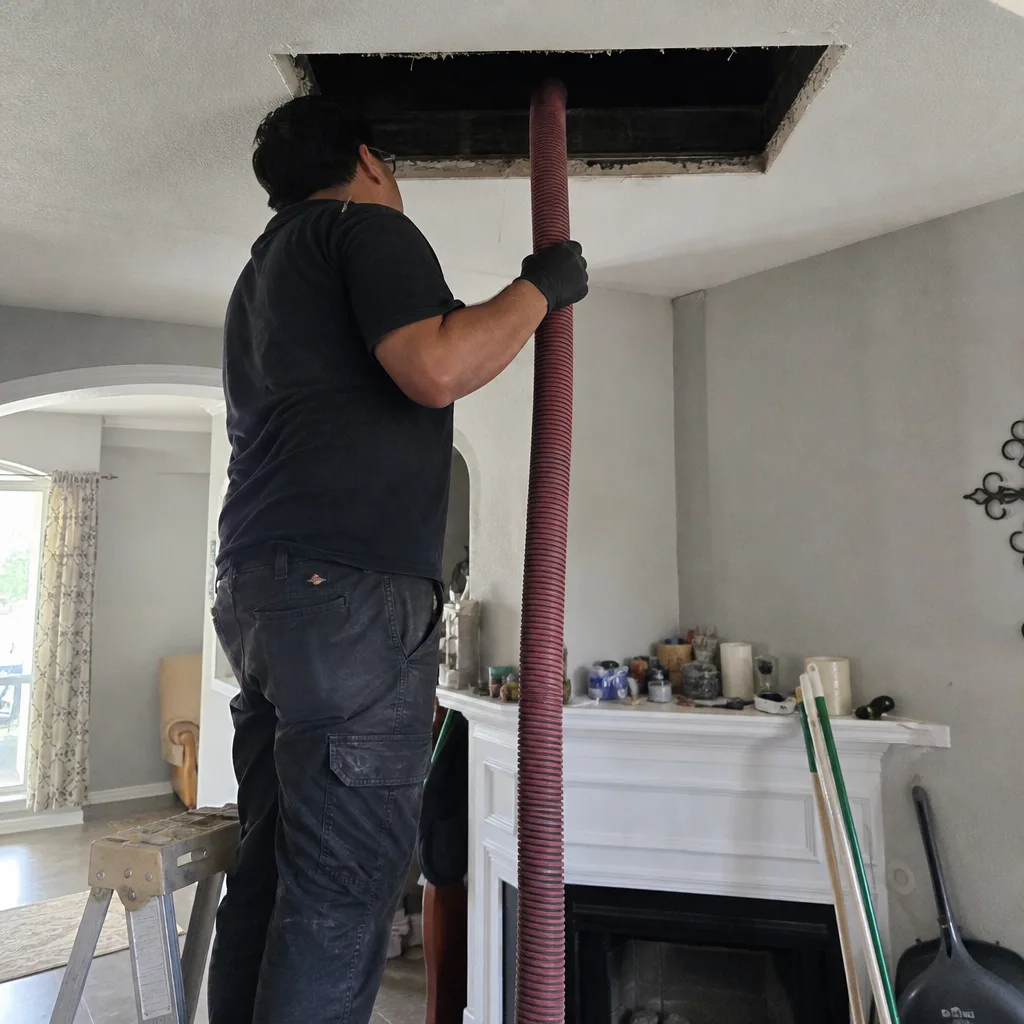 Before
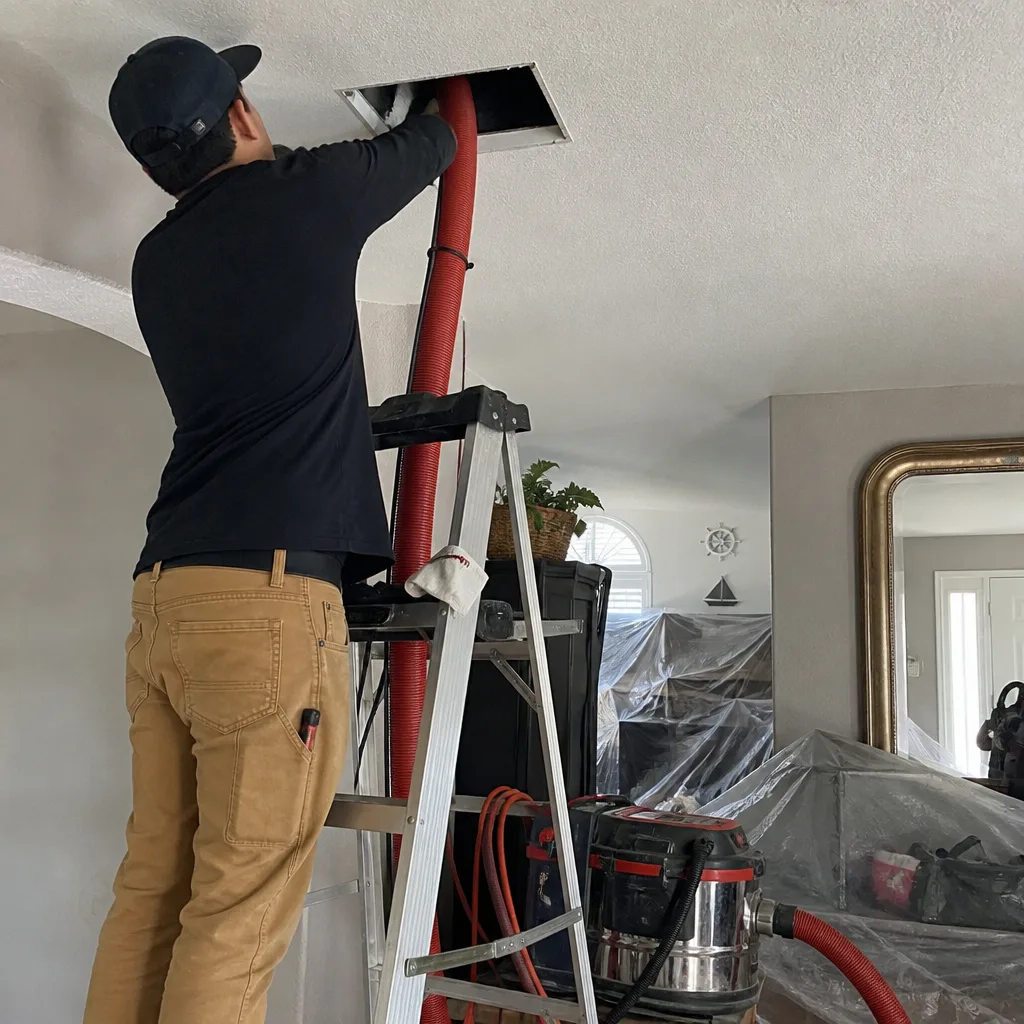 After
After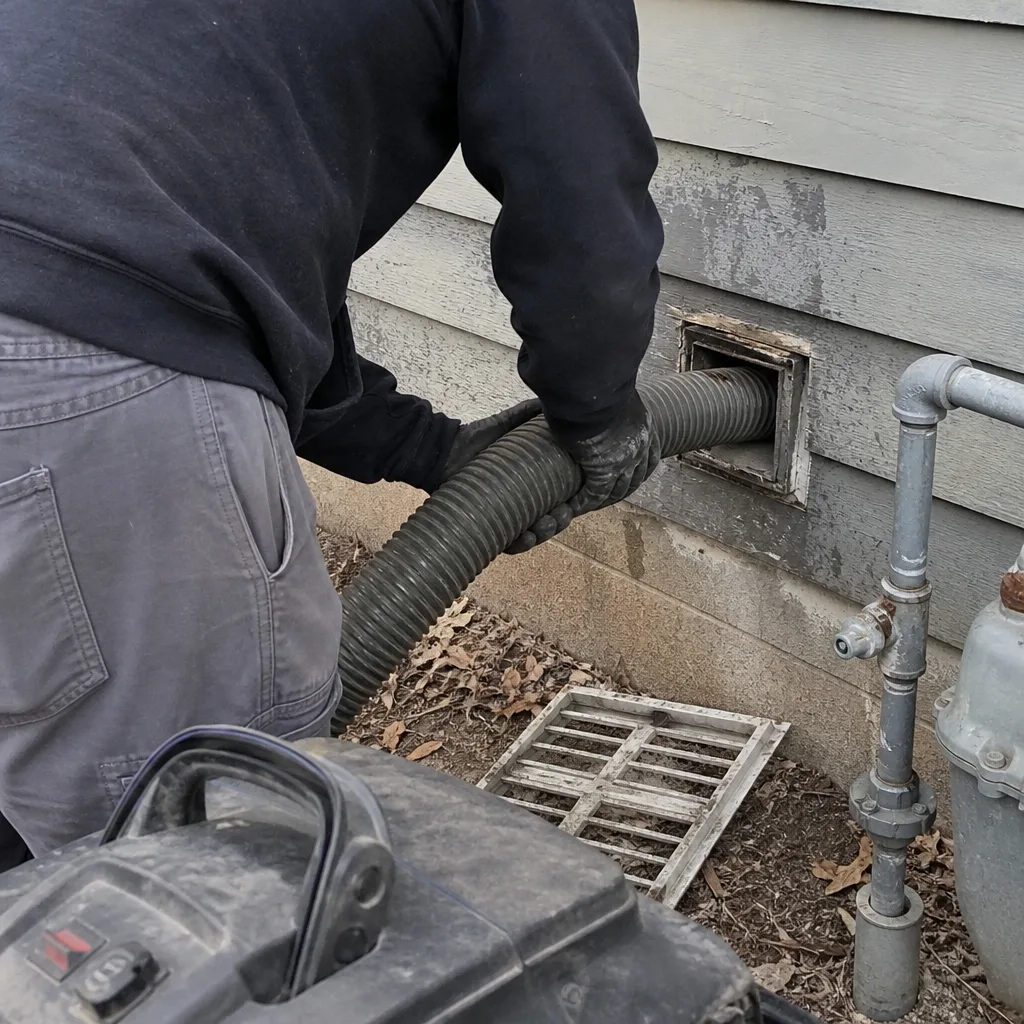 Before
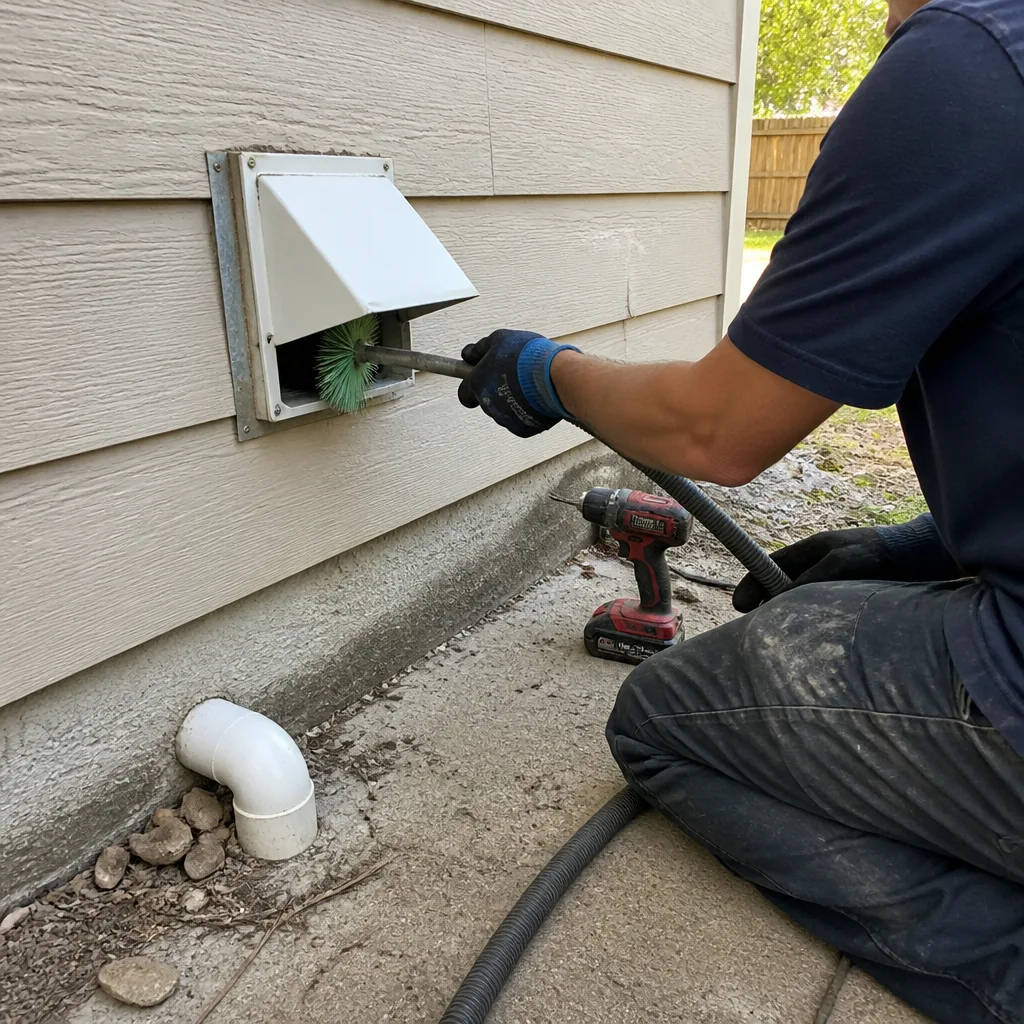 After
After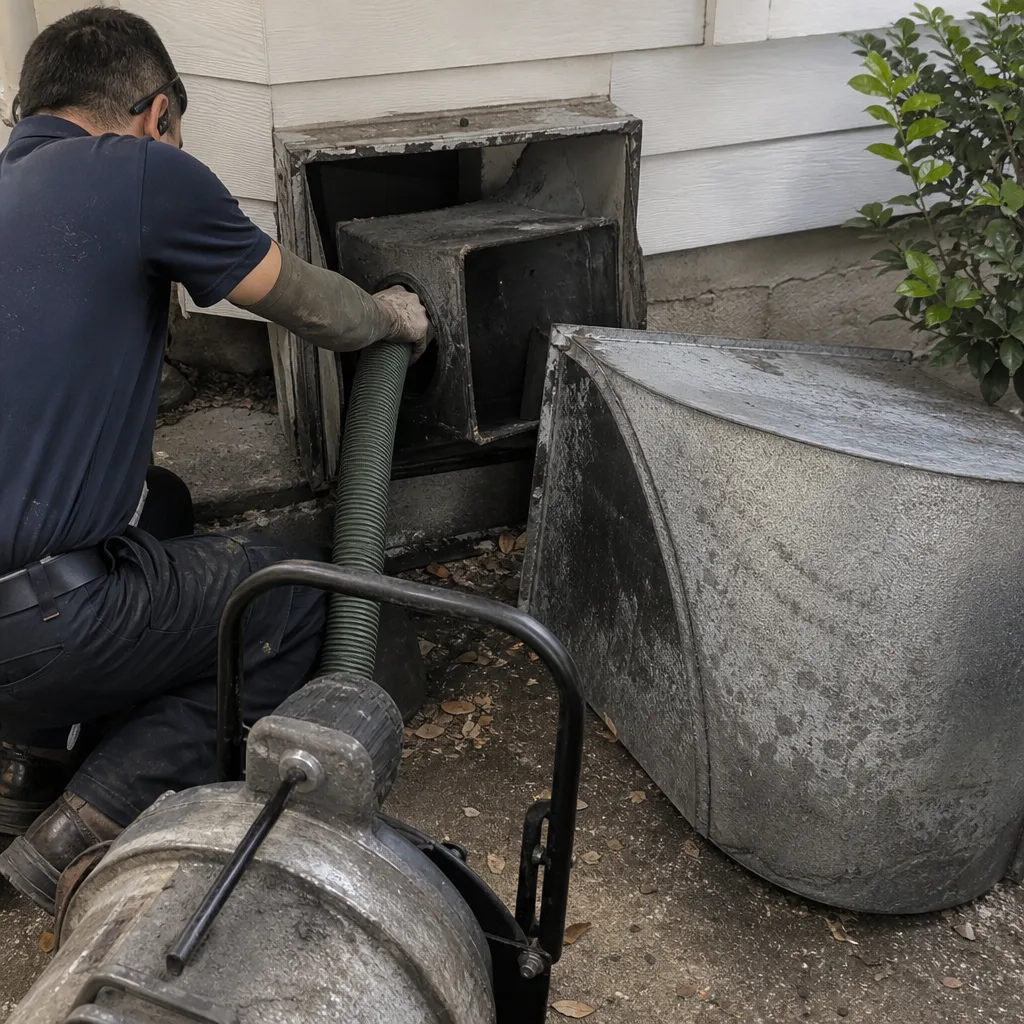 Before
 After
AfterWhen to Call a Professional
Call a professional duct cleaner when you see visible dust or debris inside supply registers, when your HVAC system distributes a dusty smell when it kicks on, when allergy symptoms track with time spent at home, when your home has been through renovation, or when the ducts haven’t been cleaned in five years or more. Call immediately if you see visible mold growth around registers or inside accessible duct interiors, or if your dryer vent hasn’t been cleaned in two years. Duct cleaning is not a DIY project; the runs are longer than any consumer vacuum can reach, and improper cleaning can damage flex duct liners or loosen debris that then circulates through your living space. Before booking, check Air Duct Cleaning Permits, Codes & Inspections in TX: What You Need to Know to understand local requirements. Cardinal Air Duct Austin offers free estimates in Austin. Call (940) 283-6595 and a live person will answer, ask about your home, and give you an honest price range before you ever schedule an appointment.
Frequently Asked Questions
Most standard whole-house duct cleanings in Austin run $450 to $850 in 2026, with per-vent pricing between $30 and $45 and typical homes having 12 to 20 vents. Larger homes with two HVAC systems or heavy contamination can reach $1,000 to $1,300 when legitimate add-ons like dryer vent cleaning or coil cleaning are included. Call (940) 283-6595 for an exact written quote for your specific home, free of charge.
Cheap quotes are almost always loss-leaders designed to get a technician into your home, where the real sales pitch happens. The $99 and $199 specials you see on Facebook and Instagram cover a fraction of the vents in a typical Austin home and funnel you into aggressive upsells for mold remediation, sanitizing fog, and filter upgrades. Legitimate Austin companies lose money at those price points, which means the profit has to come from somewhere else. Get the per-vent price, the total vent count, and the out-the-door number in writing before booking anything.
You should receive before-and-after photo documentation of your actual ducts. A professional duct cleaning company using equipment like Rotobrush rotary brush systems and Nikro HEPA vacuums can photograph the interior of your duct runs through the access points, and the difference should be visible. If a company can’t show you photos of your own ducts, inside your own home, taken during the job, you have no way to verify the work happened. The Relay Standard, which Cardinal Air Duct Austin operates under, includes before-and-after photo proof on every job.
Every 3 to 5 years for most Austin homes, with every 3 years recommended for homes with pets, allergy-sensitive residents, or nearby construction, and annually for dryer vents regardless of anything else. Austin’s cedar pollen season, summer humidity, and constant construction dust accelerate contamination faster than the national average. Homes that have been through renovation or have never been cleaned since construction should schedule sooner than the three-year mark.
Duct cleaning removes accumulated pollen, dust, and debris from the HVAC system, which reduces the amount of particulate the system recirculates through your living space. For Austin allergy sufferers, a clean duct system means the air handler isn’t distributing last cedar season’s pollen back into the bedroom. It’s not a cure, but removing a reservoir of accumulated allergen particulate from the air path makes a measurable difference for many allergy sufferers, especially when combined with a quality media filter.
Air duct cleaning addresses the duct runs and registers that carry conditioned air. HVAC cleaning addresses the equipment itself: the air handler interior, the evaporator coil, the blower assembly, and the drain pan. The coil and blower are where moisture, dust, and microbial growth interact in an Austin system. A complete system cleaning does both, and booking them together is more cost-effective than scheduling two separate visits. Call (940) 283-6595 for a combined quote covering the full system.
The Bottom Line
Air duct cleaning in Austin in 2026 costs $450 to $850 for a legitimate whole-house job, with $1,000 to $1,300 covering a full system cleaning with worthwhile add-ons like dryer vent service and coil cleaning. Anything priced below $300 is a lead-generation loss-leader, and any company quoting a number without asking about your vent count, duct material, and system configuration is guessing. The honest operators in Austin write the price before work starts, count the vents, document the work with photos, and stand behind the result for a year. The rest rely on the gap between quote and invoice. You now know how to close that gap before the van pulls up.
Written by Omar Haddad, Owner at Cardinal Air Duct Austin, serving Austin since 2005.