
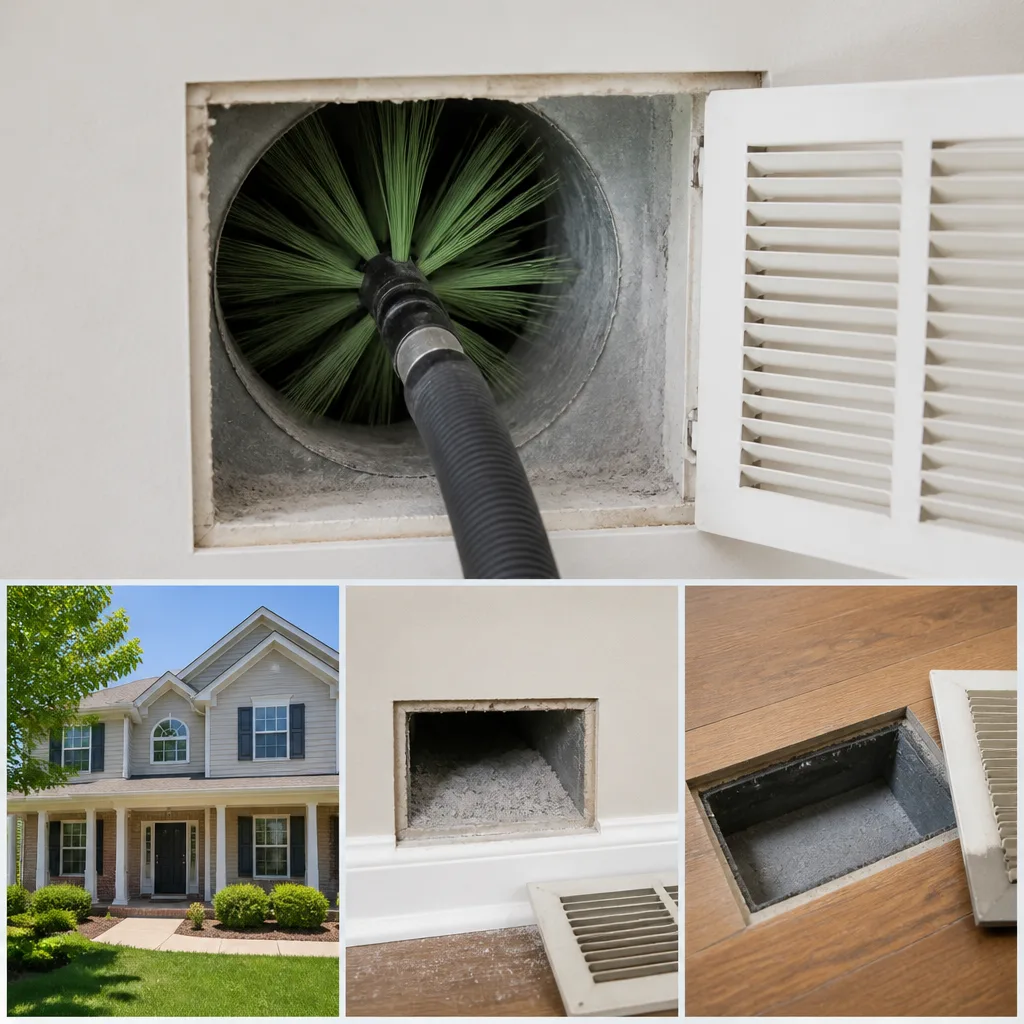
 Whole-home duct cleaning
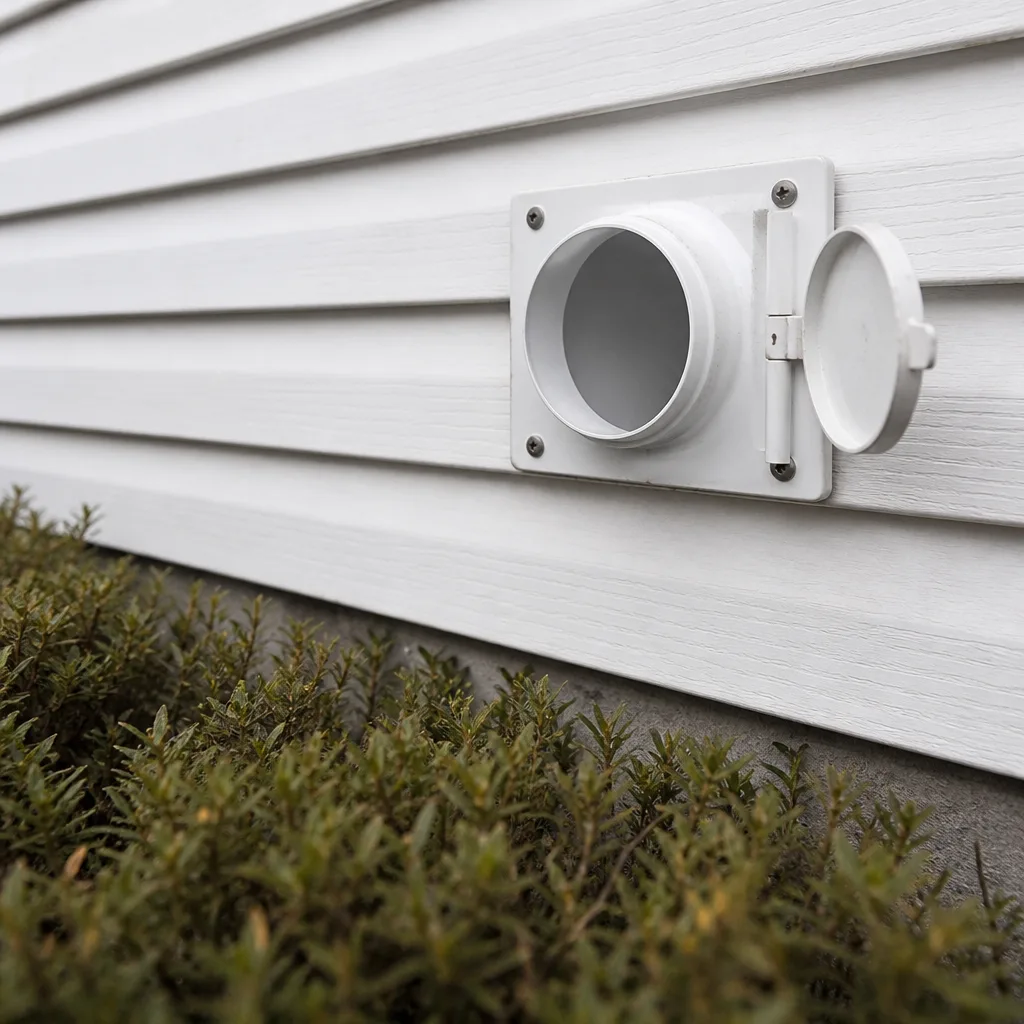 Dryer vent cleaning
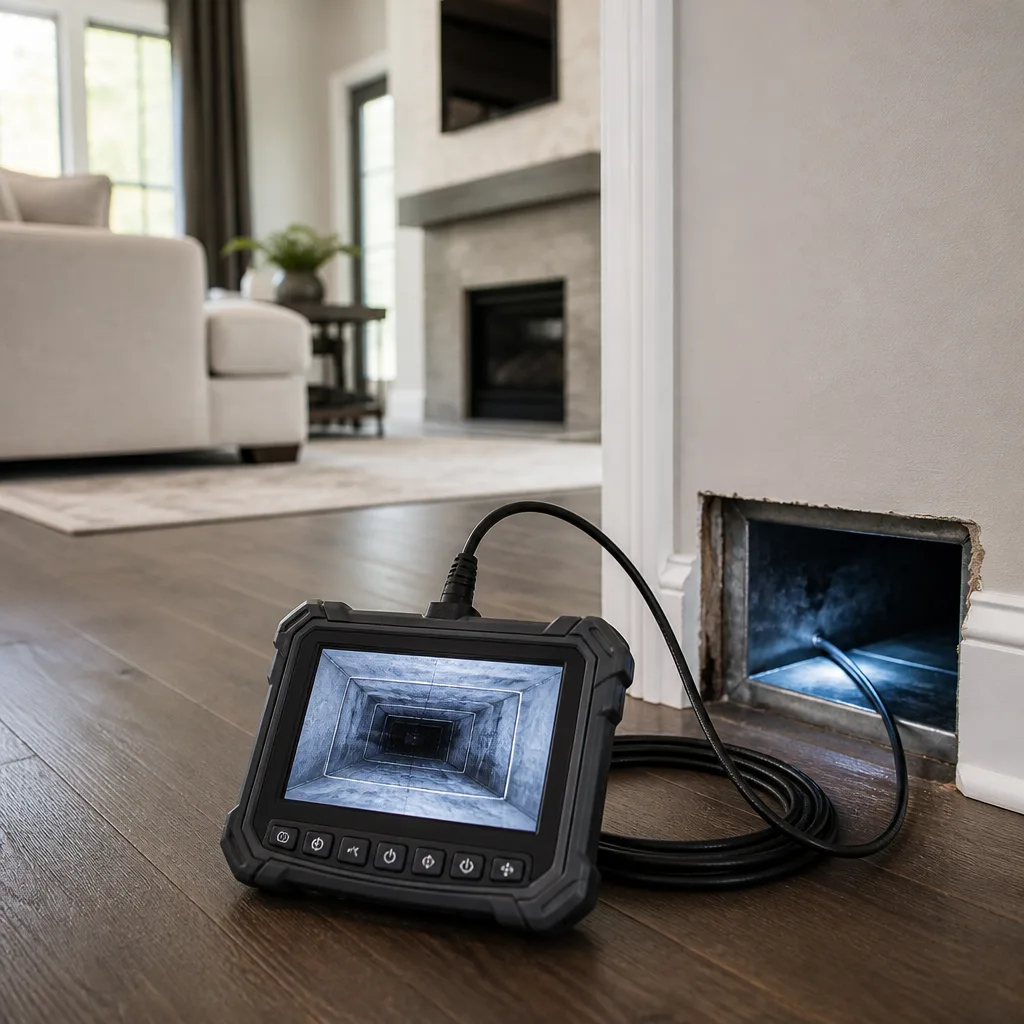 Camera inspection
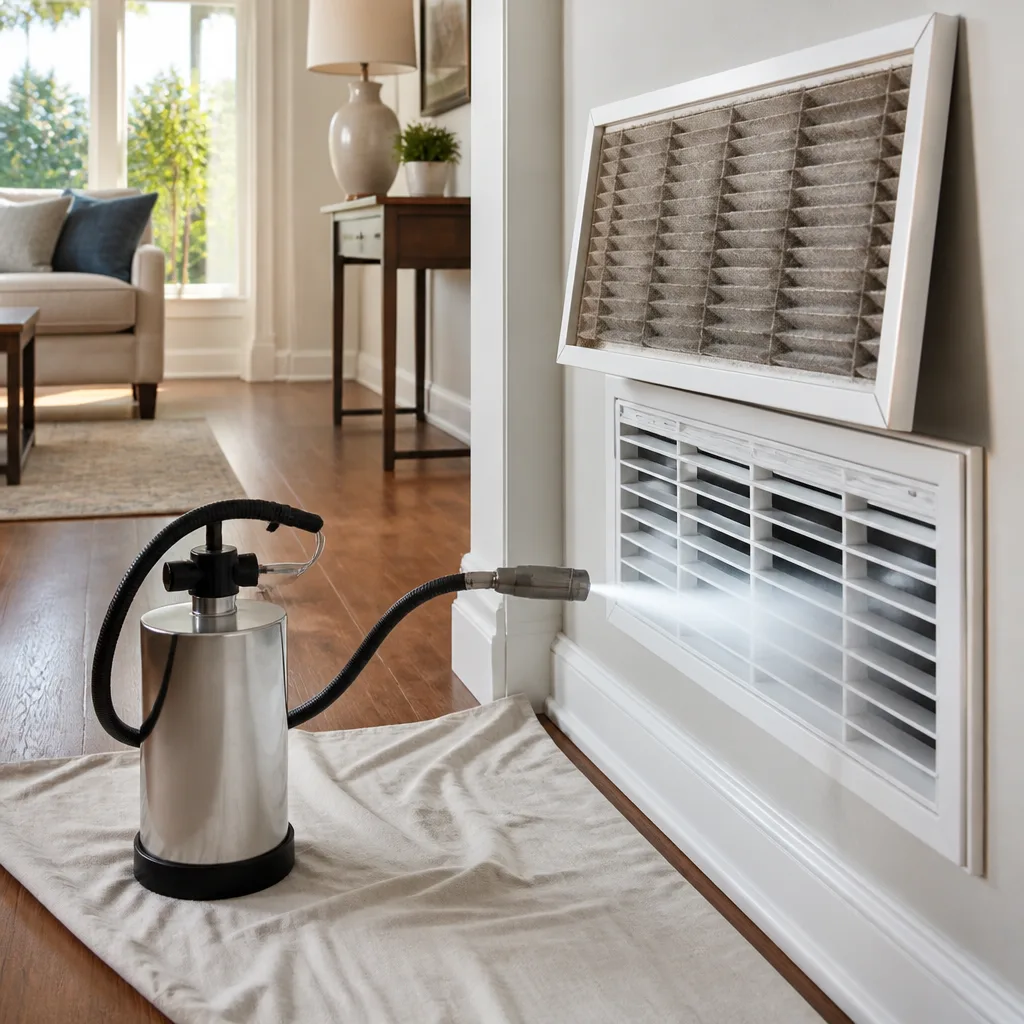 Sanitizing & deodorizing
Whole-system duct and dryer vent check with before-and-after photos - you see exactly what came out of your vents
That "$99 whole-house special" is a bait ad - the real number appears once they are in your hallway, or the "clean" is a shop-vac at the register. We photograph the inside of your ducts before and after instead.
Rotobrush Duct Sealing & Repair: The Austin Owner’s Guide
We stock and install Rotobrush-compatible duct sealing and repair components across Austin, with most sealing jobs running $350 – $650 installed and full repair work landing between $450 – $1,100 depending on what’s failed and how much of your system it’s affected. We carry the parts on our trucks, so most Rotobrush sealing and repair work in Austin is done in a single visit without waiting on a shipment. The way owners usually find us is pretty consistent: a routine cleaning turns up a cracked end cap, a loose brush head that scored the duct liner, or a compression fitting that’s been quietly leaking conditioned air into an attic that didn’t need it. Omar Haddad and our Austin crew see it every week, and it’s almost always fixable the same day.
Key Takeaways:
- Rotobrush sealing and repair across Austin typically runs $350 – $1,100 installed, with the final number depending on the part, your system size, and how many duct sections need sealing.
- We stock Rotobrush-compatible parts on the truck, so most jobs don’t need a return trip.
- A failed seal or fitting isn’t a cleaning problem. It’s an efficiency and air quality problem that gets worse every month it runs.
- Cardinal Air Duct Austin is an independent service provider. We’re not affiliated with Rotobrush, but we run their systems daily and know exactly which parts fail first.
Which Rotobrush Models This Applies To
Most of the Rotobrush systems we service in Austin fall into two families: the older aiR+ series and the current BR.1 / BR.2 platform that Rotobrush has been selling for the past several years. The sealing and repair parts overlap more than you’d expect. Compression fittings, brush head shafts, vacuum collar seals, and end caps are largely interchangeable between the aiR+ and BR.1 lines, but the BR.2 switched to a slightly different shaft diameter on the brush head and a redesigned vacuum collar, so parts from an aiR+ won’t always seat correctly on a BR.2. We’ve seen Austin homeowners buy a knockoff aiR+ shaft online and struggle for an afternoon before calling us.
Here’s the compatibility gotcha worth knowing before you buy anything: Rotobrush uses metric shaft threading on most of its brush heads and compression fittings. A lot of aftermarket sellers list parts as “universal” when they’re actually cut to SAE tolerances. That means they thread on, feel fine for the first few hundred feet of duct, then vibrate loose or strip the fitting mid-job. We’ve pulled too many loose aftermarket collars out of Austin return ducts to count.
For the OEM versus aftermarket question: Rotobrush-branded parts are consistently well made, but they’re priced at a premium and sometimes slow to ship. We carry quality aftermarket equivalents that we’ve tested on our own equipment. If you’re running an aiR+ or BR.1, an aftermarket collar or end cap from a name-brand supplier will serve you fine. If you’re on a BR.2, we lean OEM or high-grade aftermarket with exact metric specs. That’s the one place off-brand parts bite hard.
Styles & brands we work with
Signs Your Rotobrush Duct Sealing & Repair Is Failing
- You can hear the whine change mid-run. When a compression fitting loosens or a brush head starts backing off the shaft, the system’s pitch changes. It goes from a steady hum to a higher, sharper sound. That’s metal-on-metal or nylon-on-metal contact, and it’s chewing through a duct liner every second you keep running it.
- Debris blows back instead of extracting clean. Rotobrush systems rely on negative pressure at the vacuum collar. When that collar’s seal degrades (and in Austin’s heat, the rubber hardens faster than anyone expects), the brush kicks debris loose but the vacuum can’t pull it all out. You’ll see dust puffing from the register you’re not working.
- You’re losing suction at the collection point. A cracked end cap or a warped vacuum collar means the system isn’t holding pressure. The vacuum runs, the brush spins, but the debris stays in the duct instead of the collection bag. It looks like a cleaning problem. It’s a sealing problem.
- The brush head wobbles visibly. If you can see any lateral movement in the brush head while the shaft spins, the shaft is bent or the bearing is worn. Running it bent is how we see Austin homeowners turn a $180 repair into a full shaft and bearing replacement plus duct liner repair.
- Your cleaning takes twice as long with half the results. This is the one that gets missed. A system with bad seals and worn fittings works harder to do less. If you’re doing two passes over the same duct run and still pulling junk out, the machine isn’t the problem. The parts are.
Replacement Cost & What’s Included
What you’ll pay for Rotobrush sealing and repair in Austin depends on what’s broken. Here’s the honest breakdown based on what we quote and install in this market:
- Seal replacement (vacuum collar, end caps): $180 – $380 installed. This covers the new seals, removal of the old hardened rubber, seating the new parts, and testing the system under load.
- Compression fitting or coupling replacement: $200 – $450 installed. If the shaft threading is still intact, we swap the fitting, re-seat the brush head, and run the system to confirm it holds.
- Brush head replacement: $350 – $650 installed. The brush head is the workhorse. In Austin, the nylon bristles degrade faster than they would in a milder climate because the heat cycling makes them brittle. We’ll match it to your model.
- Shaft and bearing replacement: $500 – $1,100 installed. This is the expensive end. It includes disassembly, new metric-threaded shaft, new bearings, resealing, and a full system test.
Every repair we do in Austin comes with a written price before work starts, and a written guarantee on the parts and labor. If the repair fails within 365 days, we come back and make it right at no charge. That’s the 365-Day Done Right Promise, and it covers every single job.
See the difference
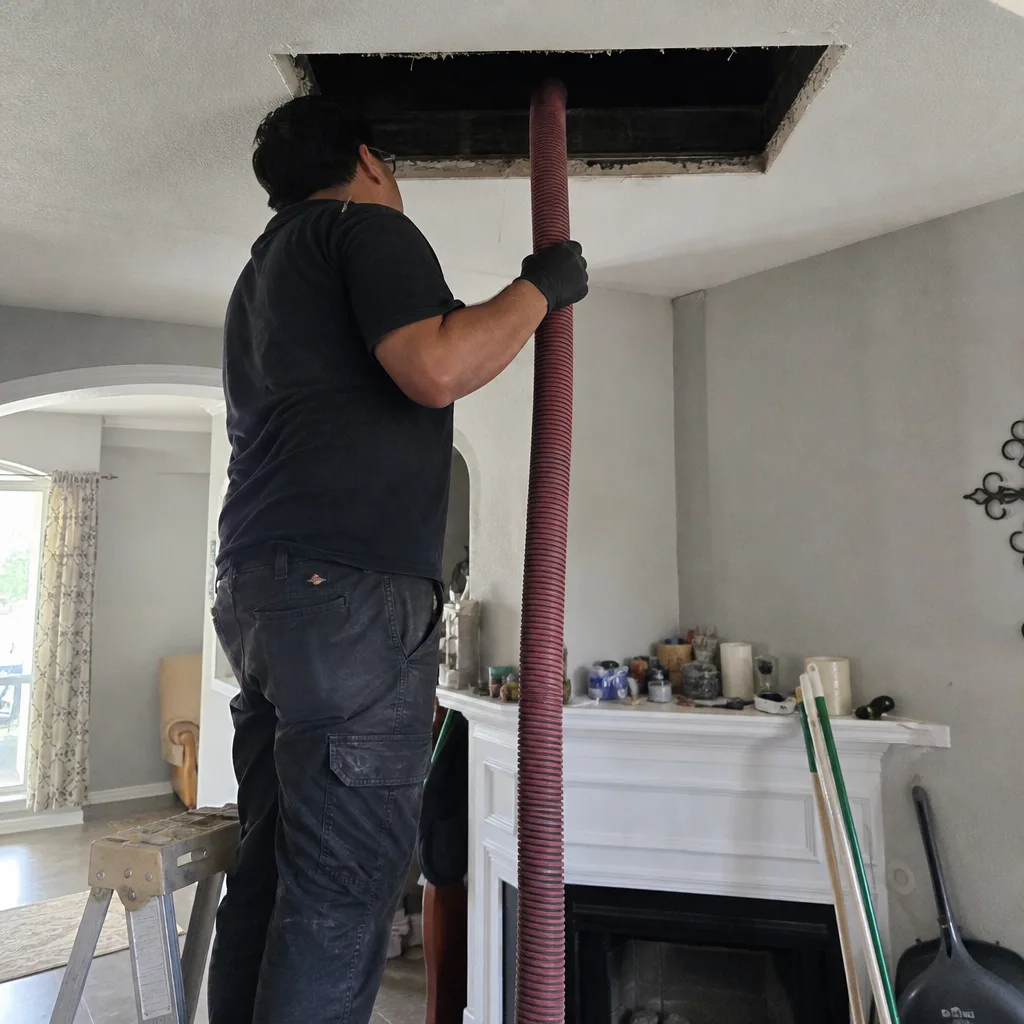 Before
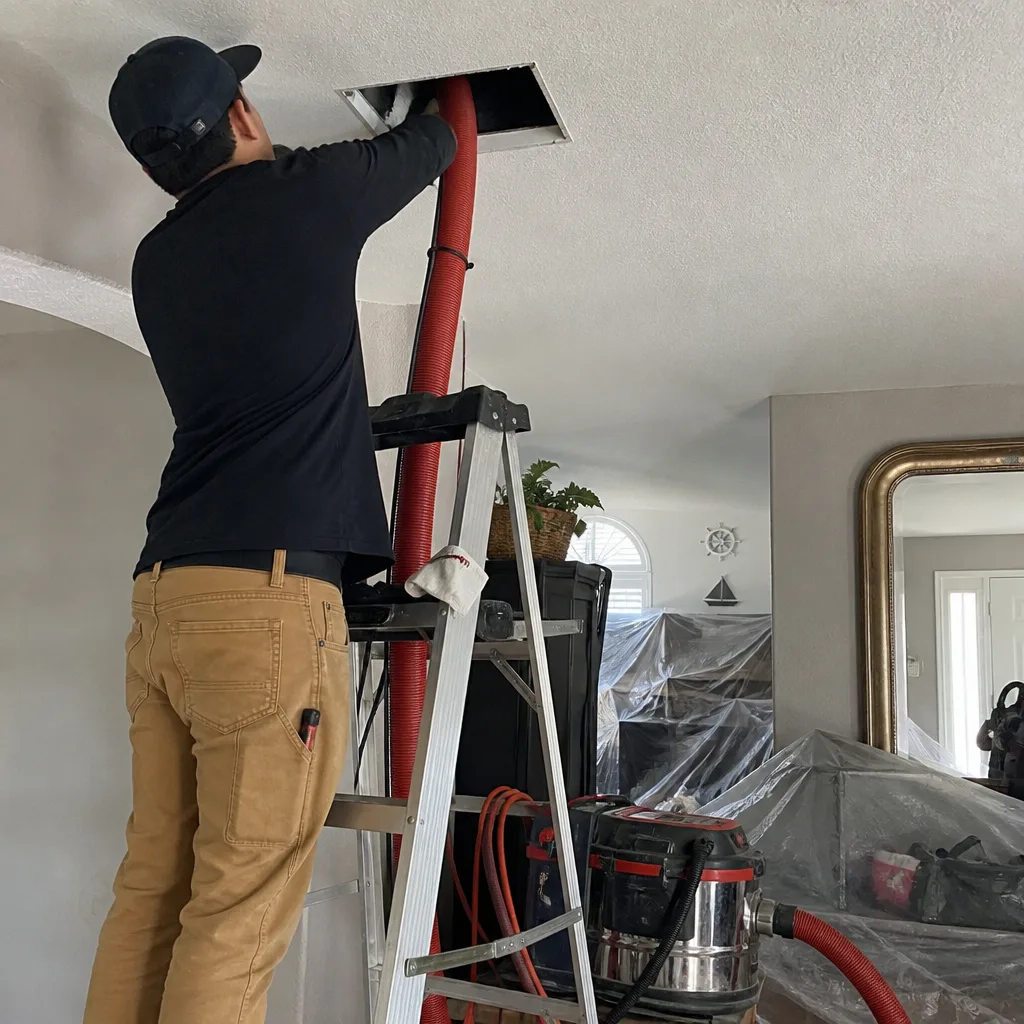 After
After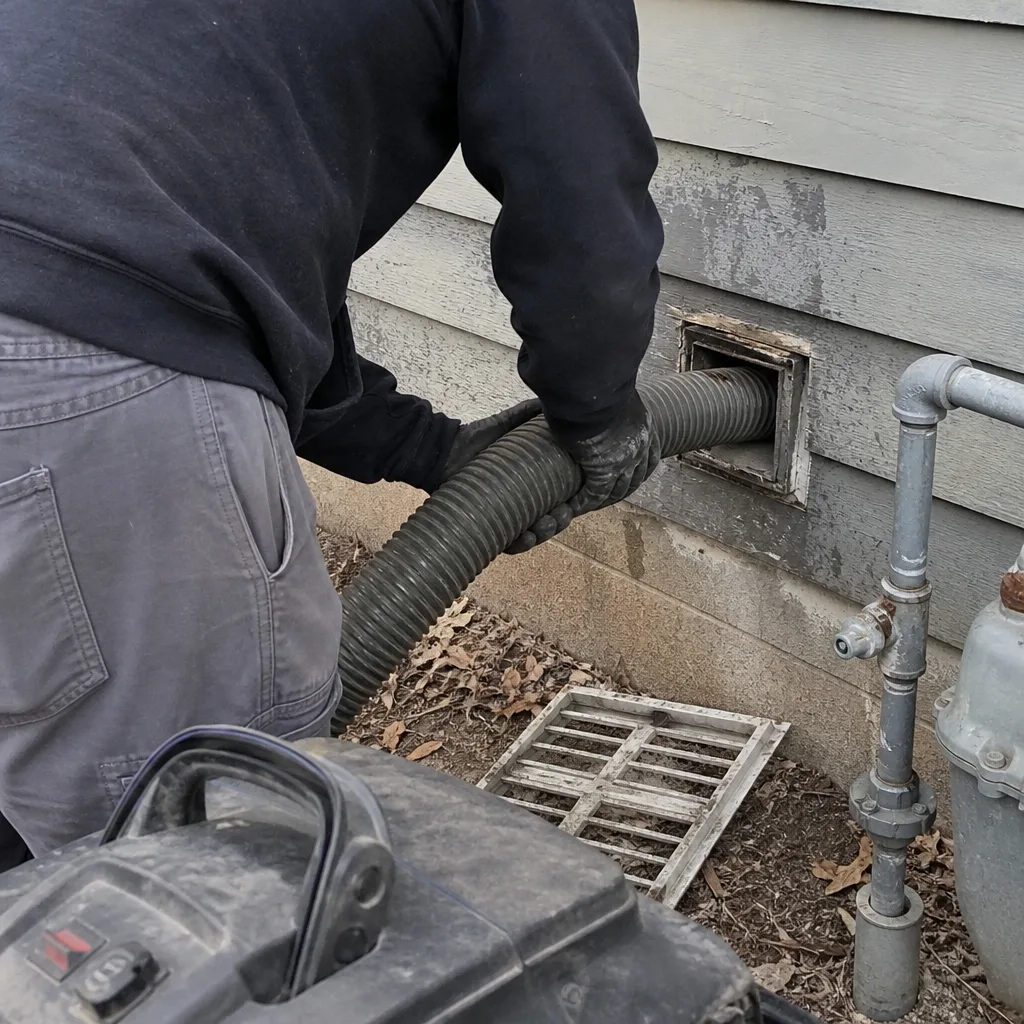 Before
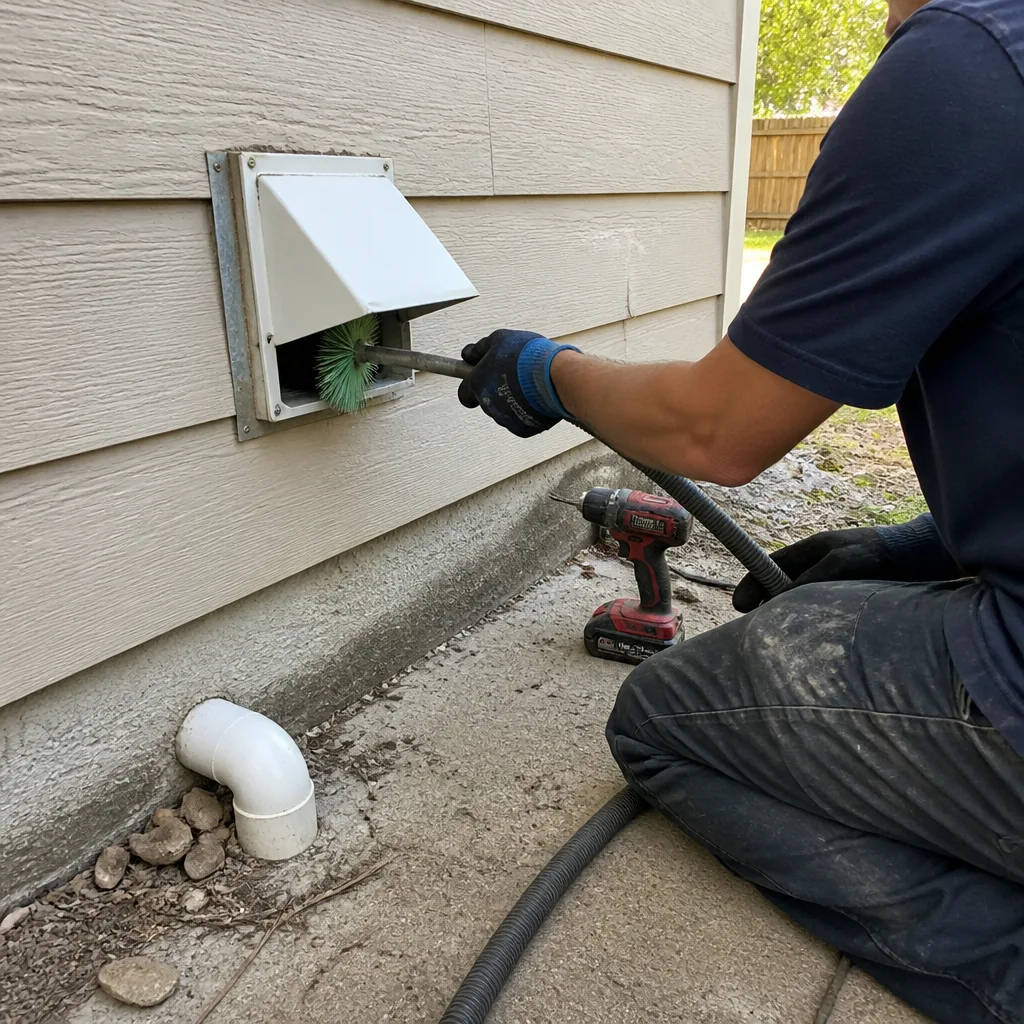 After
After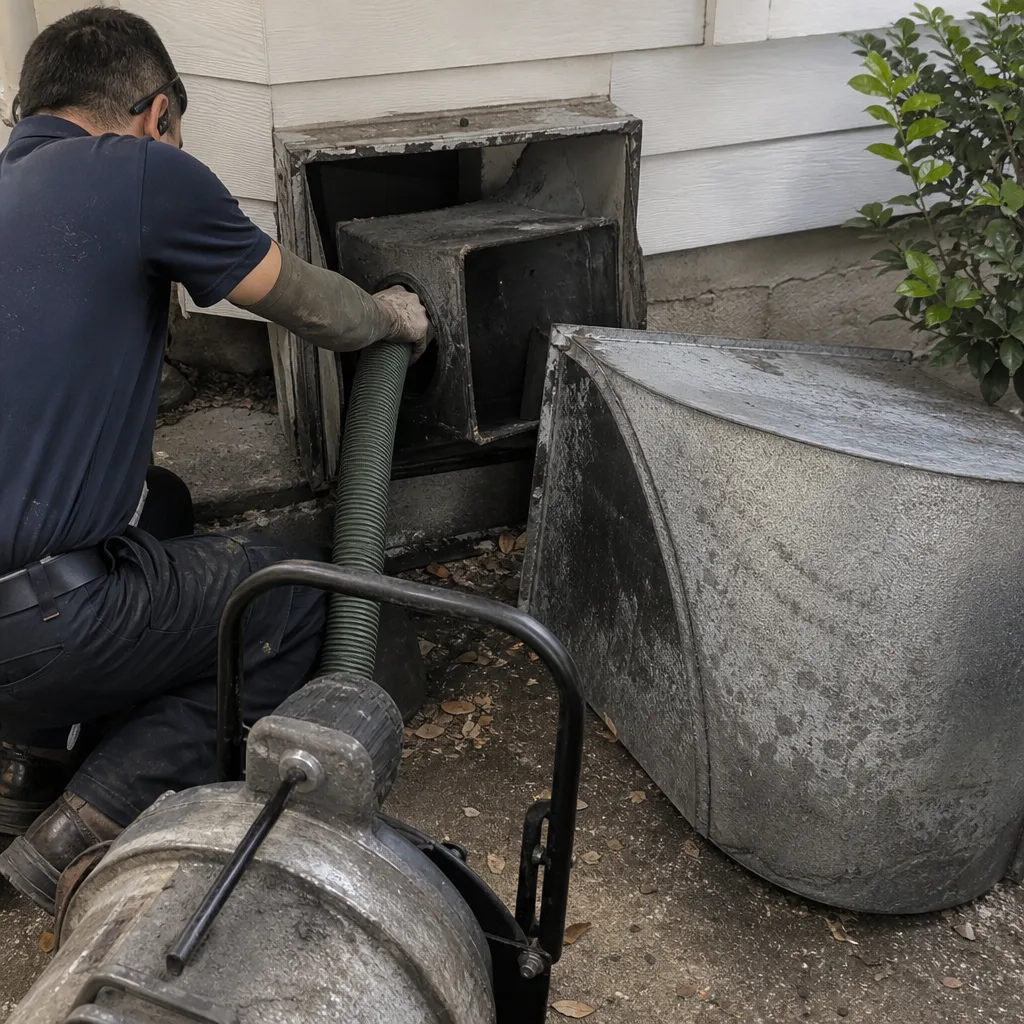 Before
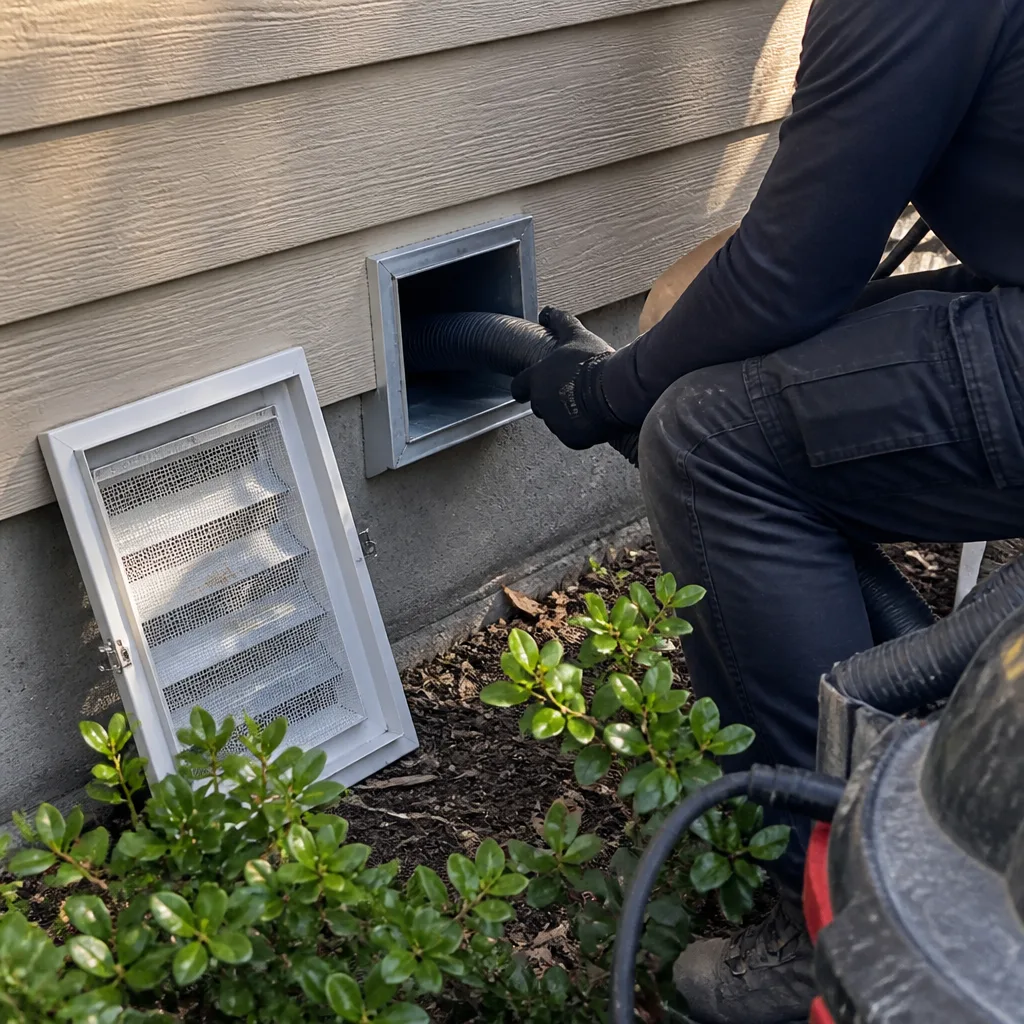 After
AfterDIY or Call Us?
Here’s our honest split on this one. You can safely inspect your Rotobrush system for visible wear: look at the vacuum collar for cracks, spin the brush head by hand (with the system unplugged) to feel for wobble, and check the end caps for separation. That’s all fair game, and it helps you know what you’re dealing with before anyone quotes you.
What we don’t recommend is replacing a compression fitting, shaft, or bearing yourself unless you’ve done it before. These are high-tension rotating parts. A brush head that comes apart inside a duct at full speed will tear a liner, and a shaft that lets go can damage the duct wall. We’ve seen the aftermath of both in Austin homes, and the repair bill after a DIY failure is always higher than the original fix would have been.
If you’re in Austin and your Rotobrush isn’t holding pressure or the brush head is wobbling, call us at (940) 283-6595. We’ll give you a straight answer on what it needs and what it costs before we touch anything.
FAQs
In Austin’s climate, vacuum collars and rubber seals typically last 2 – 4 years before the heat hardens them enough to lose their grip, while metal shafts and brush heads can run 5 – 8 years with regular use and basic maintenance. The Texas summer is the biggest enemy of rubber components. Call (940) 283-6595 if your seals feel stiff or cracked, and we’ll give you a free estimate.
Seals can sometimes be reconditioned with a proper cleaning and re-seating, but compression fittings with stripped metric threading should always be replaced, because re-tapping weakens the metal and creates a failure point. Our Austin techs will tell you plainly which route makes sense before any work starts. Call (940) 283-6595 for an honest assessment.
Most sealing and repair work on a Rotobrush system takes 1 – 2 hours, and the majority of Austin jobs are done in a single visit since we carry the common parts on the truck. If we need a specialized BR.2 shaft or bearing, we’ll tell you up front and schedule the return visit. Call (940) 283-6595 to get an exact timeframe for your model.
Yes, we stock common Rotobrush-compatible parts on our service vehicles: vacuum collars, end caps, compression fittings, brush heads, shafts, and bearings for the aiR+ and BR.1/BR.2 lines, along with parts for Lennox, Trane, and Carrier systems. That’s why we can usually fix your Rotobrush system the same day rather than waiting on a warehouse shipment. Call (940) 283-6595 and tell us your model.
Why Austin Homeowners Call Cardinal for Rotobrush Work
We’re a duct specialist first. That means Rotobrush equipment isn’t a side product for us, it’s the tool we run every day. Our Austin technicians are background-checked, show up in uniform, and bring Rotobrush contact-vacuum systems, Nikro negative-air machines, and Abatement Technologies containment units on every job. You’ll know the tech’s name before they knock on the door.
Part of the Relay Home Co. family and founded in 2005, Cardinal Air Duct Austin operates on The Relay Standard: a live arrival window you can track, before-and-after photo proof of the work, and a digital invoice you can pay from a link. No paper clutter, no vague arrival windows, no surprises. Clean air isn’t a luxury – it’s just what your system was built to deliver.
If your Rotobrush machine is losing suction, wobbling, or just not cleaning the way it did when it was new, call us at (940) 283-6595 for a free estimate. We’ll tell you what’s wrong, what it costs to fix, and we’ll put it in writing before the work starts.
Written by Omar Haddad, Owner, Cardinal Air Duct Austin at Cardinal Air Duct Austin, serving Austin and nearby areas.