
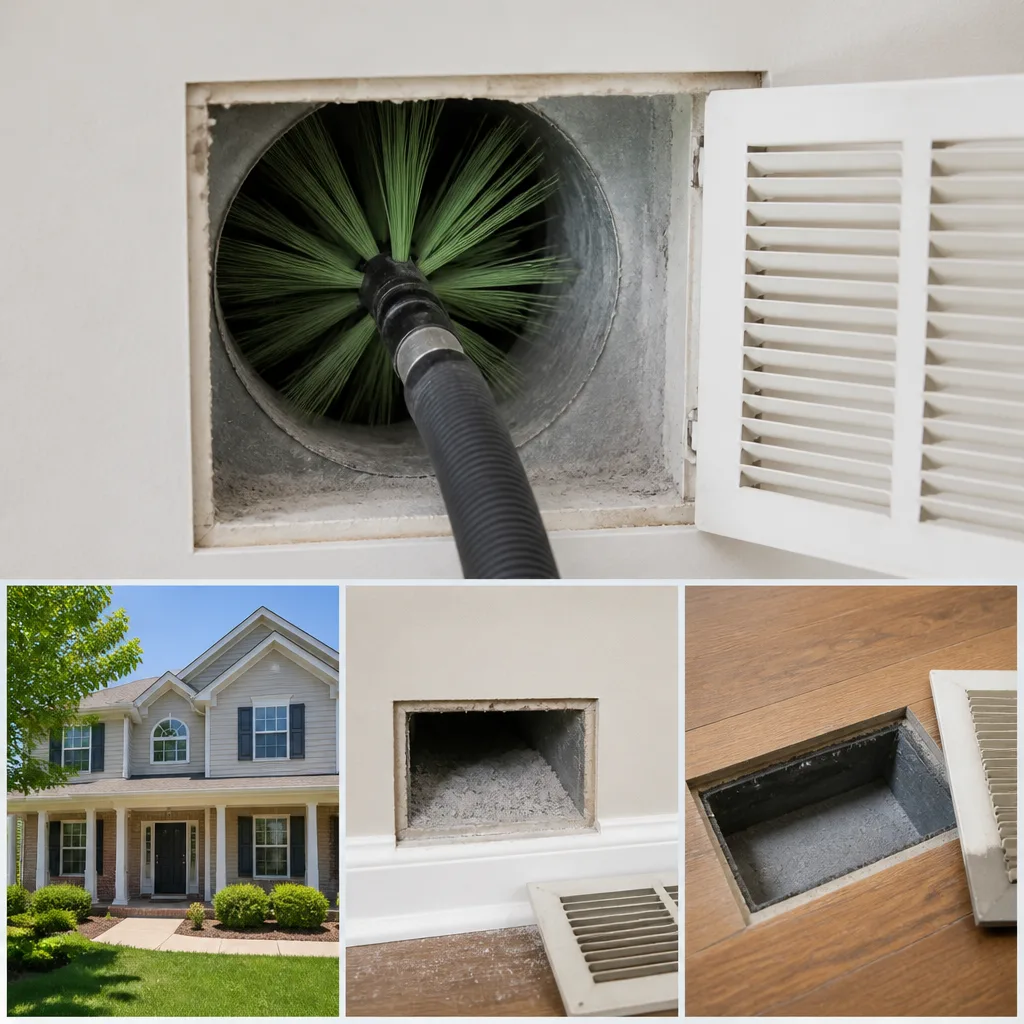
 Whole-home duct cleaning
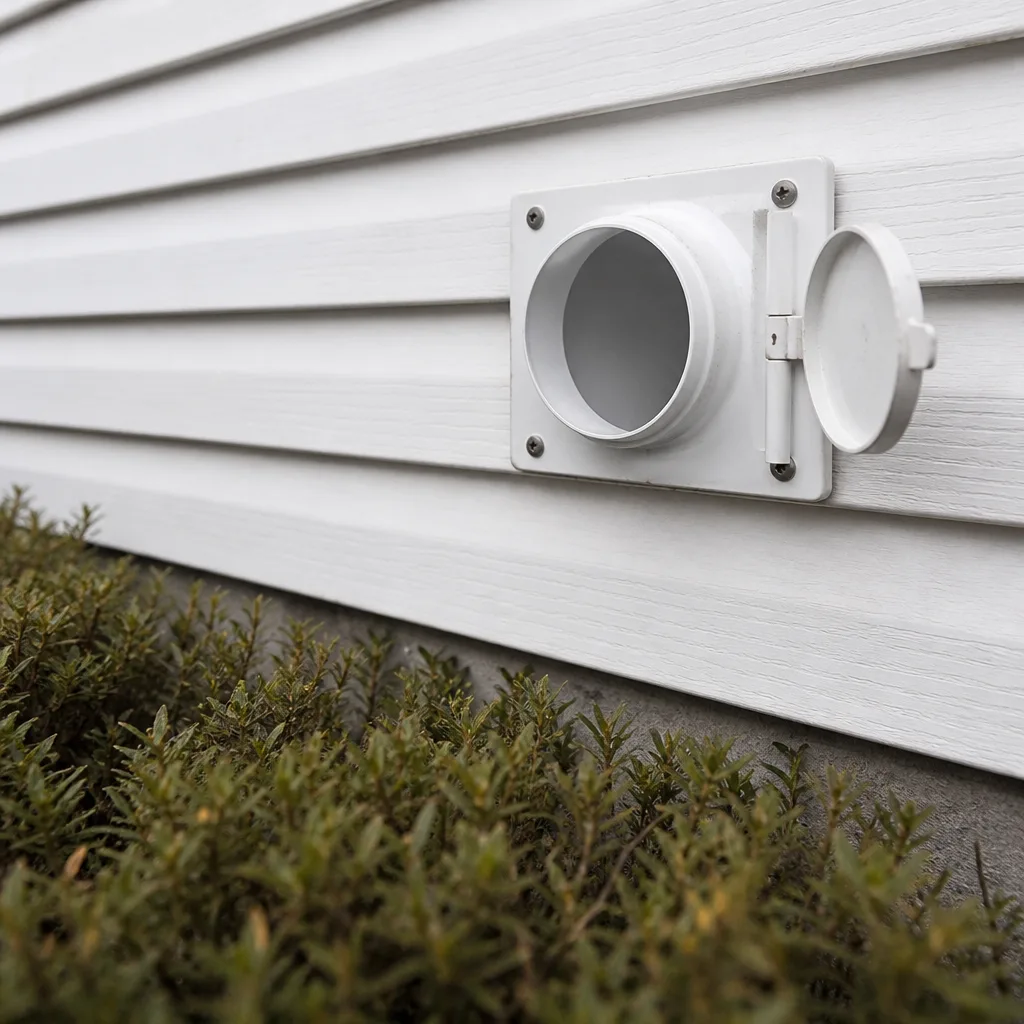 Dryer vent cleaning
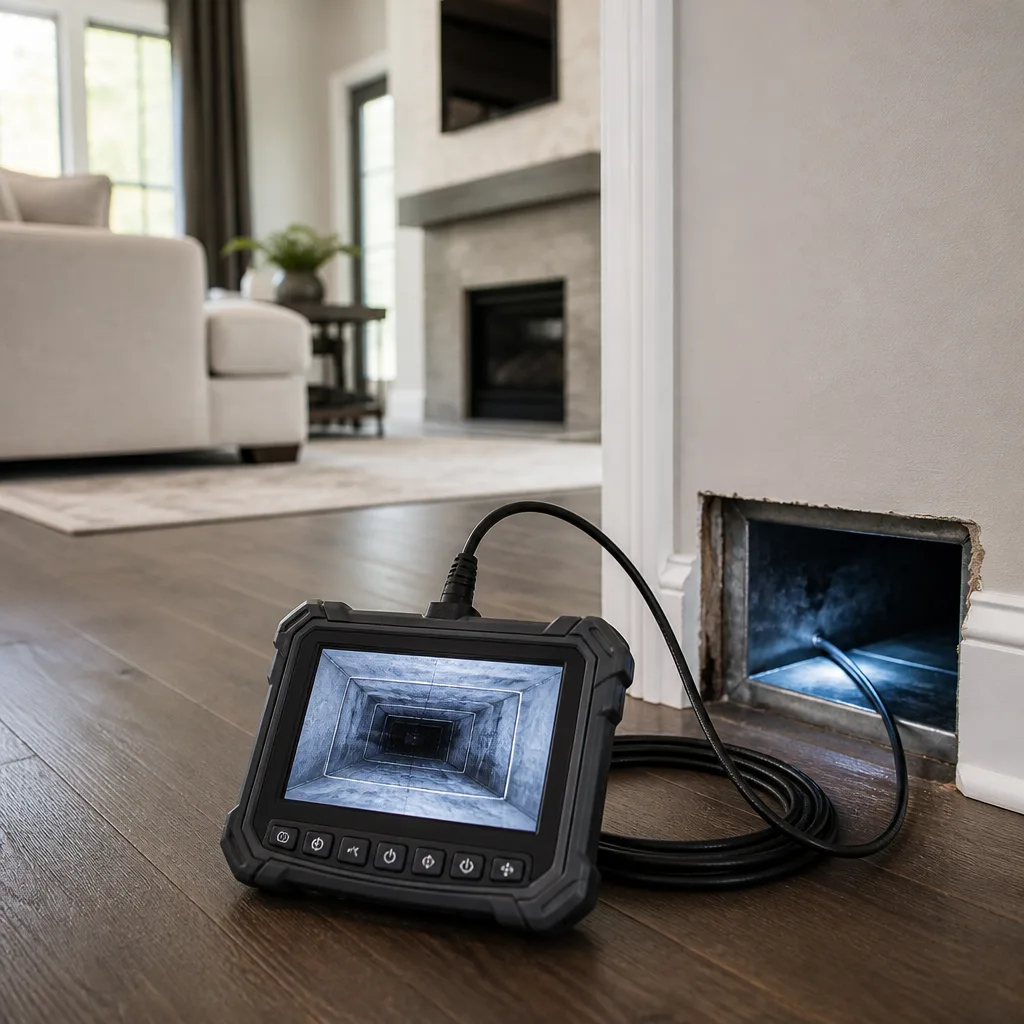 Camera inspection
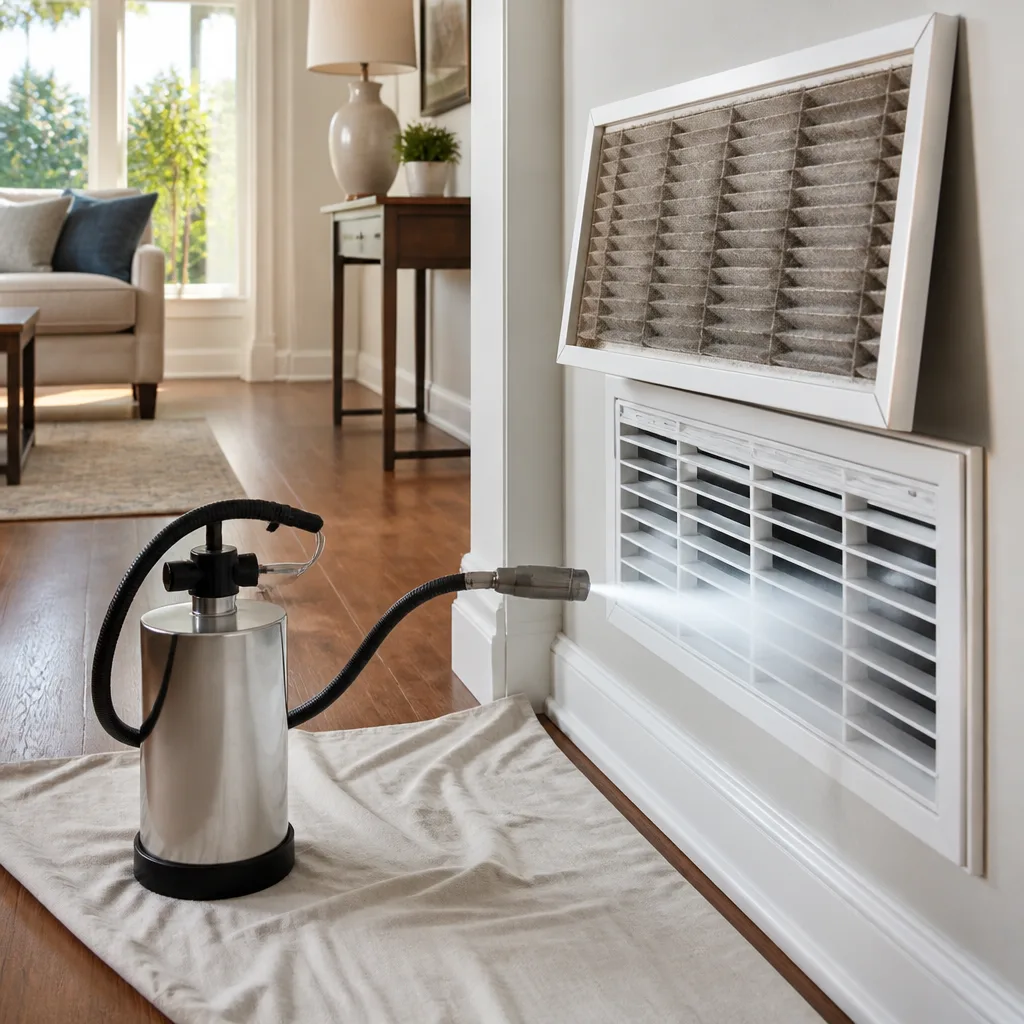 Sanitizing & deodorizing
Whole-system duct and dryer vent check with before-and-after photos - you see exactly what came out of your vents
That "$99 whole-house special" is a bait ad - the real number appears once they are in your hallway, or the "clean" is a shop-vac at the register. We photograph the inside of your ducts before and after instead.
Abatement Technologies Vent Sanitizing: The Austin Owner’s Guide
If you own an Abatement Technologies air scrubber or containment unit and the vent sanitizing function has quit, here’s the straight answer: we stock Abatement Technologies-compatible sanitizing cartridges, UV bulbs, and HEPA filter stages for most portables and wall-mounts, and a typical replacement runs $180 to $475 installed depending on your model and what’s actually worn out. Most Austin calls we get for this are same-week, and if you’re in Tarrytown, Mueller, or up near the Domain, we can usually get to you within two business days. The way most owners find out something’s wrong is simple: they flip the unit on, the air moves fine, but the sanitizing indicator light never comes on, or the airflow drops even on high. That usually means the UV bulb or the sanitizing stage itself has hit the end of its service life, not that the whole unit is dead.
One thing worth saying up front: Cardinal Air Duct Austin is an independent service provider. We’re not affiliated with Abatement Technologies, but we’ve worked on enough of their units in Austin homes and commercial buildings that we know exactly which parts fail first, which aftermarket options are junk, and which ones are worth your money.
Key takeaways:
- We stock Abatement Technologies sanitizing bulbs, cartridges, and filters on the truck for most portable and wall-mount models.
- Installed replacement in Austin runs $180 to $475; you get a written price before anything is touched.
- Omar Haddad and our techs have diagnosed and repaired Abatement units across Austin for years, from Tarrytown homes to commercial jobs near the Domain.
- Every replacement carries the 365-Day Done Right Promise: if it fails within a year, we return and make it right at no charge.
Which Abatement Technologies Models This Applies To
Abatement Technologies makes a few distinct lines that end up in Austin homes and businesses, and the vent sanitizing part is not one-size-fits-all. The Predator series (the PRED750 and PRED1200) uses a permanent-media HEPA system with a UV-C sanitizing stage that’s hardwired into the airflow path. The Viper series is more common in duct-mounted installs and uses a replaceable UV-C bulb plus a catalyst cartridge. The Airwolf and CAP series portables used mostly in remediation and restoration work all take cartridge-style sanitizing modules that twist out from the top or side of the housing.
Here’s the compatibility gotcha most people miss: the UV bulb on a Viper looks identical to a Predator bulb, but the base pins and wattage are different. Abatement labels most parts with a series code and a wattage stamp on the bulb base or cartridge collar. If the label is worn off, we measure the old bulb length and pin spacing before ordering anything. Buying the wrong one means a unit that powers up but never reaches sanitizing output, and you won’t know it’s wrong until mold or odor comes back. For most Austin owners, OEM Abatement parts are the safer call on bulbs and cartridges because the aftermarket equivalents we’ve tested tend to burn out 30 to 40 percent faster in our humidity. On the HEPA filter stages, a quality third-party filter from a name brand like Guardsman performs every bit as well and saves real money.
Styles & brands we work with
Signs Your Abatement Technologies Vent Sanitizing Is Failing
- The sanitizing indicator light stays off or blinks constantly. On most Abatement units, the UV stage has a separate indicator circuit from the main fan. A solid-off light usually means a dead bulb; a blinking light often means the ballast or control board has detected a fault in the sanitizing circuit. Both are repairable without replacing the whole unit.
- Air moves, but stale or musty smells return within a day. When the UV-C stage fails, the unit becomes just an expensive fan. The HEPA filter keeps trapping particles, but the sanitizing function is what kills the organic gunk that causes odor. If a room smells fine while the unit runs and goes stale when it cycles off, the sanitizing stage is likely dead.
- You see visible residue or discoloration on the bulb or cartridge. Austin’s humidity means bulbs and catalyst cartridges pick up a fine film over time. A bulb that’s gone cloudy white or a cartridge that’s browned at the edges has lost real output. If you can see it, it’s done.
- The unit runs hotter than usual or shuts itself down intermittently. A failing ballast driving a dying bulb generates excess heat. Abatement units have thermal cutoffs, so the shutdown is the machine protecting itself. It’s a warning sign, not a coincidence.
- The bulb or cartridge has exceeded its rated hours. Abatement UV-C bulbs are typically rated 9,000 to 12,000 hours, which is 12 to 18 months of continuous use. In Austin homes where units run constantly through allergy season, that clock burns faster than owners expect.
See the difference
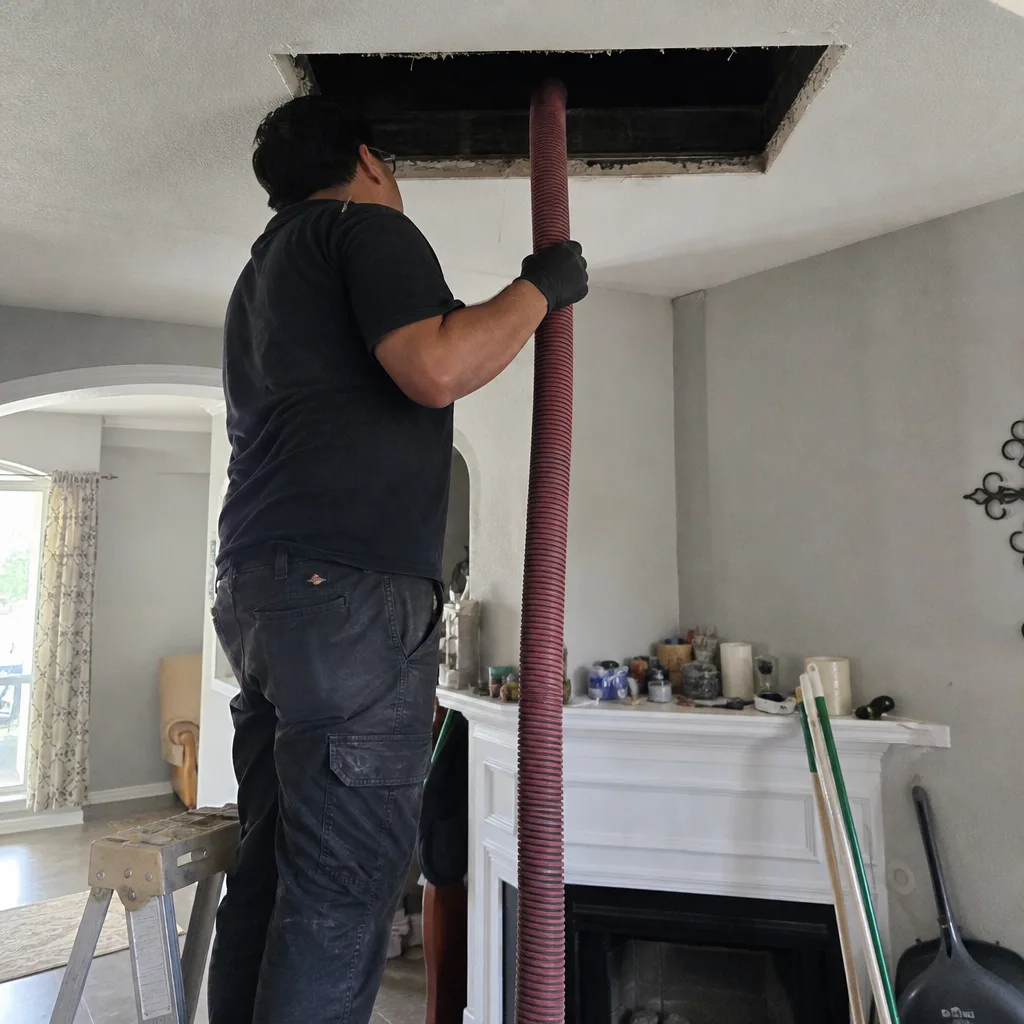 Before
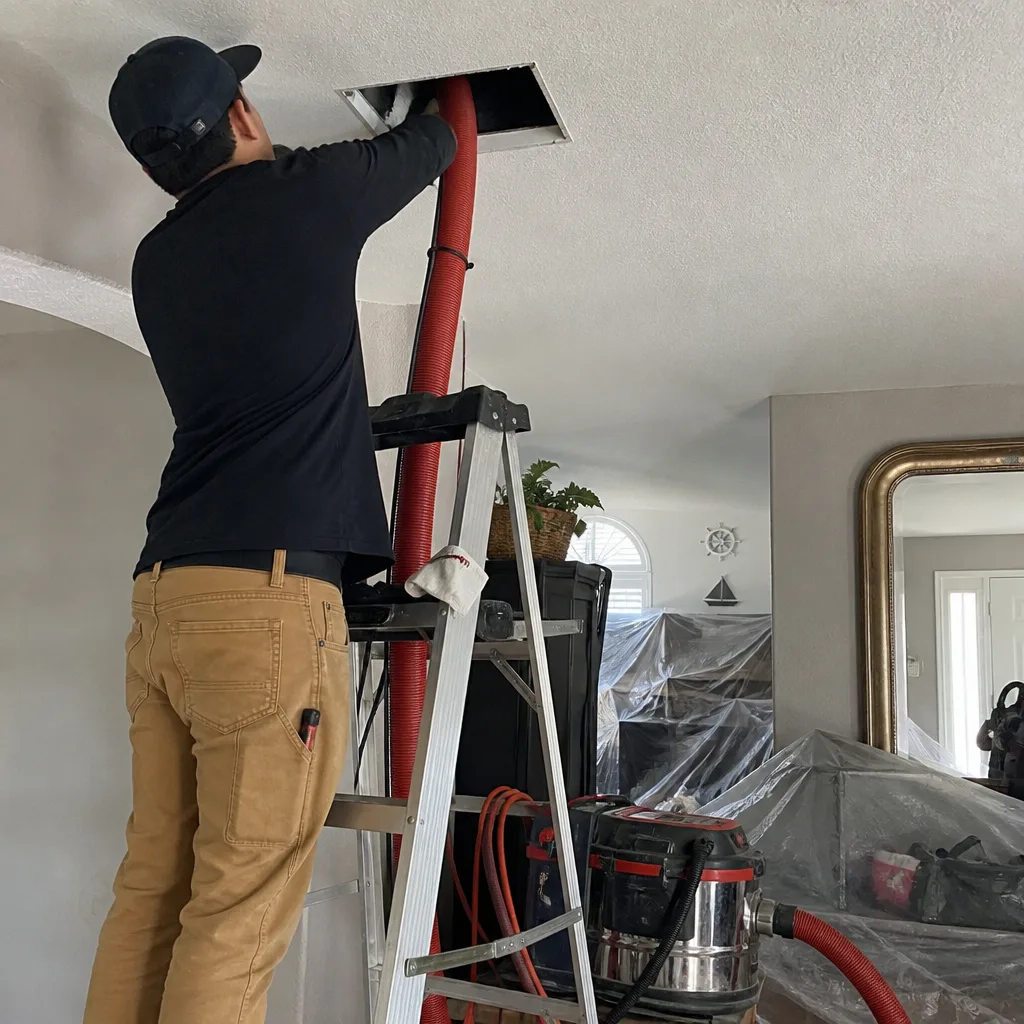 After
After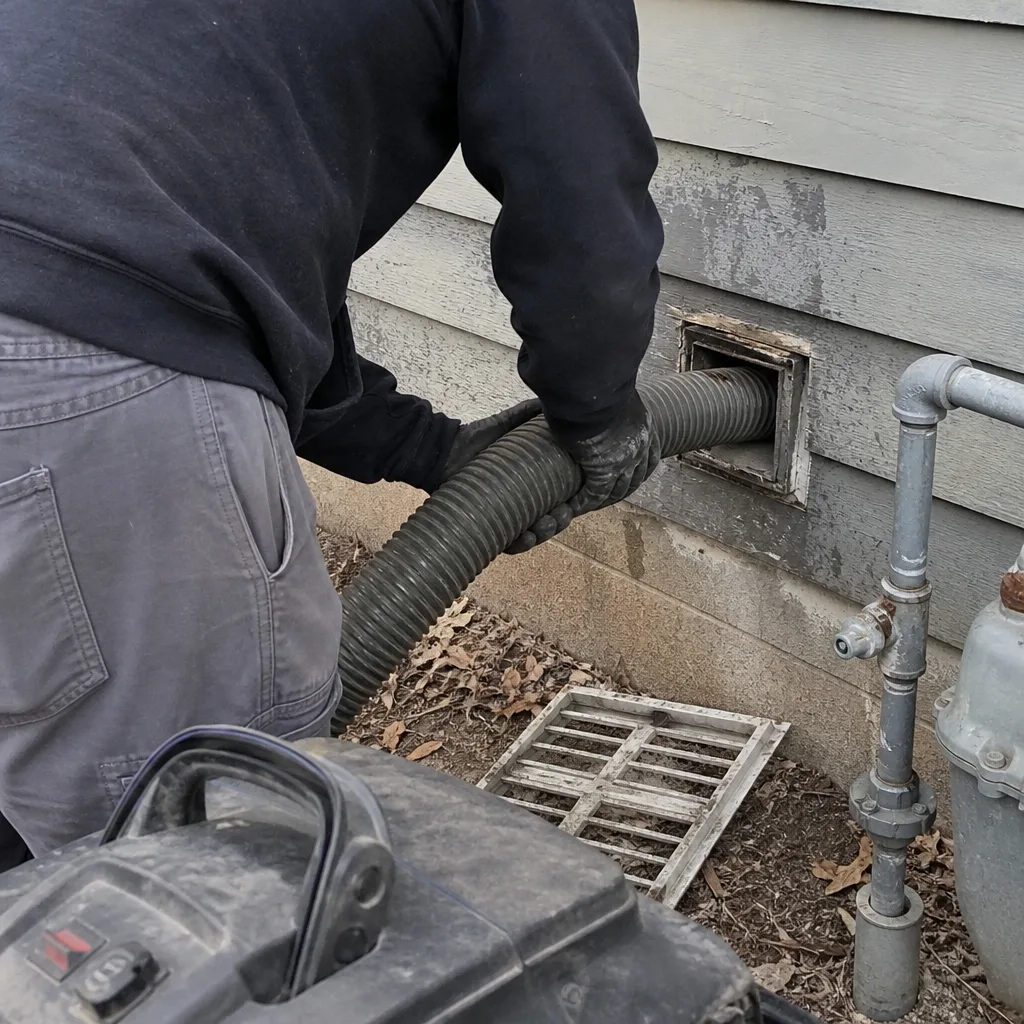 Before
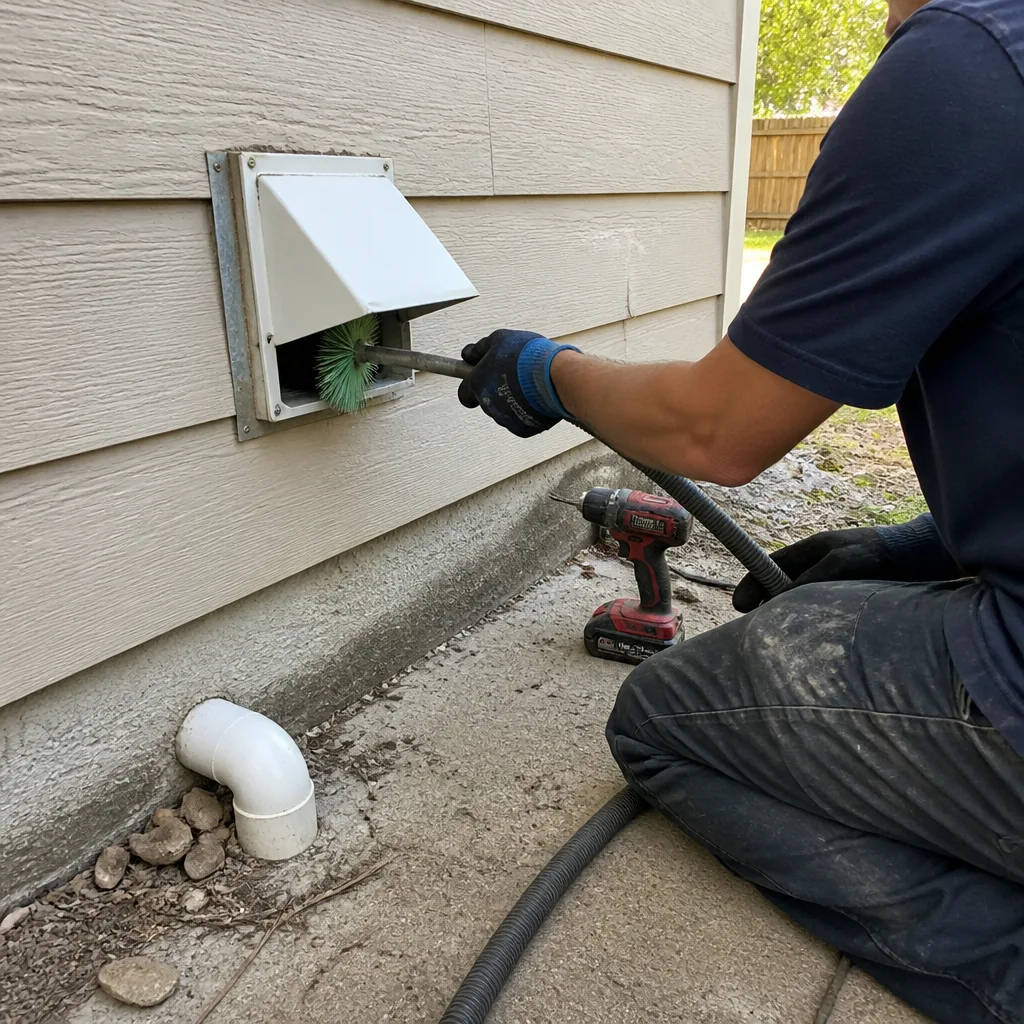 After
After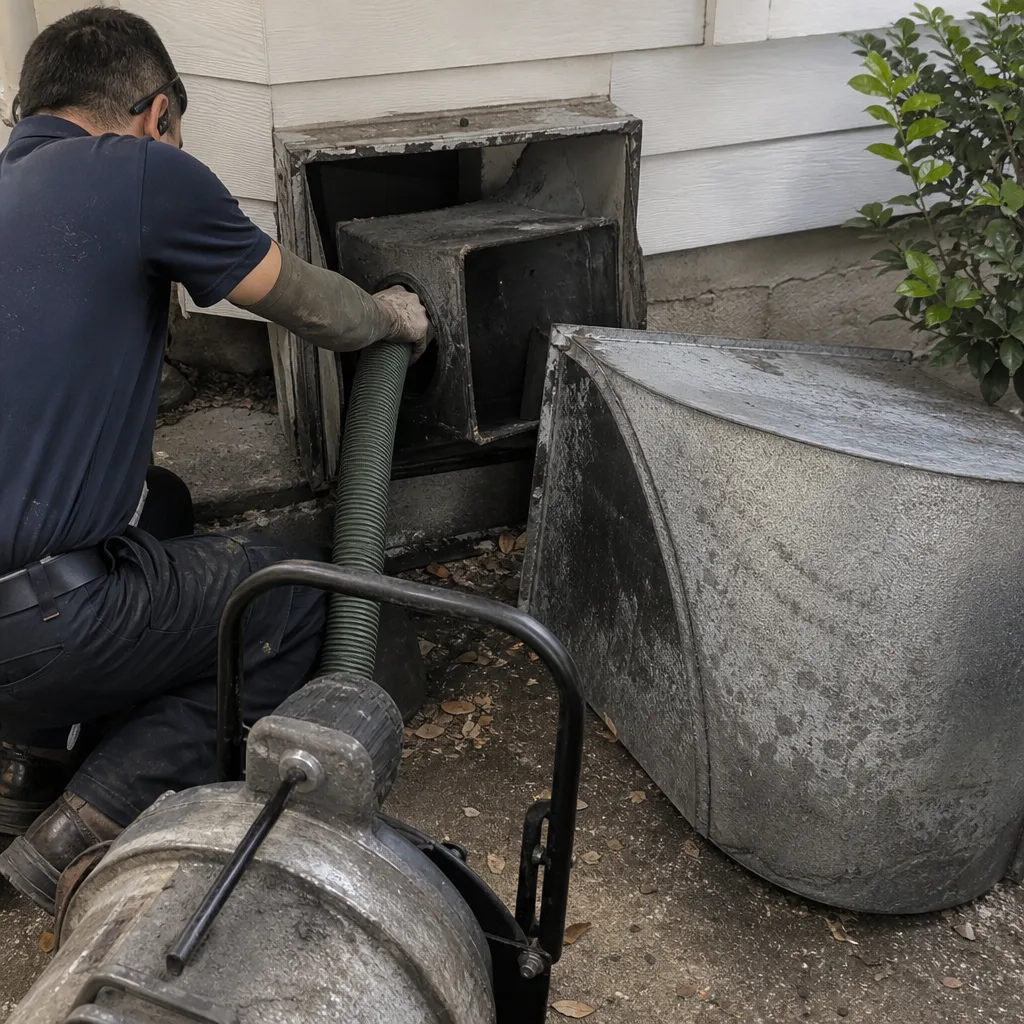 Before
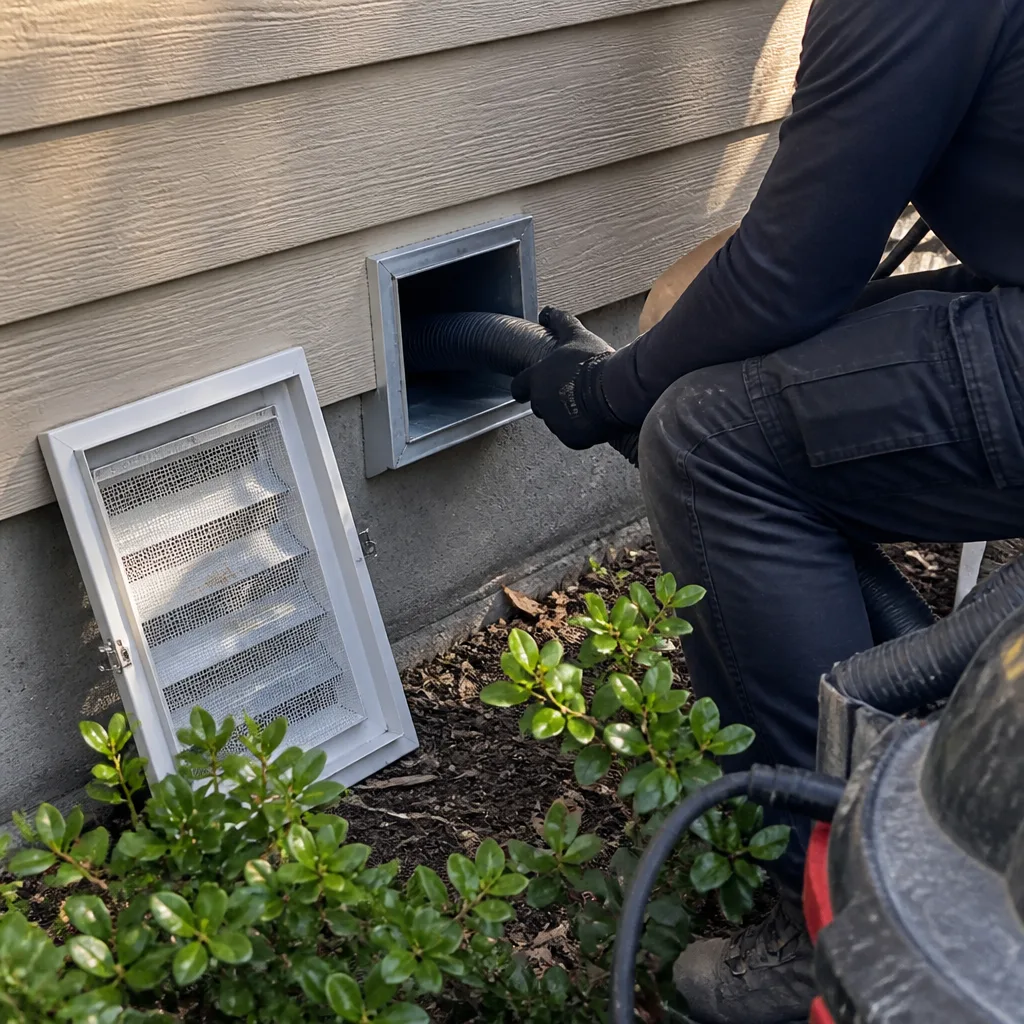 After
AfterReplacement Cost & What’s Included
Here’s the honest Austin pricing, because we don’t believe in making you call just to get a number. A standard UV-C bulb replacement on an Abatement Viper or Predator unit runs $180 to $260 installed. A catalyst cartridge replacement runs $220 to $340 depending on whether it’s a single or dual-stage module. A full sanitizing stage replacement, meaning bulb, cartridge, and the HEPA filter if it’s soaked or fouled, runs $350 to $475 installed for most residential units. Commercial CAP series units run higher because the cartridges are physically larger.
That price includes the part, the labor to open the unit, inspect the airflow path, swap the component, and run the unit through a full output check before we leave. You get a written price before we start, it does not change at the door, and the work carries the 365-Day Done Right Promise: if the replacement fails or the sanitizing function quits within a year, we return and correct it at no charge. No fine print, no exclusions on the parts we install.
DIY or Call Us?
Let’s be straight about what’s safe to do yourself and what is not. On most Abatement portables, the sanitizing cartridge twists out with no tools, and a homeowner can read the wattage stamp and order a replacement bulb. That’s within reach if you’re comfortable with it. The risk is ordering the wrong part, because the visual differences between series are subtle, and the unit will not tell you the bulb is wrong until the air quality problem returns.
What you should not attempt: opening a wall-mounted Viper unit hardwired into your duct system, or anything involving the ballast or control board. These units run line voltage, and a short in a ballast you’ve half-wired can arc. That’s not a burned finger, that’s a fire risk. If the problem is anything beyond a twist-out cartridge swap, call a professional. If you’re in Austin and want a real diagnosis before spending money on parts, call Omar and the crew at (940) 283-6595 and we’ll tell you honestly whether it’s a simple bulb or something deeper.
FAQs
Most Abatement bulbs are rated for 9,000 to 12,000 hours of continuous runtime, which translates to 12 to 18 months of typical residential use in Austin. Units running constantly through cedar season and ragweed months will burn through bulbs faster. If you bought the unit two years ago and haven’t touched the sanitizing stage, it’s overdue regardless of whether the light is still on.
On the bulb-and-ballast systems, the ballast can sometimes be tested and replaced independently, but the bulb and catalyst cartridge themselves are consumables. Once the catalytic coating is fouled or the bulb has clouded, there’s no reconditioning that brings back meaningful output. The repair-versus-replace question usually comes down to whether the ballast is dead or just the bulb, and we’ll tell you which one before quoting a price. Call (940) 283-6595 for an exact diagnosis.
For a standard bulb or cartridge swap on an Abatement portable or wall-mount, we’re usually in and out in 45 to 90 minutes. That includes opening the unit, checking the airflow path for buildup, swapping the part, and running the unit to confirm the sanitizing stage is actually producing output, not just powering on.
We keep the most common Abatement bulbs, cartridges, and HEPA filter stages stocked on our service vehicles. If your model needs a part we don’t carry, we can usually have it in hand within two to three business days. We also stock compatible parts for Lennox, Trane, and Carrier systems when the sanitizing unit is integrated into a larger HVAC setup. If you’re not sure what your unit needs, call us and we’ll help you identify it before you spend a dime.
Written by Omar Haddad, Owner, Cardinal Air Duct Austin at Cardinal Air Duct Austin, serving Austin and nearby areas.