
Last updated October 15, 2026
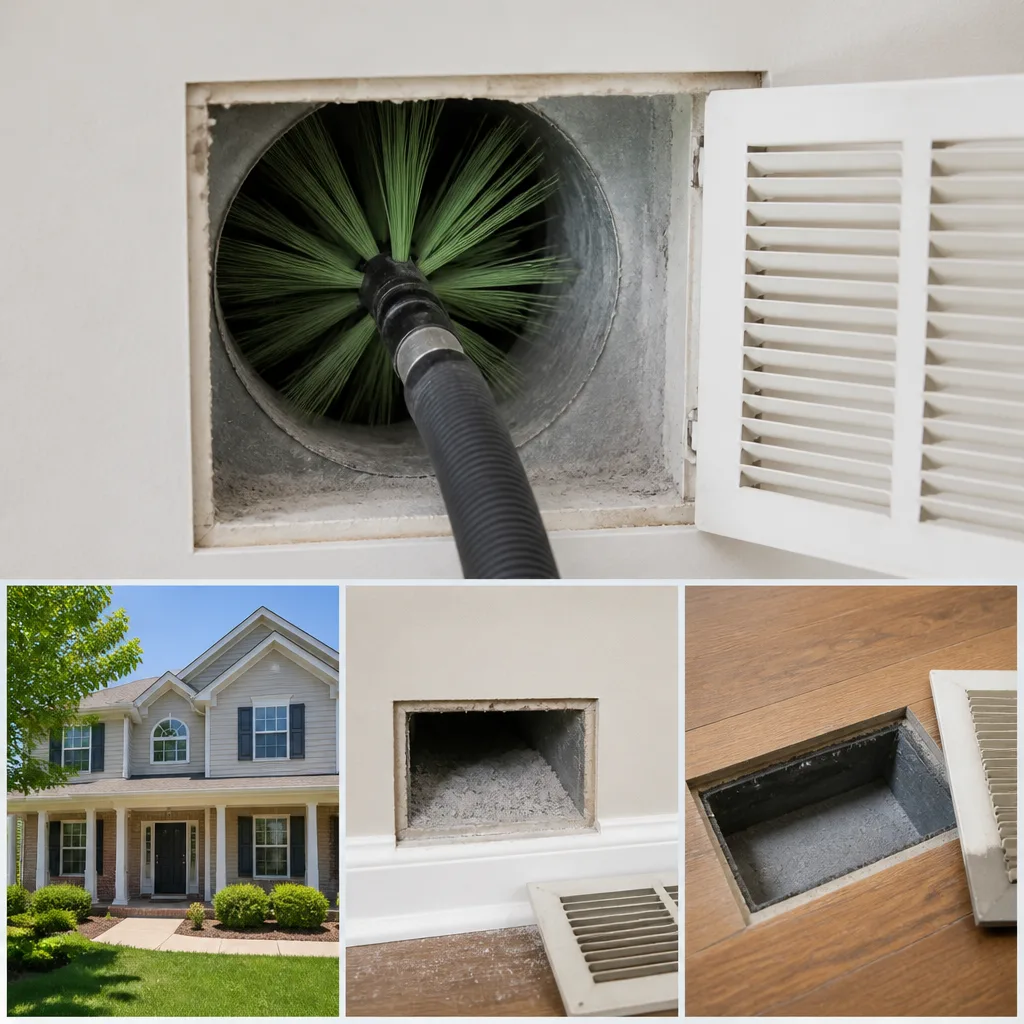 Whole-home duct cleaning
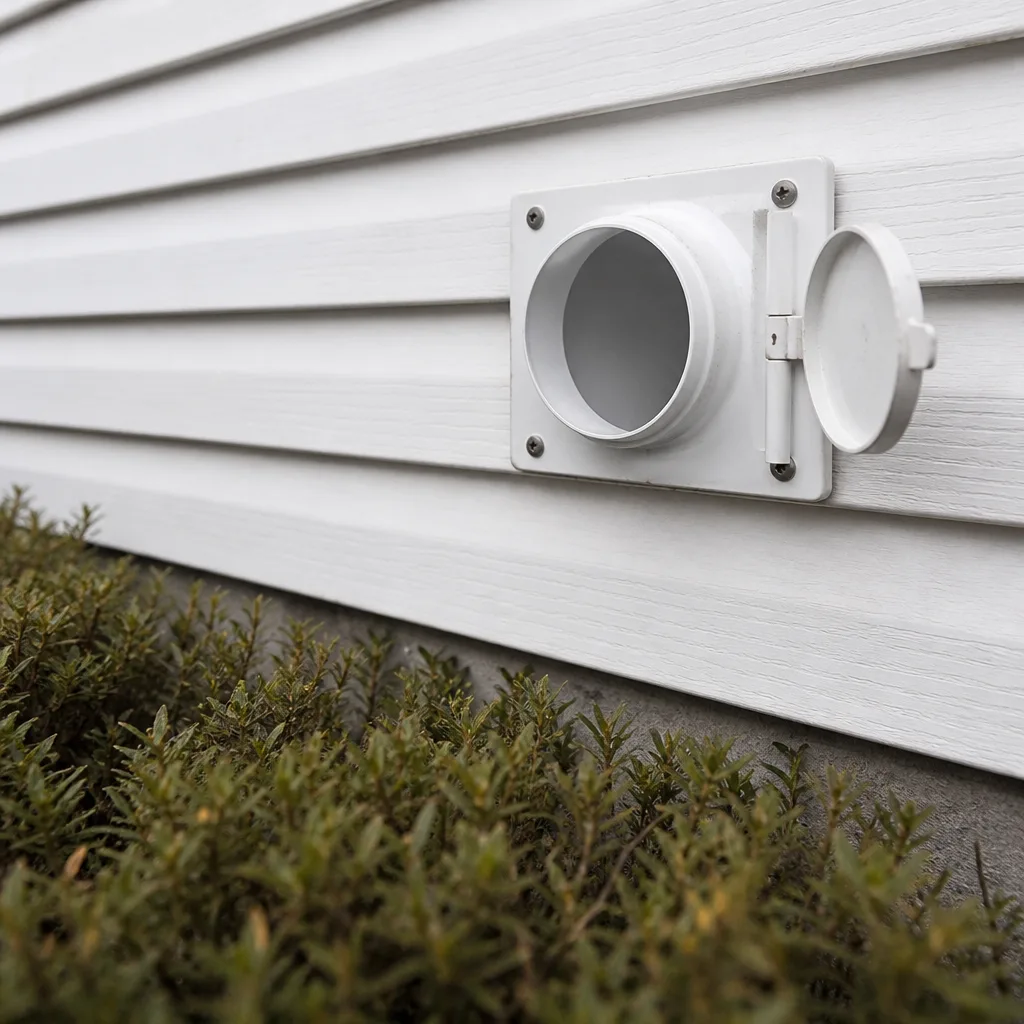 Dryer vent cleaning
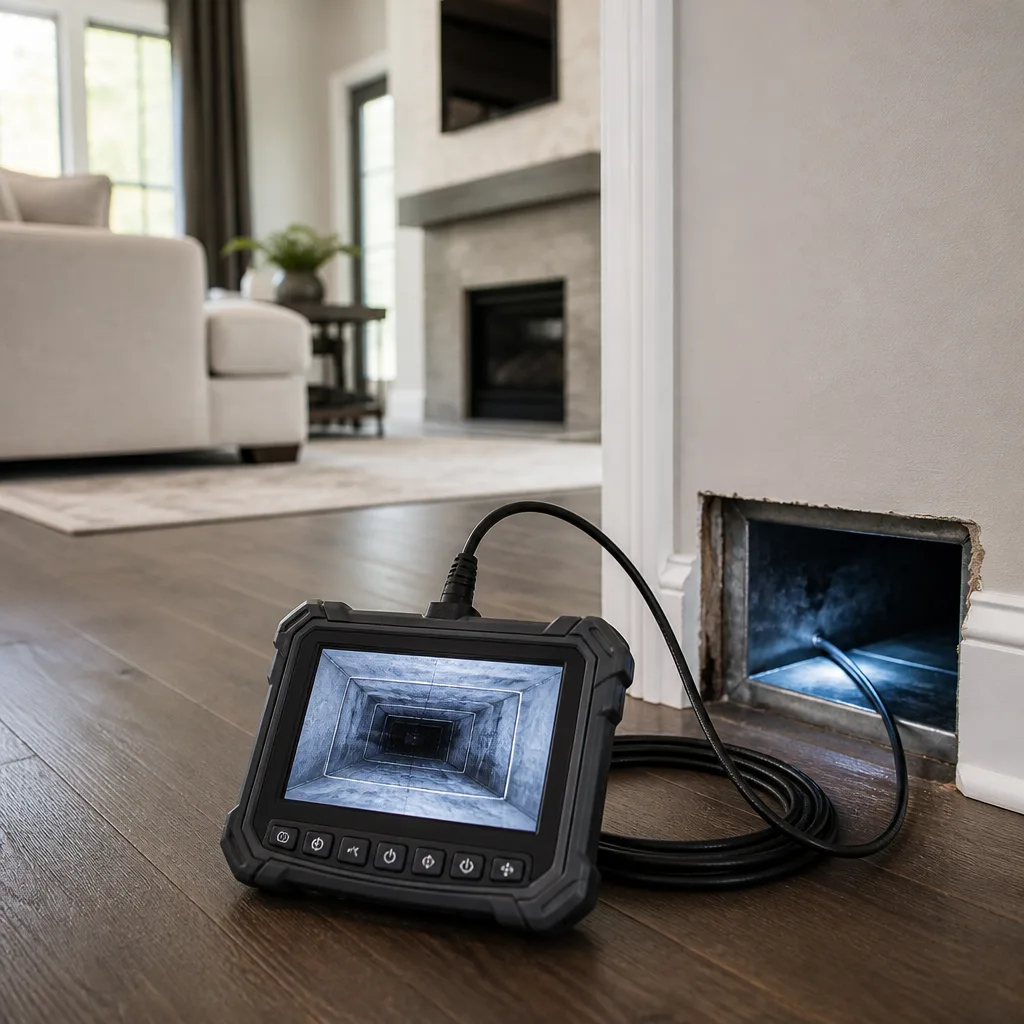 Camera inspection
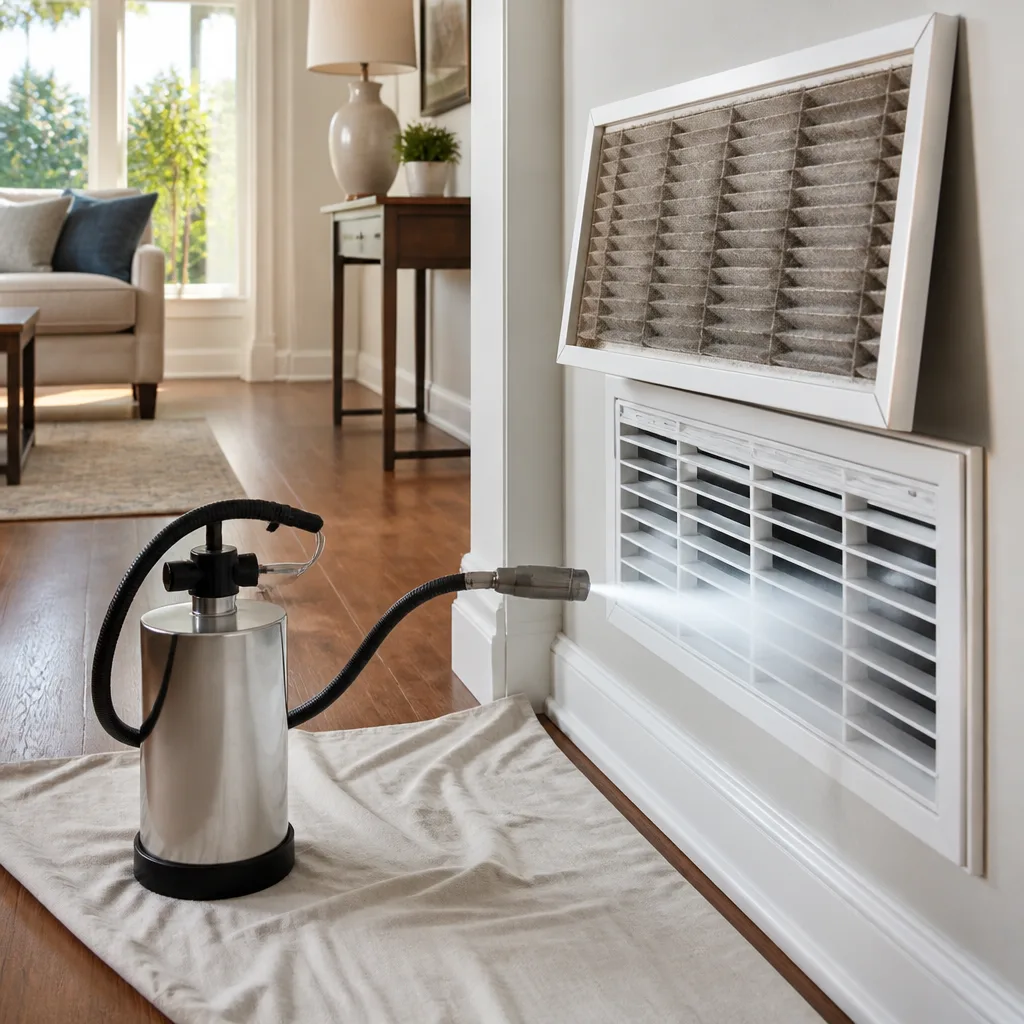 Sanitizing & deodorizing
Whole-system duct and dryer vent check with before-and-after photos - you see exactly what came out of your vents
That "$99 whole-house special" is a bait ad - the real number appears once they are in your hallway, or the "clean" is a shop-vac at the register. We photograph the inside of your ducts before and after instead.
Seasonal Air Duct Cleaning Care for Austin: Year-Round Homeowner’s Guide
Your HVAC system logs more runtime in Austin than in almost any other American city. While a furnace in Minneapolis hibernates half the year, your air handler cycles through cedar pollen in January, oak pollen in March, mold spores in August, and construction dust from the Domain to South Lamar all twelve months. This guide explains what actually accumulates in Austin ductwork season by season, when to schedule cleaning, what to check yourself, and how to avoid paying for work your system doesn’t need. We’ll walk through the five real contamination windows Austin homeowners face and give you a month-by-month plan that fits how this city actually behaves.
Styles & brands we work with
Quick Answer
In Austin, the most valuable times to clean air ducts are late February to early March (after cedar and before oak pollen peaks) and mid-October after the August – September mold window closes. Most Austin homes benefit from professional Air Duct Cleaning services every 2 to 4 years, not the generic 3-to-5-year rule written for cooler climates. Homes near active construction zones or with pets, allergies, or recent renovations often need cleaning on the shorter end of that range.
Table of Contents
- Austin’s Five Duct Contamination Windows
- The Month-by-Month Austin Duct Care Calendar
- Why August and September Are Austin’s Highest-Risk Mold Months
- How Austin’s Building Boom Loads Ductwork With Particulates
- When to Upgrade Your Filter: MERV 8 to MERV 11 and Beyond
- The Two Off-Peak Booking Windows in Austin
- What a Professional Air Duct Cleaning Actually Involves
- Common Mistakes to Avoid
- When to Call a Professional
- Frequently Asked Questions
- The Bottom Line
Austin’s Five Duct Contamination Windows
Most national duct cleaning advice assumes four seasons. Austin has two mild seasons and three aggressive ones, and the ductwork in your attic or crawlspace doesn’t care about the calendar. What matters is what’s blowing through your return grilles and condensing on your evaporator coil. In our experience cleaning systems across Austin, we see five distinct contamination windows that repeat every year with remarkable consistency.
The first window is cedar season, which hits hardest from late December through mid-February. Mountain cedar pollen from the Hill Country rides north winds into the city. It’s fine, sticky, and astonishingly good at coating return ducts and blower fans. The second window is oak and elm pollen, peaking in March and April. This pollen is larger and grittier than cedar, and it mixes with dust already in the system to form a packed layer on coil fins. The third window is summer HVAC overload from June through early September, when your system runs 14 to 18 hours a day. More runtime means more air pulled through the ducts, more moisture condensed at the coil, and more biological material stuck to damp surfaces. The fourth window is the fall mold surge after August rains, which spikes indoor humidity and feeds anything already living in the duct liner or on the coil. The fifth window is construction dust, which in Austin never really stops. It intensifies wherever infill construction, teardowns, and road work are active near your home.
These windows overlap. By October, a typical Austin duct system is carrying layers from all five. That’s why timing matters more than frequency: cleaning in the right window removes a year’s worth of contamination at once, while cleaning at the wrong time lets the next season’s load start accumulating the week after the tech leaves.
The Month-by-Month Austin Duct Care Calendar
Here’s a practical, month-by-month plan keyed to what’s actually happening in Austin’s air and inside your HVAC system. This is the calendar we’d give a friend who just bought a 1990s ranch house off Burnet Road or a newer build in Mueller.
January: Cedar Peak, Filter Vigilance
Mountain cedar counts hit the highest levels of the year, often exceeding 10,000 grains per cubic meter on bad days. Your HVAC filter is the front line. If you’re running a basic MERV 8 filter, check it every two weeks during cedar season. If it looks packed before the month is out, upgrade to a MERV 11 until the counts drop. This is also a smart window to schedule duct cleaning before spring pollen arrives.
February: Late-Month Cleaning Window
The last two weeks of February are one of the two best times all year to schedule professional air duct cleaning in Austin. Cedar is winding down, oak hasn’t started, and duct cleaners aren’t booked solid yet. Cleaning now removes a full cedar season’s worth of sticky pollen from your blower, coil, and duct walls before the spring load begins.
March: Oak Season Begins
Live oak pollen turns Austin cars yellow-green and does the same to return-air registers. If you skipped February cleaning, you’re now in the worst possible window to do it: pollen is actively pouring into the system during the clean, and whatever the tech removes today gets replaced within days. Instead, focus on filter changes twice this month and make a note to schedule for October.
April: Coil Inspection Month
By April, oak and elm pollen have been circulating through the coil for six to eight weeks. This is the month to peek at your evaporator coil if you can access it safely. A gray or green mat on the coil fins means the pollen load has mixed with moisture and is now reducing airflow and heat transfer. A professional HVAC cleaning that includes coil cleaning can restore efficiency before summer demand peaks.
May: Pre-Summer Tune-Up
Temperatures climb past 90 and your system shifts into daily heavy rotation. This is the right time for an HVAC cleaning in Austin that addresses the blower wheel, coil, and drain pan before the condensation season really begins. A clean coil sheds condensate properly; a dirty one holds water and creates the exact conditions for microbial growth.
June through August: Runtime Surge
Your air conditioner becomes the hardest-working appliance in the house. It pulls thousands of cubic feet of Austin air through the return ducts every hour. Every particle floating in that air either lands in the filter, on the coil, or on the duct walls. Change filters monthly this quarter, even if they don’t look terrible. Listen for changes in airflow or new musty smells from vents.
September: The Mold Window Closes
September is the most important filter-check month of the year in Austin. August rains push humidity up, the system has been condensing water for four straight months, and the accumulated organic material inside the ducts is now damp and warm. When you pull the filter in early September, look at it closely. Visible dark spots, a musty smell, or filter media that feels damp are all signals that elevated mold activity is happening deeper in the system. This is the single highest-value month to have a professional inspection if you suspect anything.
October: Second Off-Peak Cleaning Window
The second half of October through early November is the other ideal scheduling window. The mold surge is past, summer runtime has dropped, and the winter cedar spike is still weeks out. An air duct cleaning now clears everything that accumulated through the summer surge and fall damp period, leaving your system clean ahead of the mild winter months.
November and December: Dryer Vent Check Before Holiday Load
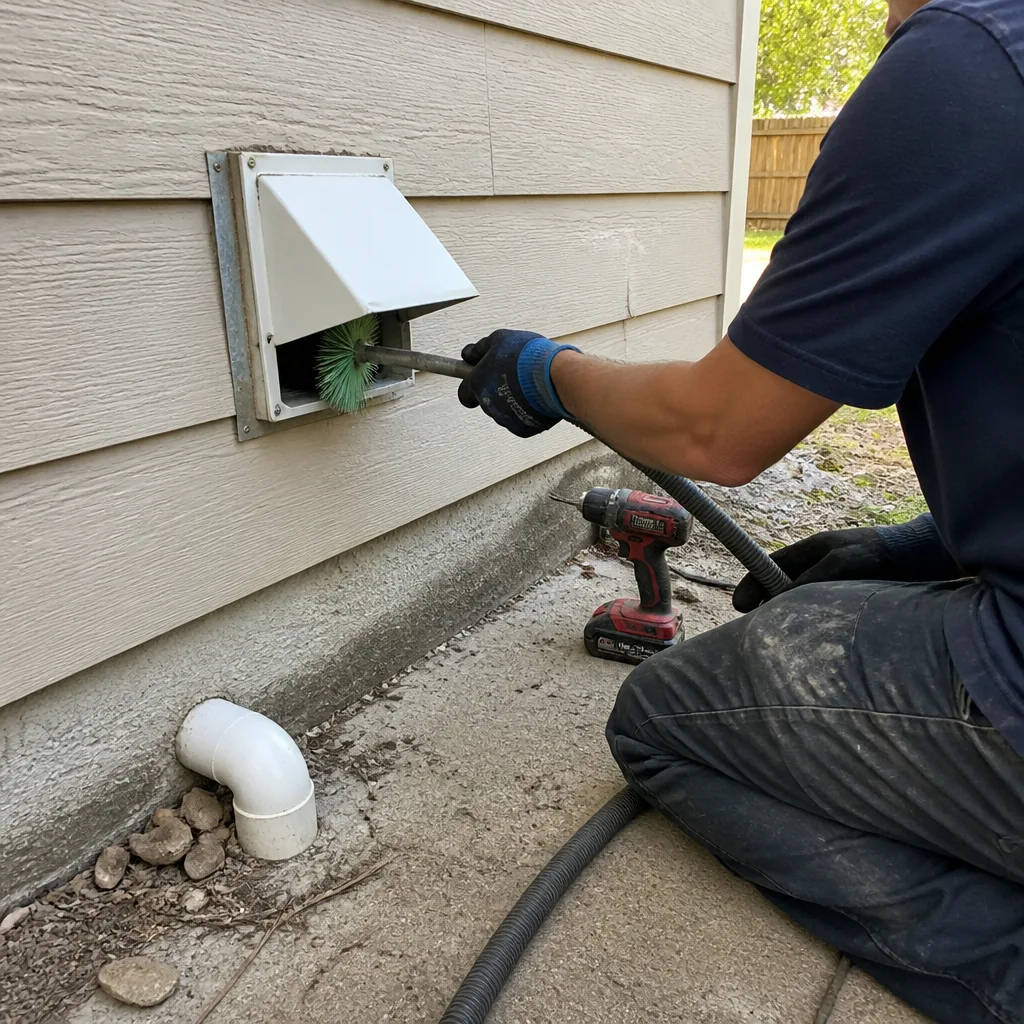
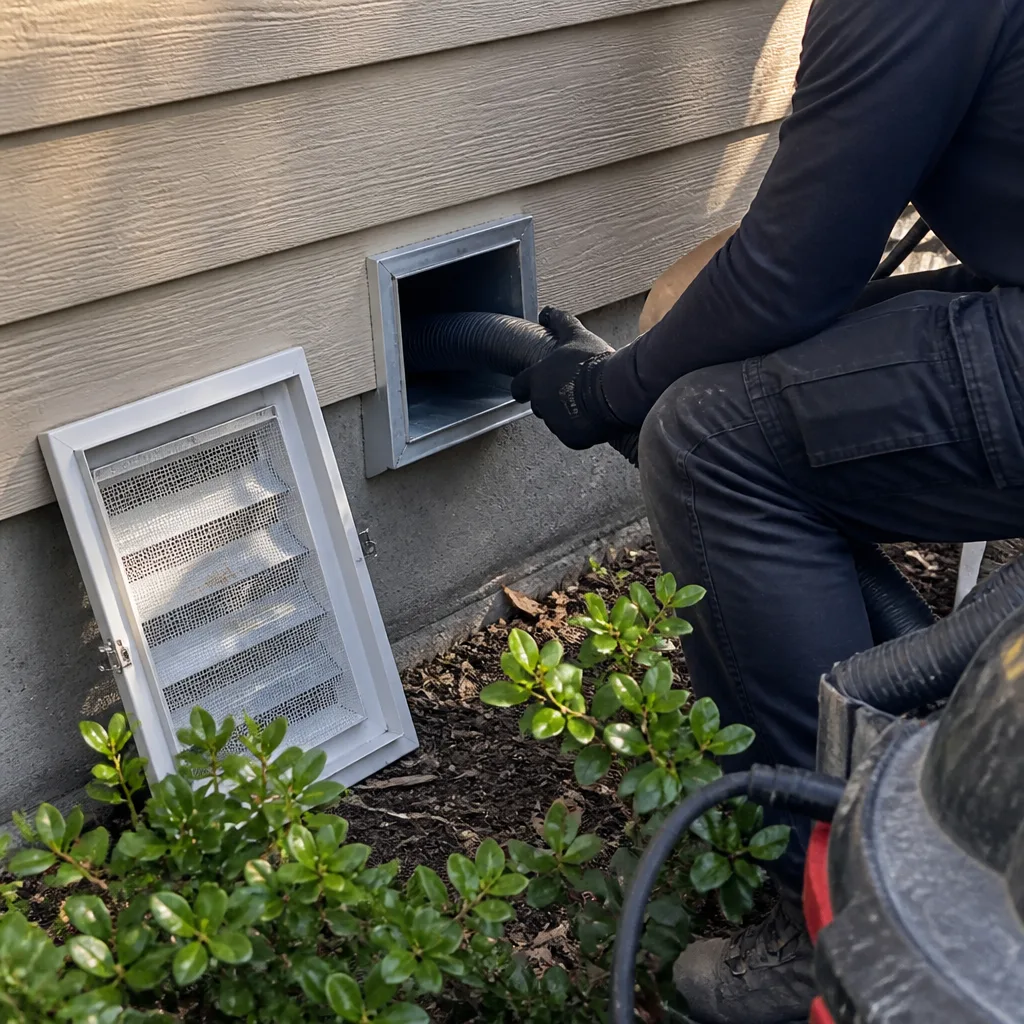
With holiday cooking, house guests, and higher laundry volume approaching, this is the right time for dryer vent cleaning in Austin. Austin’s dry autumn air makes lint extra brittle and fast-accumulating. A clogged dryer vent is a fire hazard, and the holiday season is the worst possible time to discover it. Have it cleaned before Thanksgiving if it’s been more than a year.
Why August and September Are Austin’s Highest-Risk Mold Months
The highest-risk mold window for Austin duct systems runs from mid-August through late September. This is not a guess; it’s a pattern we’ve seen repeatedly in systems across the city, from 1970s duplexes off Riverside Drive to new builds in Leander. Here’s why this window is uniquely dangerous.
First, Austin’s August rainfall pattern spikes outdoor humidity and indoor humidity together. When outdoor dew points sit above 70 degrees for weeks, every cubic foot of air your HVAC pulls through the return ducts carries more moisture than it does during the dry winter months. Second, your evaporator coil has been producing condensate since May. The coil, drain pan, and the first few feet of supply duct are chronically damp all summer. Third, the organic load inside the ducts is at its annual maximum: months of pollen, skin cells, pet dander, and dust have accumulated, and that organic material is now sitting in a humid environment. Mold needs three things: moisture, food, and a surface. By late August, all three are consistently present in many Austin systems.
What should you look for in September? When you change your filter, check for visible dark staining on the filter media, a distinctly musty or earthy smell from supply registers, or any signs of water staining around ceiling vents. These are not proof of a mold problem, but they’re the early indicators. If you notice condensation dripping from a ceiling register in a hot attic during August, the duct insulation may be compromised, and that’s a moisture source worth addressing quickly. A professional inspection with a borescope can confirm what’s happening inside the duct without cutting into drywall.
How Austin’s Building Boom Loads Ductwork With Particulates
Austin’s construction cycle never lets up. The Domain keeps expanding, South Lamar keeps densifying, and East Austin infill projects churn out concrete dust and demolition particulate month after month. If you live within half a mile of active construction, your duct system is working harder than the design assumed.
Construction dust is not the same as regular household dust. It’s finer, heavier, and more abrasive. Concrete and drywall dust particles are small enough to pass through a standard MERV 8 filter and large enough to pack into coil fins, reducing heat transfer and airflow. Excavation and demolition also release silica dust, which settles into return ductwork and then circulates whenever the fan runs. We’ve cleaned systems in homes near major construction on South Lamar where the coil looked like it had been coated in fine gray paste, a mix of construction dust, summer humidity, and normal home particulate that had been baking on the coil for months.
If you live near an active project, here’s what changes for you:
- Filter replacement doubles. In a construction zone, a monthly filter change is the floor, not the ceiling. Check every two weeks and replace when visibly dark.
- Seal windows during active phases. When demolition, concrete pouring, or drywall sanding is happening within sight of your house, keep windows closed and run the HVAC fan to filter indoor air.
- Clean ducts after construction wraps. Once the project finishes and dust stops being generated daily, that’s the time to clean. Cleaning during active construction is wasted money.
- Inspect the return side more often. Construction dust enters through returns located near doors and windows. Check return grilles for gray buildup that indoor-only dust doesn’t produce.
For homes near perpetual construction corridors, the practical cleaning interval may be every 18 to 24 months instead of every 3 to 4 years. The dust load is simply higher, and the efficiency loss happens faster.
When to Upgrade Your Filter: MERV 8 to MERV 11 and Beyond
Most Austin homes start with a MERV 8 filter. It’s the default: cheap, available everywhere, and adequate for large particles like carpet fibers and pet hair. But Austin’s air quality profile, dominated by fine pollen, construction dust, and mold spores, means there are clear times when a MERV 8 isn’t enough.
A MERV 11 filter captures a meaningfully higher percentage of particles in the 1.0 to 3.0 micron range, which includes most pollen fragments, mold spores, and fine construction dust. For many Austin homeowners, MERV 11 is the right year-round choice. But there’s a critical caveat: filters that capture more also restrict more airflow. If your system has thin ductwork, an aging blower motor, or a coil that hasn’t been cleaned in years, jumping to a MERV 13 filter can drop static pressure to a point that hurts performance and raises energy use.
Here’s the practical decision tree we recommend:
- Start with MERV 8 if you have no allergies, no pets, no construction nearby, and a system older than 15 years. The airflow headroom matters more than marginal filtration gains.
- Upgrade to MERV 11 during cedar season (January – February) and oak season (March – April) if you have any allergy symptoms, and consider it year-round if you have pets or live near construction.
- Try MERV 13 only if you have a newer system, a variable-speed blower, and a coil that gets professionally cleaned at least every two years. On older single-speed systems, the airflow penalty is real.
- Change the filter on schedule, not by looks. A filter that looks clean can still be loaded with fine particles that impact airflow. Monthly changes during heavy seasons are cheap compared to the cost of a struggling compressor.
We regularly install Austin home filtration upgrades alongside duct cleaning, and the combination of a clean coil and an appropriately matched filter is what actually moves the needle on indoor air quality. Brands like Honeywell and Aprilaire make excellent media filter housings and filters that fit this exact purpose, and they pair well with a properly cleaned duct system.
The Two Off-Peak Booking Windows in Austin
There are two windows every year when Austin duct cleaning demand drops and smart homeowners can get better pricing and more scheduling flexibility: late February and October. Both windows have specific reasons tied to Austin’s seasonal cycles.
Late February sits after the cedar season rush and before the spring pollen surge. Most homeowners aren’t thinking about their HVAC because the weather is mild and the system is neither heating heavily nor cooling heavily. Duct cleaners have open calendars, which often means better pricing, same-week availability, and a job that’s completed before the oak pollen starts flying. The timing also makes practical sense: you remove a full cedar season’s worth of accumulation before spring pollen adds another layer.
October sits after summer’s emergency repair season ends and before holiday scheduling chaos begins. The August – September mold window has closed, humidity has dropped, and the system has just finished its hardest four-month stretch of the year. Cleaning in October clears everything from the summer runtime surge and the damp fall period in one pass. Demand for duct cleaning in October is low because most homeowners have shifted their attention to the holidays and cooler weather.
Both windows also beat the scheduling crunch that hits in November and December, when the combination of holiday guests and dryer vent concerns drives a spike in service calls. If you’re flexible on timing, late February and October are where you’ll find the most accommodating pricing and appointment windows from any reputable Austin provider.
What a Professional Air Duct Cleaning Actually Involves
If you’ve never watched a professional duct cleaning, the process can seem mysterious. It shouldn’t be. A legitimate Austin duct cleaning is straightforward, and you should know exactly what’s happening before anyone enters your home.
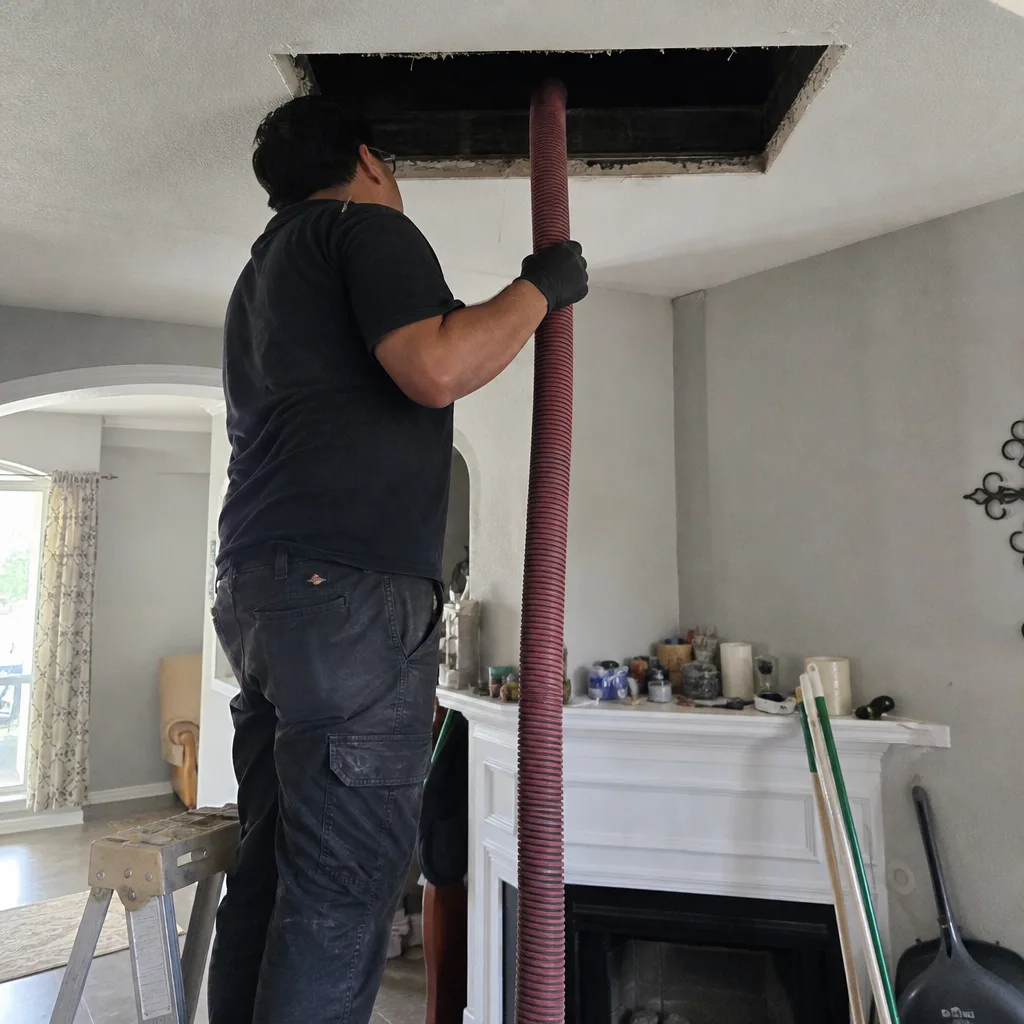
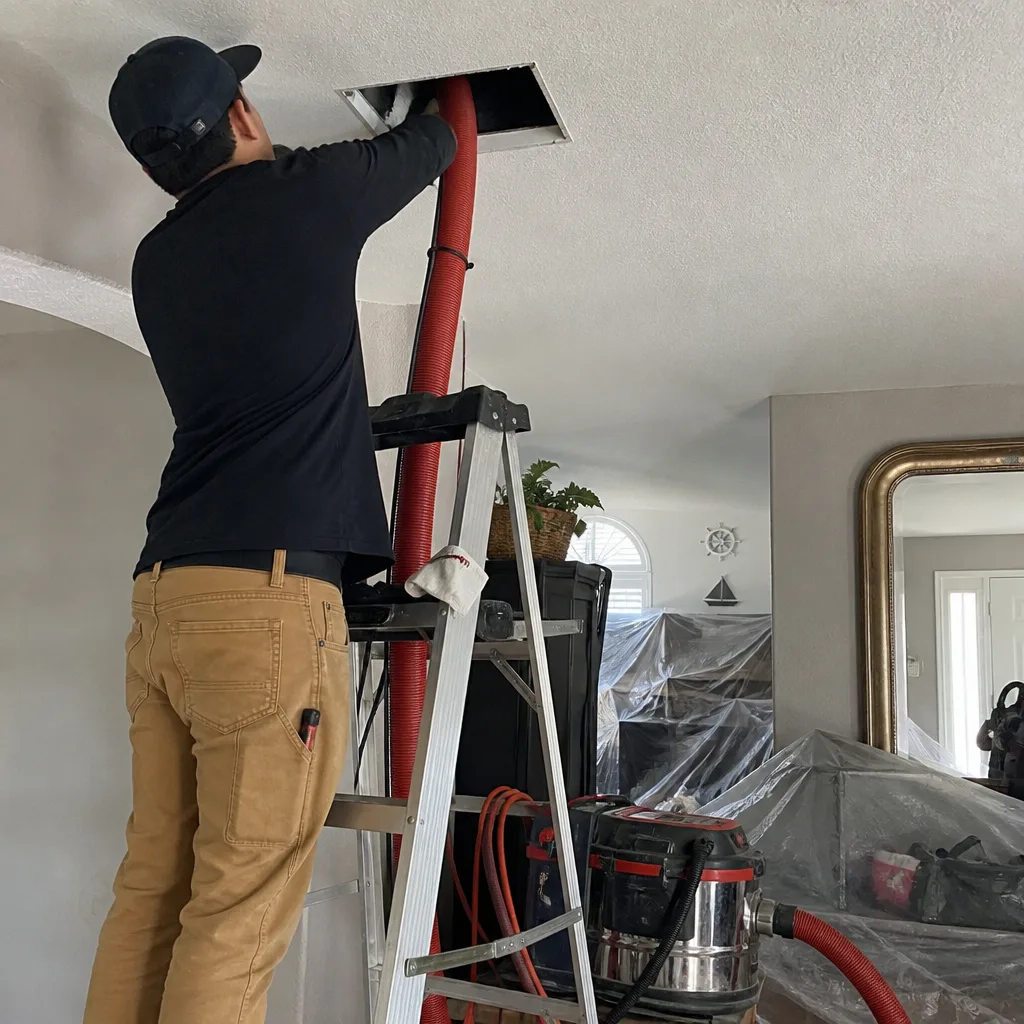
The standard professional process uses negative-pressure extraction, which means the loosened debris goes straight into the vacuum, not back into your living room. Most reputable companies in Austin, including ours, pair a rotary brush system from Rotobrush with a HEPA-rated vacuum like the Nikro units we run, and you can read about Air Duct Cleaning Permits, Codes & Inspections in TX: What You Need to Know to verify any provider’s compliance. The brush mechanically agitates dust, pollen, and debris off the duct walls, and the vacuum immediately extracts it. For homes with heavy contamination or mold concerns, a containment unit like the ones Abatement Technologies makes is used to keep the work area sealed off from the rest of the house.
Here’s what a full cleaning covers:
- Supply and return ductwork – all accessible duct runs are brushed and vacuumed.
- Supply and return registers and grilles – removed, cleaned, and reinstalled.
- Blower motor and housing – dust and pollen accumulate here and reduce efficiency.
- Evaporator coil – the biggest single efficiency and air quality factor in the system.
- Drain pan and condensate line – the moist components where biological growth starts.
- Air handler interior – wherever accessible without disturbing refrigerant lines.
A full system cleaning on a typical Austin single-family home takes 3 to 6 hours depending on the home’s size, number of returns, and contamination level. Pricing varies with system size and scope, but most standard whole-system cleanings in Austin run $450 to $800 for a typical home; see our Air Duct Cleaning Cost Breakdown: The Austin Homeowner’s Reference for 2026 for detailed factors. Every job we do includes a written price before any work starts, so the number you approve is the number you pay. No per-vent surprises, no upsell once the van is in the driveway.
Common Mistakes to Avoid
- Applying the national 3-to-5-year rule to Austin. Our climate, pollen load, and construction dust mean many Austin homes need cleaning every 2 to 4 years. Waiting longer often means a heavier, more expensive cleaning when it finally happens.
- Scheduling during March pollen season. Cleaning while oak and elm pollen are actively blowing through every open door and window means the system starts re-accumulating before the tech’s van leaves the driveway.
- Upgrading to MERV 13 without checking system airflow. On older Austin systems with single-speed blowers and tight ductwork, the extra filter resistance reduces airflow and can increase energy costs. MERV 11 is the sweet spot for most homes.
- Ignoring the September filter check. The August rains create a specific mold-risk window in Austin. Skipping the September filter inspection means missing the single most important early warning signal of the year.
- Paying for cleaning during active nearby construction. If a lot is being demolished or a building is going up within half a mile, wait until the project completes before paying for duct cleaning.
- Choosing the cheapest quote without verifying equipment. A truck-mounted shop vac is not negative-pressure extraction, and it won’t clean what a Rotobrush and HEPA vacuum system will. Equipment matters, and it shows in the before-and-after photos a reputable company provides.
When to Call a Professional
Some situations call for an inspection before they become bigger problems. If you notice visible mold growth around vents or registers, a persistent musty smell from the HVAC system that gets worse when the fan runs, or dust accumulating on surfaces within days of cleaning, those are signals that something inside the ductwork needs professional attention. Reduced airflow from all vents, not just one room, often points to coil or blower fouling rather than a duct blockage. If you’ve had a rodent infestation, a water leak, or major renovation work since the last cleaning, schedule an inspection sooner rather than later. Cardinal Air Duct Austin offers free estimates for Austin homeowners, and you can reach us at (940) 283-6595.
Frequently Asked Questions
Most standard whole-system air duct cleanings for a typical Austin single-family home run $450 to $800, with larger homes or heavily contaminated systems at the upper end of that range. The price includes all supply and return ducts, registers, the blower, coil, and drain pan. Every Cardinal Air Duct Austin job includes a written price before work starts, and that number does not change at the door. Call (940) 283-6595 for a quote specific to your home.
Most Austin homes need professional air duct cleaning every 2 to 4 years, not the 3-to-5-year national average. The shorter interval reflects Austin’s high pollen counts, long cooling season, summer humidity, and the construction dust common across the metro. Homes with pets, allergy-sensitive occupants, or proximity to active construction often sit at the 2-year end of the range. A visual inspection is the best way to know for sure.
The two best windows in Austin are late February and October. Late February clears cedar season accumulation before oak pollen starts, and October clears the summer runtime and August – September mold window deposits. Both windows also tend to offer more scheduling flexibility and better pricing than peak-demand periods.
The biggest variable is equipment and scope. A low quote often reflects a shallow cleaning: one vent at a time with a small portable vacuum, no coil cleaning, no blower cleaning, and no negative-pressure containment. A professional setup with a Rotobrush rotary brush, a Nikro HEPA vacuum, and proper containment costs more to operate and takes longer, but it removes substantially more material and includes the coil and blower in the scope. Cheap duct cleaning usually means the most important components never get touched.
Ask for before-and-after photos of the interior of the ductwork, the coil, and the blower. Any reputable Austin duct cleaning company provides these as standard practice, not as an add-on. Our process includes photo documentation of every major component before and after the cleaning, so you can see exactly what was removed and what the surfaces look like afterward. If a company won’t provide photos, that’s a red flag by itself.
Yes, with a qualification. Professional duct cleaning removes accumulated pollen, dust, and dander that recirculate through your home whenever the fan runs, which means less of the seasonal load stays active in the system. But cleaning is not a cure for outdoor pollen exposure, and it works best when paired with the right filter. A clean coil and properly sealed ducts with a MERV 11 filter during cedar and oak season make an immediate difference for most allergy-sensitive households.
The Bottom Line
Austin’s HVAC systems work harder and dirtier than most national cleaning schedules assume. The city’s five contamination windows – cedar, oak, summer runtime, fall mold, and construction dust – stack on top of each other and mean many local homes need cleaning every 2 to 4 years, not 3 to 5. Timing matters: late February and October deliver the best value and the longest clean window afterward. What matters most is that when you do clean, the job covers the whole system, not just the visible vents. The coil, blower, and drain pan are where Austin’s airborne load actually ends up, and they’re what determine whether your system breathes easy or struggles through the next heat wave. If you’re not sure where your system stands, get an inspection with photos, or explore more guides & resources on maintaining Austin HVAC systems. It’s the fastest way to see what’s actually in there.
Written by Omar Haddad, Owner at Cardinal Air Duct Austin, serving Austin since 2005.
See the difference
 Before
 After
After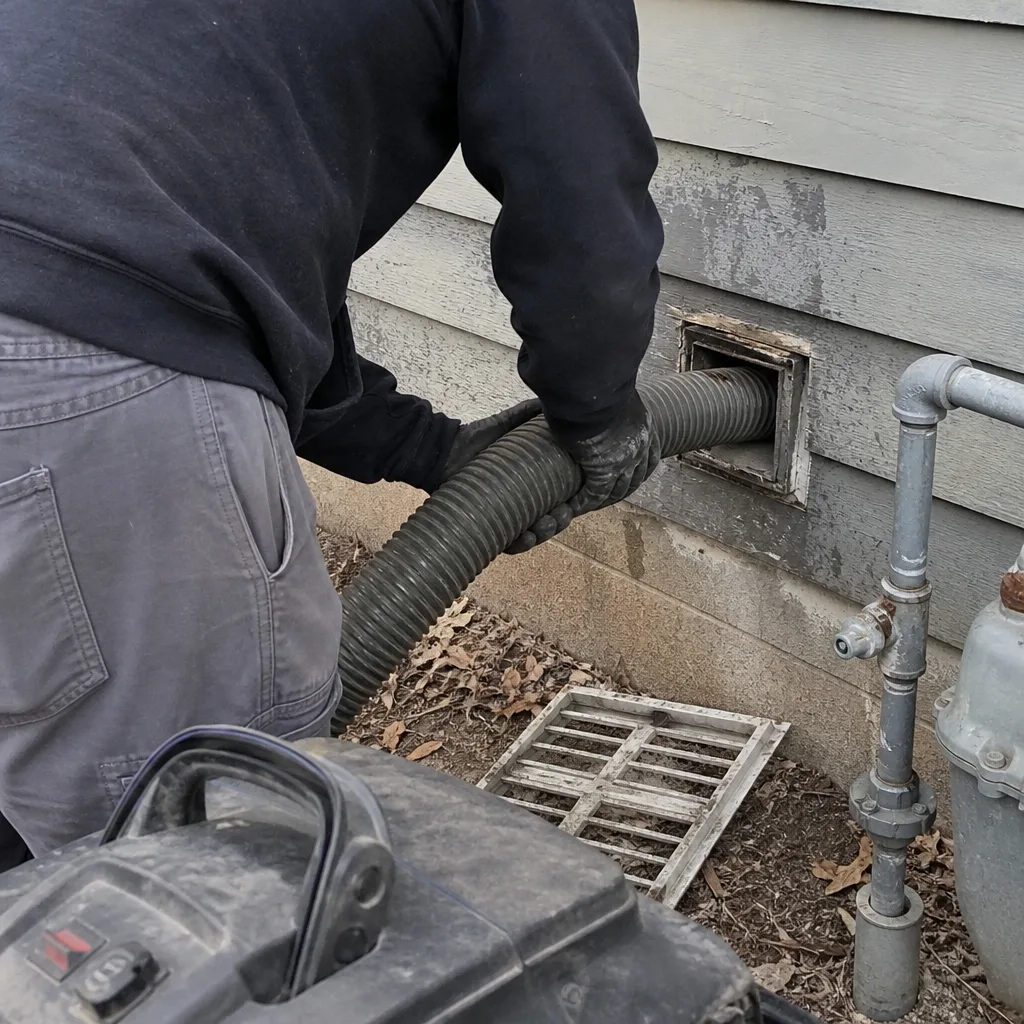 Before
 After
After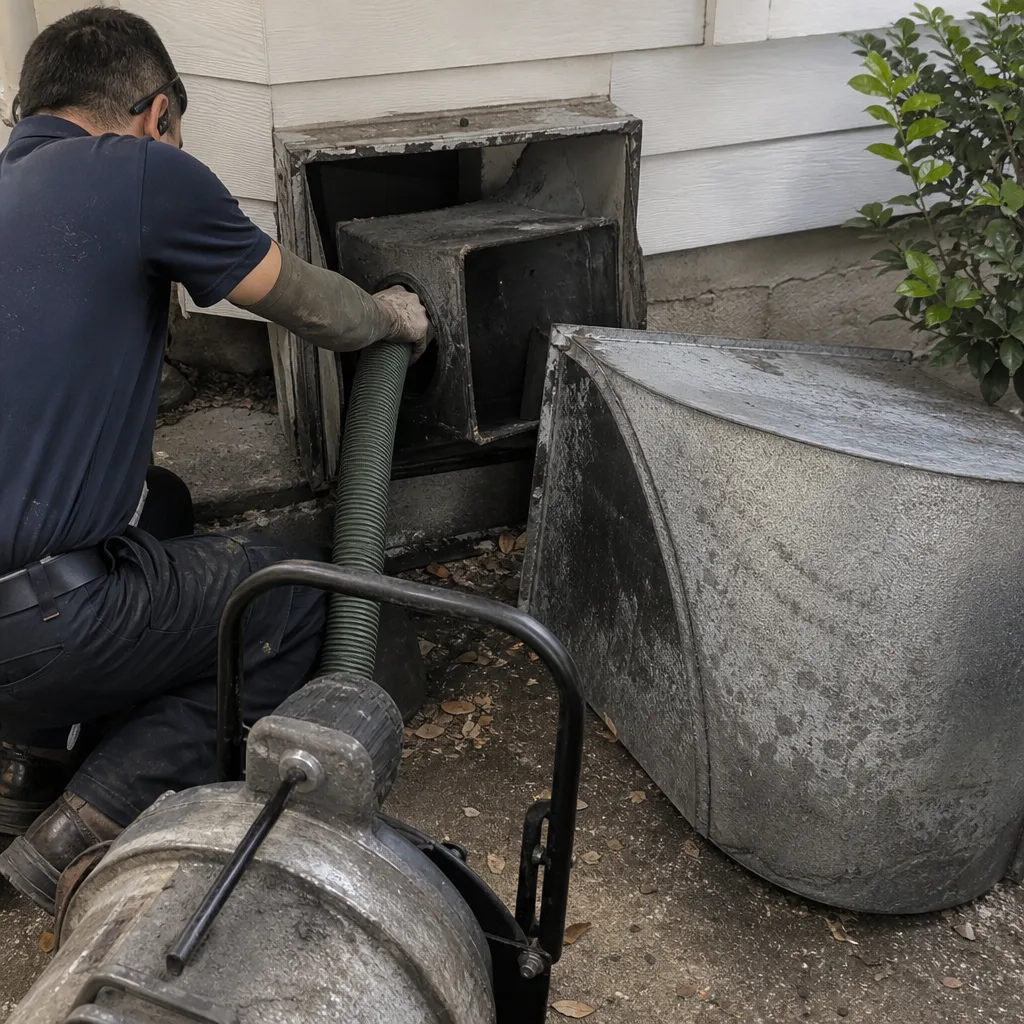 Before
 After
After